Category: Events

  • Higgy’s Magical Visit – Feb 2017

    Higgy’s Magical Visit – Feb 2017

    Colin Higgins, AKA ‘Higgy’ of YACWAG and Somerset Wildlife Photography fame, was brought up in Backwell and recently re-visited the two BET reserves in February.  Here is his story of the visit:

    Having been suffering with this awful virus that has been doing the rounds for 4-5 weeks, and waking up to sunshine following my first full night’s sleep for five days, the decision was easy; some good old fashioned ‘medicinal’ fresh air was required!

    Where to go? Having grown up in Backwell but moved away when my wife and I bought our first home some 25 years ago, I couldn’t resist a visit to my old ‘stomping ground’ of Backwell Hill!

    Despite only living in Yatton, I rarely get back and enjoy those long walks up over the top of the quarry and out to Long Lane, so with some excitement, I left home and drove to the Jubilee Stone reserve now managed by Backwell Environment Trust (BET). Having long been involved with my own local conservation group YACWAG, it’s always a treat to go and see the good work that other local groups are doing.

    Parking up, I could immediately hear the usual suspects in the form of Blue Tits, Great Tits and of course a friendly Robin, who was first to greet me at the gate.
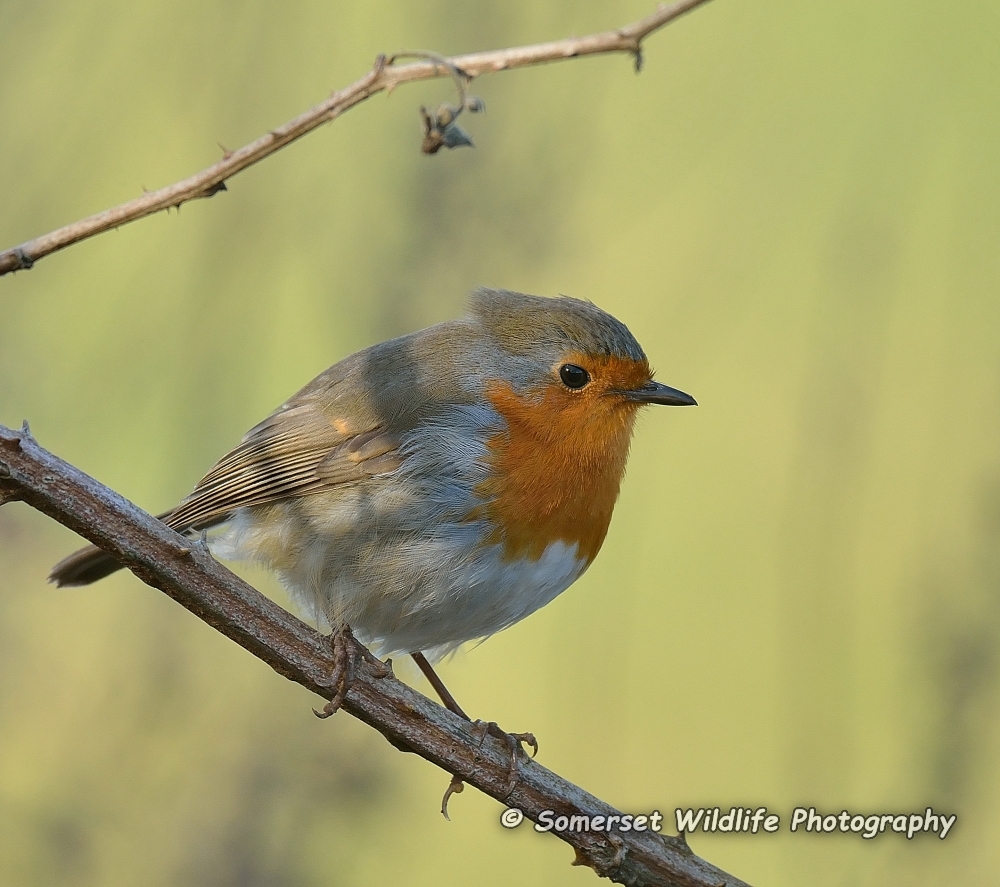
    Robin Erithacus rubecula 6

    I moved down the path towards the Jubilee Stone and bumped into a small flock of Goldcrest who were actually being quite vocal for a change! The usual wrestling match with my camera whilst trying to get a snap of this tiny but beautiful bird as it flitted in and out of branches was difficult, but I was finally rewarded with a couple of pictures that might be OK as a ‘record shot’.
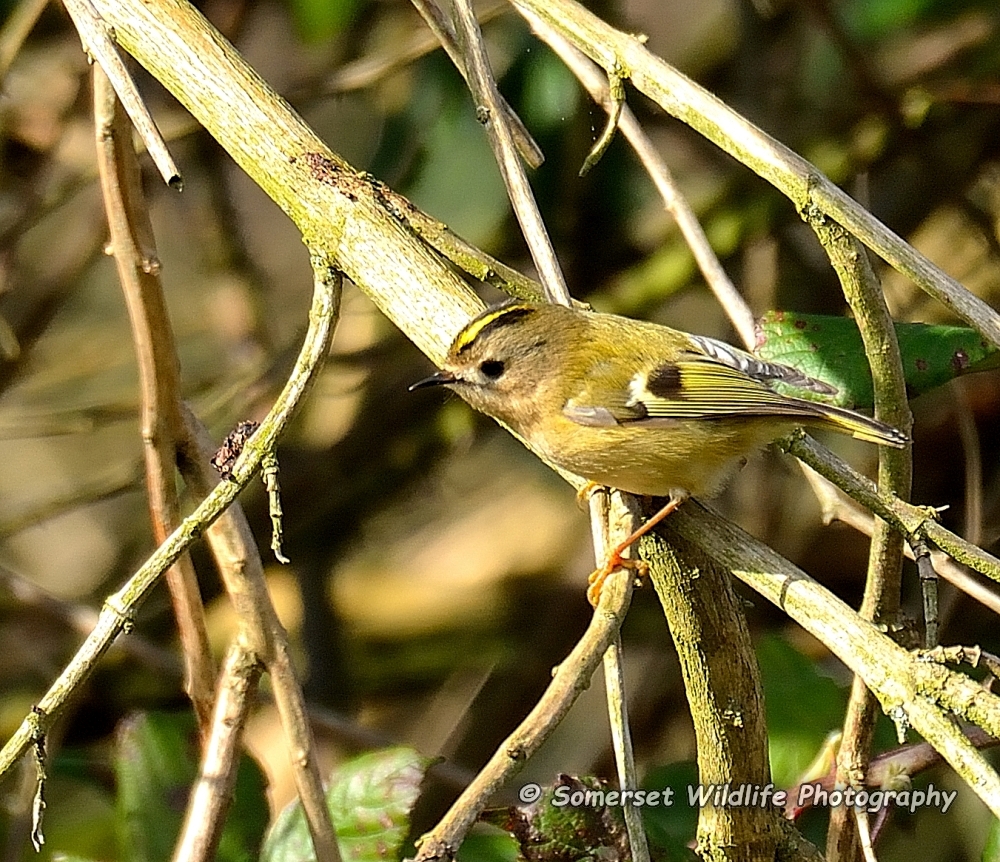
    Goldcrest Regulus regulus 7

    Moving on, the sound of bird song was obvious and I was accompanied through the wood by the alarm calls and chattering of Tits who clearly gave away my position and any hope of a stealthy approach!

    With my cover blown, I veered left and crossed the road over into Badgers Wood Reserve. I noticed straight away the work that has been carried out to make the site accessible to fellow nature lovers. I was heartened to hear the sound of birdsong actually increasing on this side of the road and at the top of the slope I was met with an amazing view over the old quarry and across Backwell and beyond. The clear sunny February day made it a pleasure to stand there and take in this wonder! Unfortunately, a huge flock of Jackdaws were in full voice and although I do enjoy Corvids, they can tend to be a bit noisy!
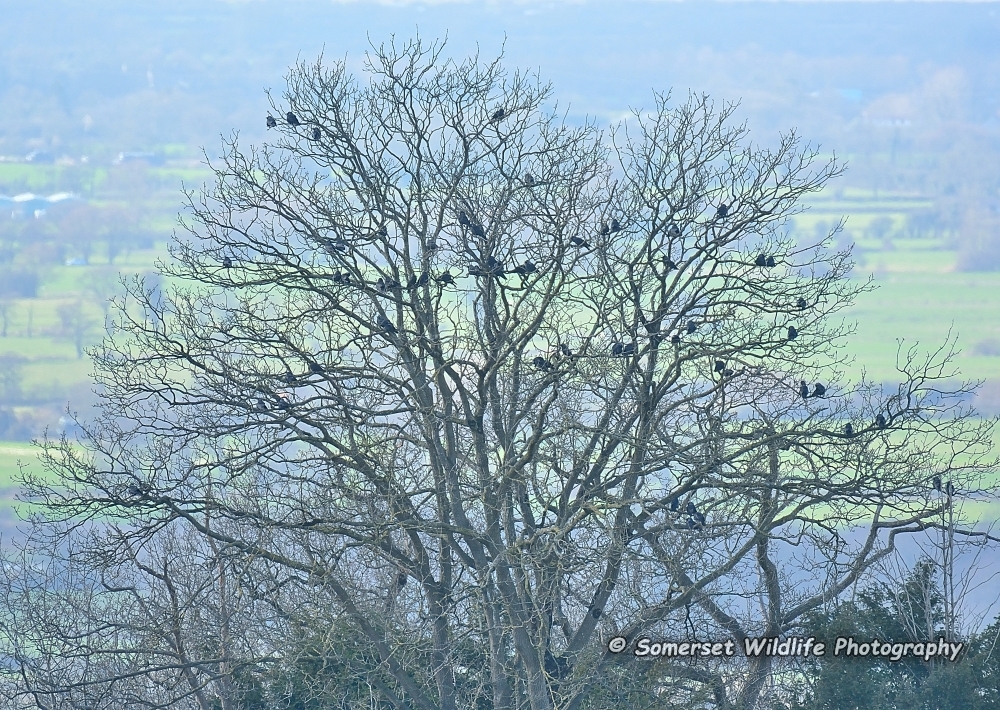
    Jackdaw Corvus monedula 7

    But I’m stuck to the spot at the amazing aerial display that these unappreciated birds were now giving me, tumbling and diving one after the other, truly spectacular!
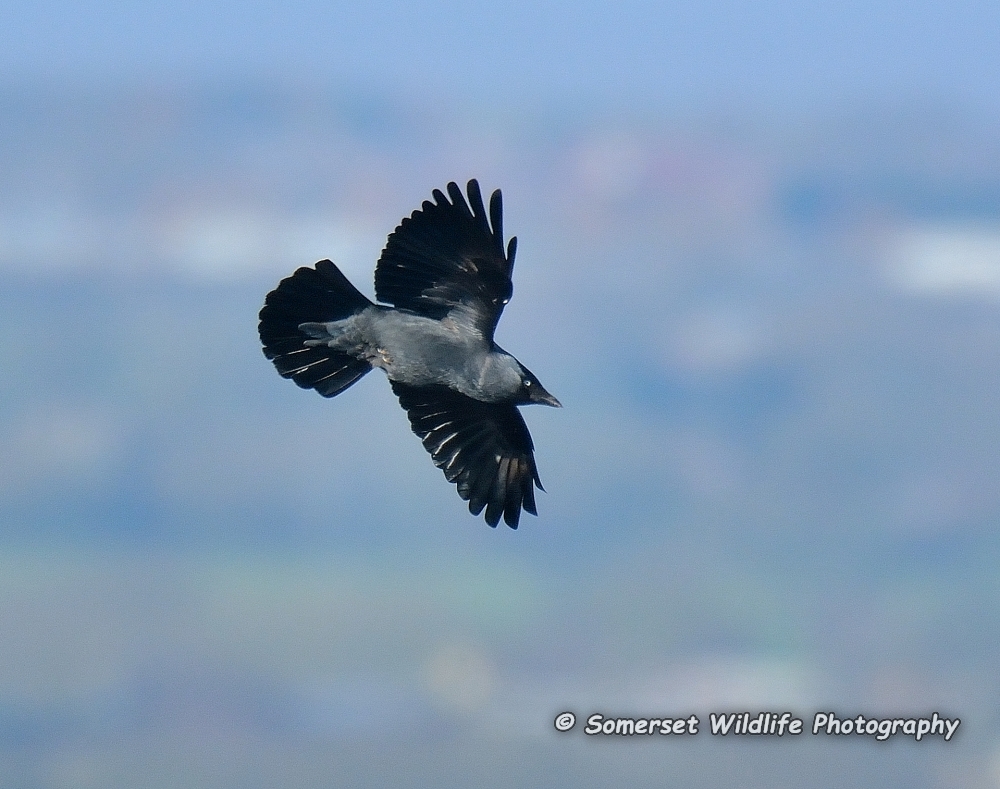
    Jackdaw Corvus monedula 2

    ‘Honk Honk’, the Ravens are also in full voice but beyond the trees and out of sight, a Buzzard calls high up on the thermals but again is as mystical as the Ravens.

    Over the stile, which is always a bit tricky with one false hip, but with no one watching, I take the chance and luckily land on both feet! I love this section now on top of the quarry or as kids forty years ago we would shout ‘On top of the world’! I pass the horses feeding and then I’m in the open field, but keeping close to the fence I can observe the Buddleia, Gorse and Hawthorn bushes that abound the top of the quarry and I strike gold! The February sun has bought out hordes of Bullfinches that are stripping the berries and seedheads.
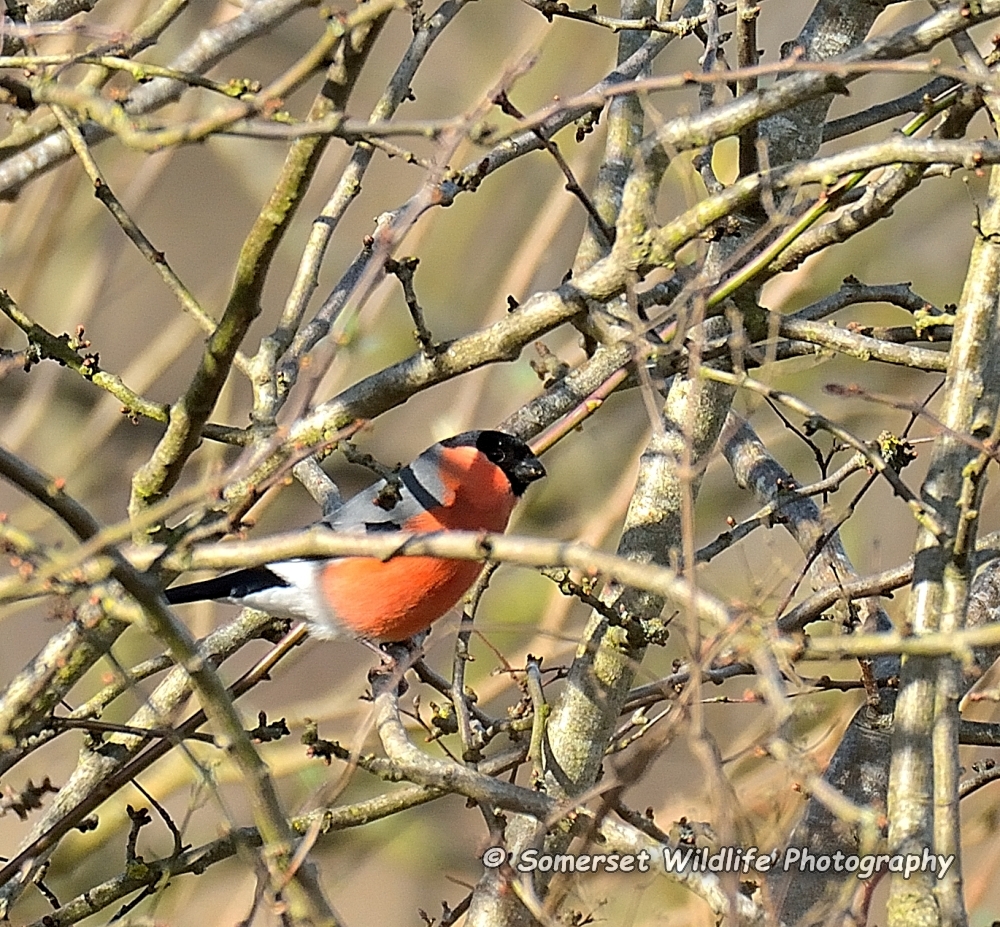
    Bullfinch Pyrrhula pyrrhula

    Although wearing camouflaged clothing and hat, I’m exposed here and only manage a couple of snaps before they take to the air like a squadron of RAF fighter jets with their pale rumps following them! I sit and wait to see if they will come back and I’m joined instead by another small flock of Goldcrest after the same seedheads. They ‘pose’ a little, just long enough for me to get a couple of slightly better snaps.
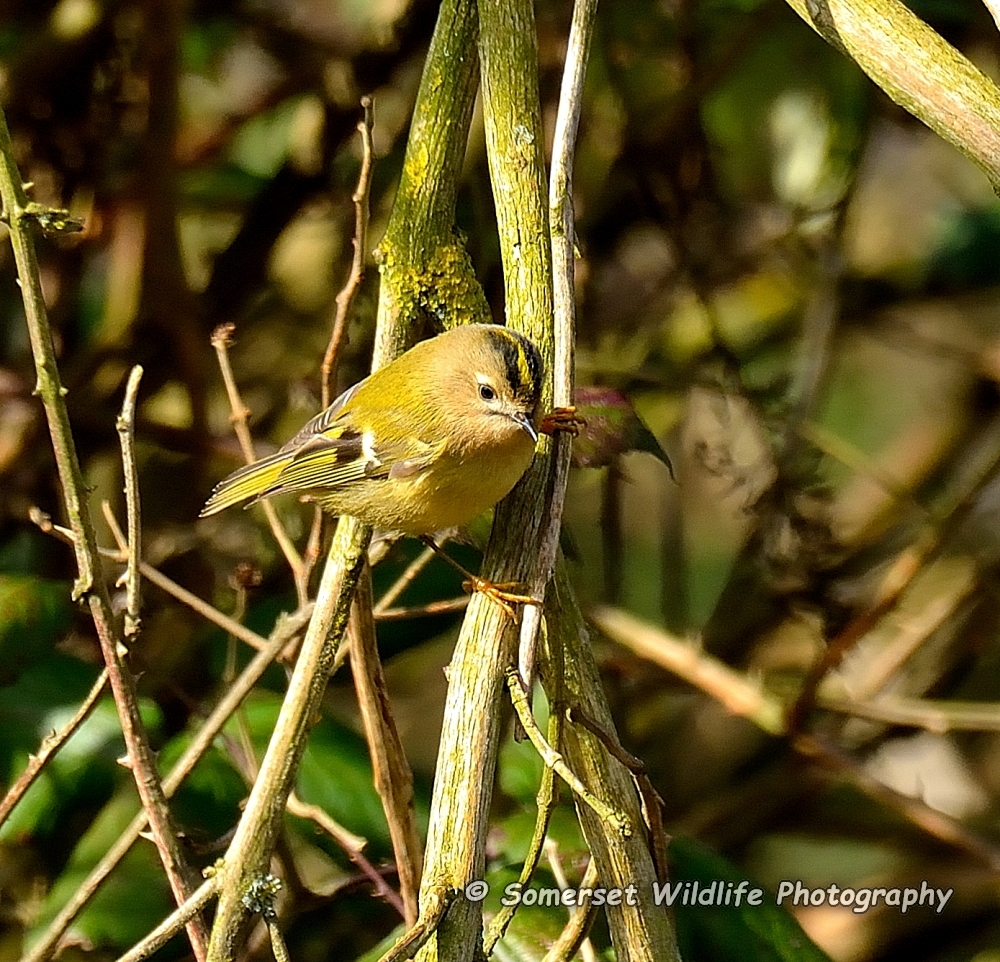
    Goldcrest Regulus regulus 4

    I spot some Fieldfare, a Wren and of course plenty more Finches and Tits before I turn around to head back, but something catches my eye and yes I’m right in full flight and flying with purpose a Peacock butterfly passes me heading in the opposite direction! This reminds me that I must come back here for butterflies this summer…
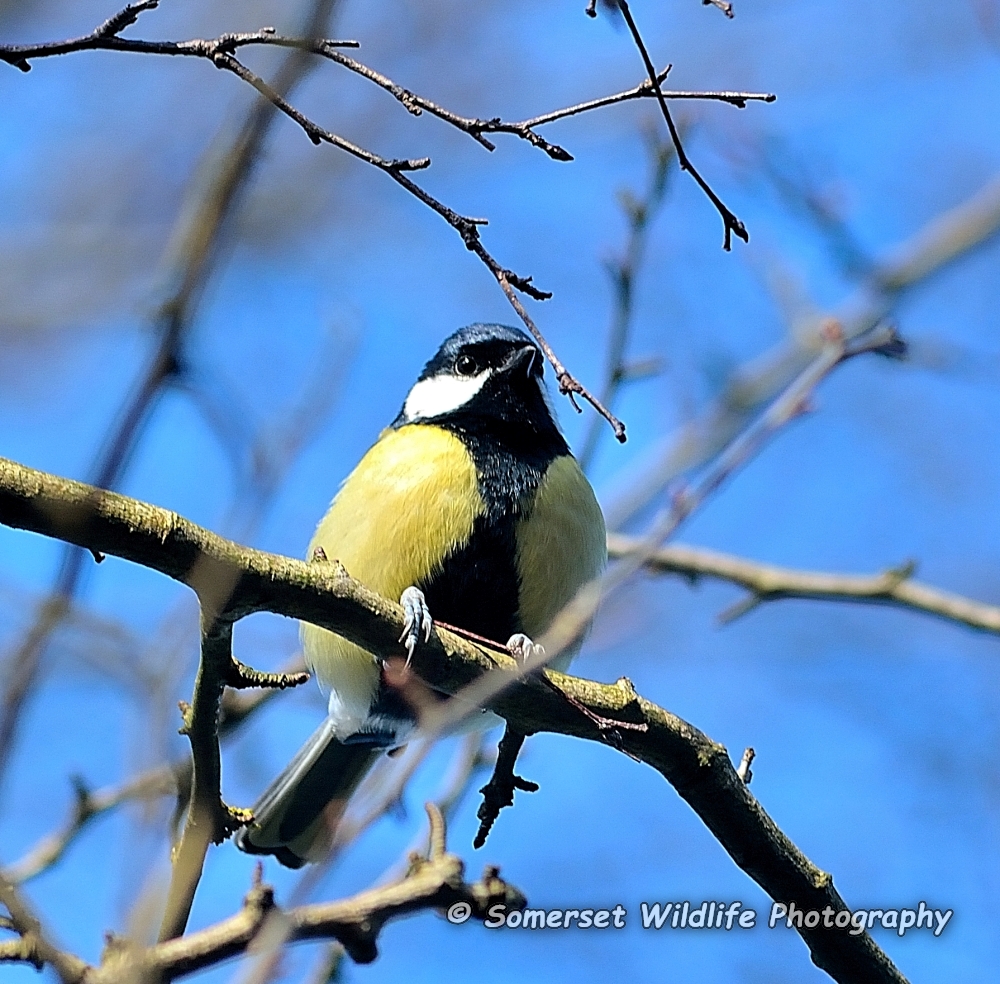
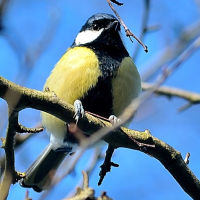
    Great Tit Parus major 2

    I wander back to the viewing platform and something is wrong! It’s quiet, ghostly quiet! One of those moments when in a horror film a ‘mad axeman’ might run out of the dark damp woods, but it’s clear and bright and the sun is causing me to pull the peak of my cap over my eyes…. and then there it is right in front of me! ‘Agggh I hadn’t expected that’ I exclaim as I wrestle with camera and binocular straps to get a shot at this beautiful predator and the reason why not a bird can be heard. The Peregrine must have been sitting up right under my nose and now it’s racing across the huge void of the quarry and I’m struggling to get focus on it or even keep my camera following it! I snap as many pictures as I can, I think I may have a blur that looks partially like a Peregrine but it’s proof if nothing else!
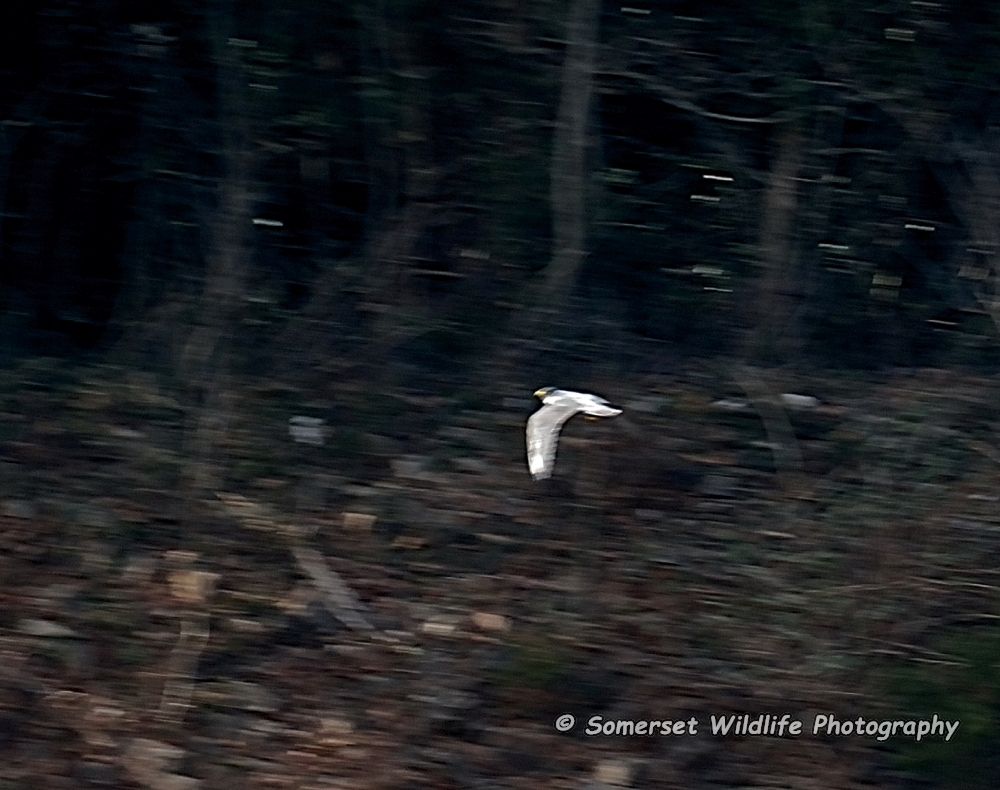
    Peregrine Falco peregrinus

    I wait to see if this magnificent bird will grace my presence again but realise that it’s fruitless when the Jackdaws go into overdrive and at full voice appear to come tumbling out of every tree. But the target of their excitement soon becomes clear as the huge Buzzard comes over my head, probably only twenty feet above me and now firmly in my sights.
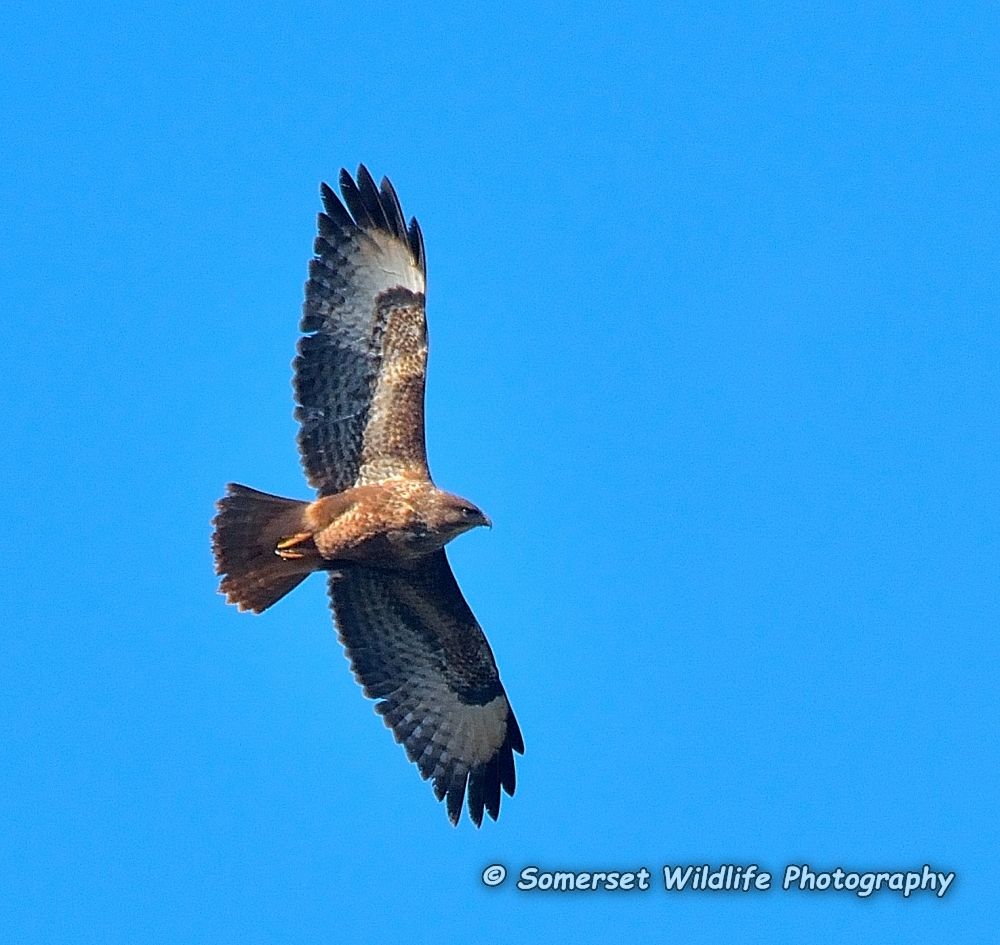
    Buzzard Buteo buteo 6

    Fulfilled and content, I stroll back across the coombe and back up into the Jubilee Wood Reserve and then take five minutes sitting on the wooden bench by the two ponds to have a sip of tea from my flask. The day has been so busy that I’m several hours in and haven’t thought to stop until now! As I sit there in the sun, a second Peacock butterfly flutters by as in a determined race as the previous one seen above the quarry. A real treat to see not one, but two, of these beautiful insects out in the February sun. Some rustling to my left alerts me to more company and this time it presents itself in the form of a beautiful brightly coloured Blue Tit, again so often overlooked but one of the first birds that we all learn as a child and one that should be admired along with the rest!
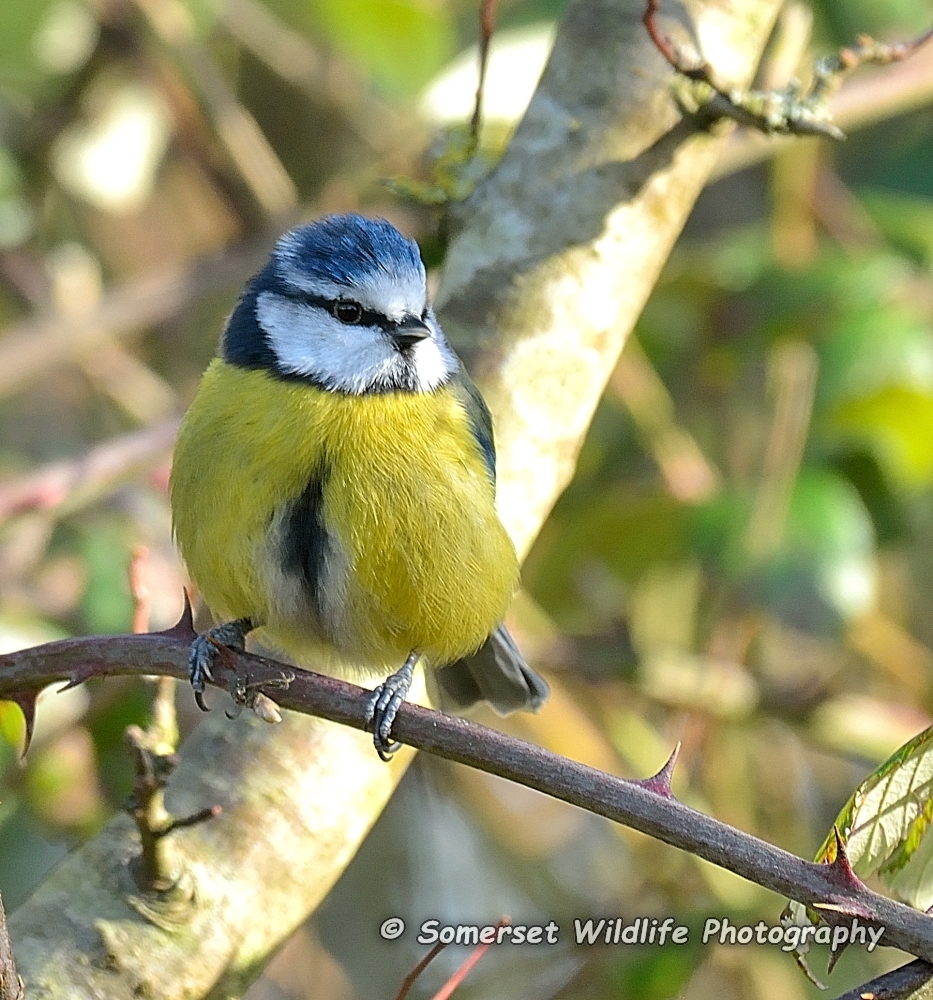
    Blue Tit Cyanistes caeruleus 2

    It really is time to go now and although I could stay here for several more hours easily, I have chores to do. I head back to the entrance of the reserve and I’m happy to see more Goldcrest and then in the top clearing I come across a family of Long-tailed Tits chattering away together. They always make me smile and it’s now that I realise what a tonic nature is, even when feeling ill or of low mood, the wonder of simple pleasures is unquestionable.

    I’m close to the gate and a Coal Tit darts across in front of me and finally I’m back at the car and it’s time for another quick brew before I leave this wonderful place. But of course I couldn’t leave without my new best friend ‘Mr Robin’ coming to wave me off!

    Many thanks to all at BET who have done a wonderful job saving what was my playground as a boy forty years ago. I truly enjoyed a wonderful day with easy access and lots to see! Great work, keep it up!

    All photographs courtesy of Colin Higgins and Somerset Wildlife Photography.
  • Gardening for Wildlife – Nov 2016

    Gardening for Wildlife – Nov 2016

    After the formal business of AGM on 12th November 2016, BET members were treated to a wonderful presentation by guest speaker Higgy – a local naturalist, wildlife photographer and life member of YACWAG. Higgy talked about the beautiful wildlife haven he has developed in his back garden in Yatton.

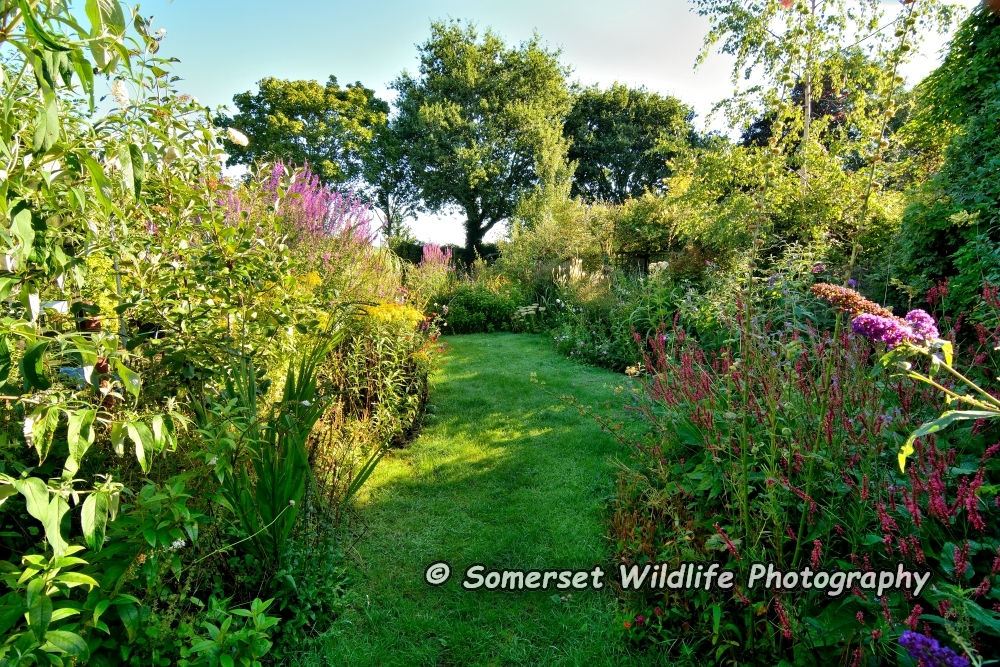
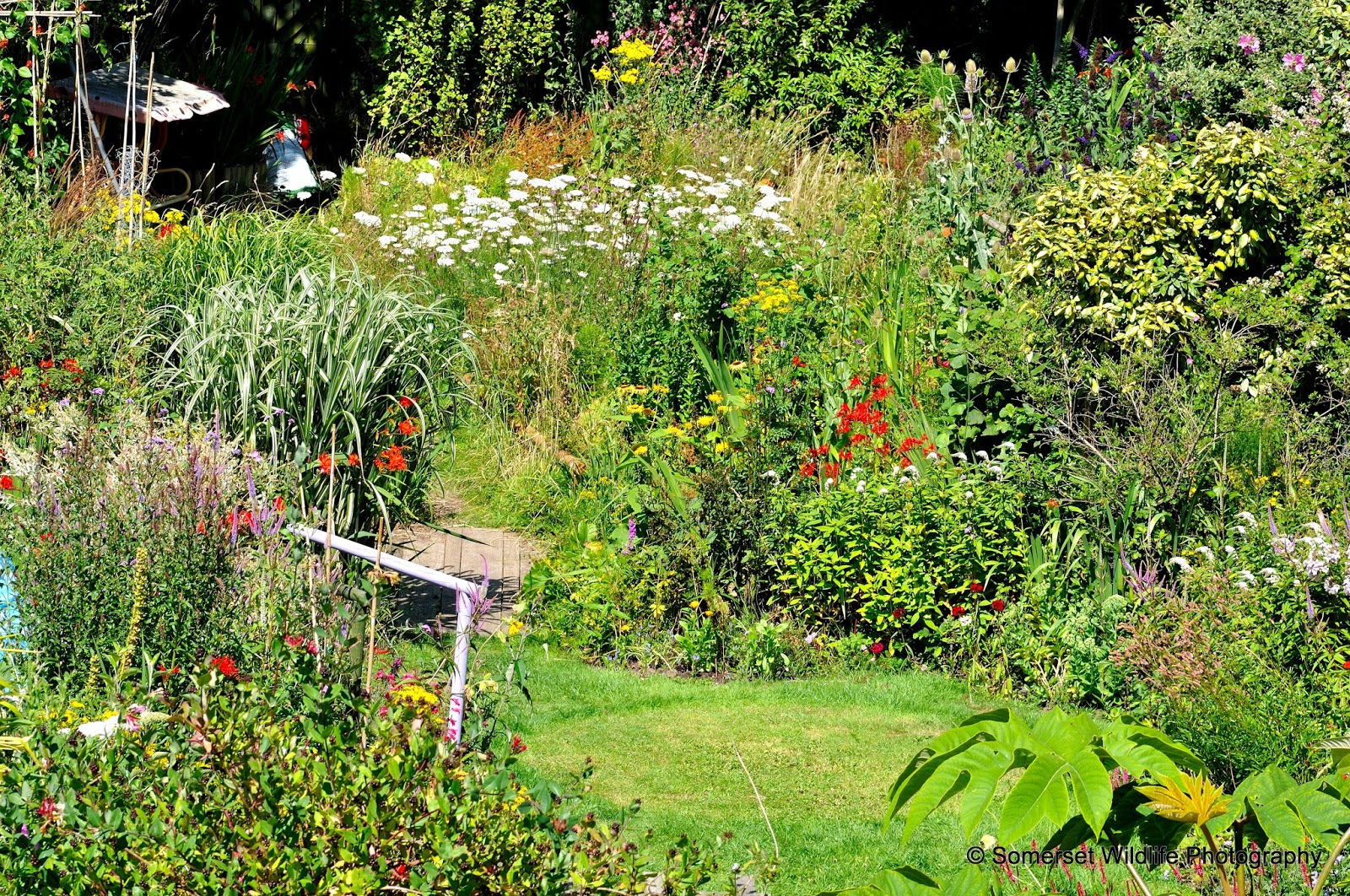
    Starting in 2010, Higgy has transformed a garden that was “basically boring and uninspiring” into an oasis that has been visited by 22 species of butterfly and 45 species of birds – and the BBC.

    Garden 3

    Garden 4

     Higgy explained how he went about incorporating each of the key elements needed by wildlife to flourish:

    • Water
    • Food
    • Shelter

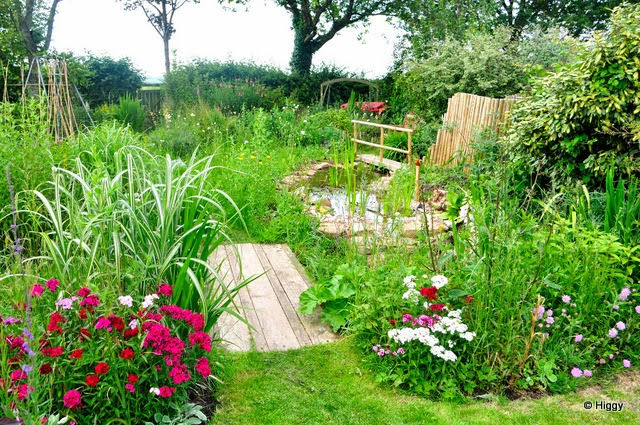
    Using recycled materials where possible (including an old bath) he has created 9 ponds, bridges, log-lined walkways, and of course beds planted with flowers carefully chosen for the wildlife they attract. He also had an objective to make the garden attractive and fun for the family and so has incorporated seating and play areas, to make a remarkable garden.

    Ponds

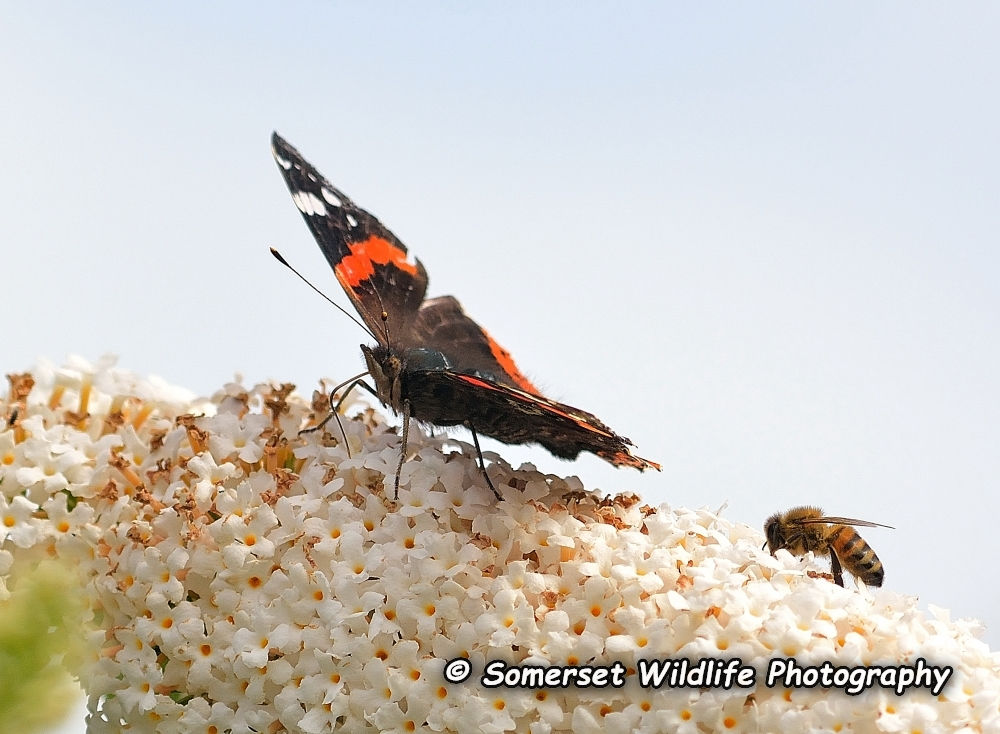
    Higgy’s presentation and story were accompanied by fantastic wildlife photos taken in his garden, like these:

    Red Admiral

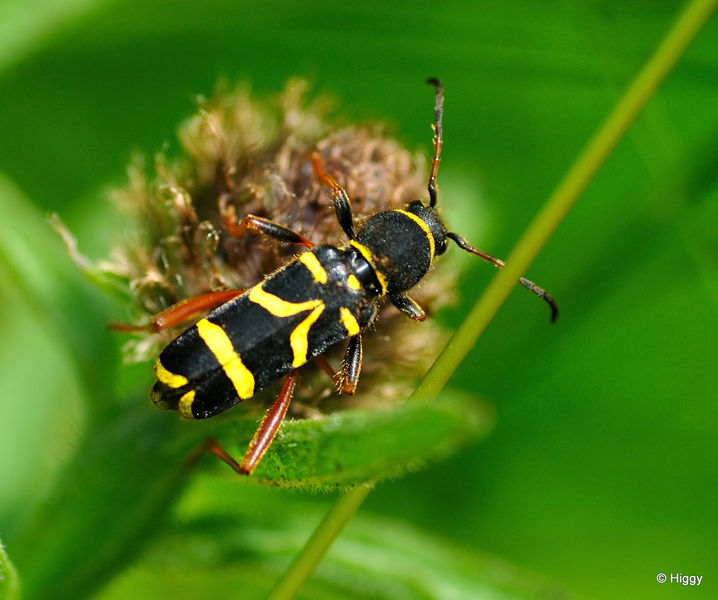
    wasp beetle

    The full story of the garden and more of Higgy’s amazing photos can be found on his Blog and Website:

    http://higgysgardenproject.blogspot.co.uk/

    http://www.somersetwildlifephotography.com/

    We are grateful to Higgy for such an impressive and inspiring talk and hope that our members are encouraged to follow his example, even in a small way.

    Peter Speight

    Trustee

  • Grass Identification Course

    Grass Identification Course

    Grass Identification Course – July 2016

    POACEAE (or GRAMINEAE) IDENTIFICATION COURSE

    Poaceae is a large family of monocotyledonous flowering plants to which most of us don’t give more than a passing glance. We might notice when the lawn needs trimming, or comment on the sweet smell of new mown hay but poaceae, or grasses, tend not to catch one’s eye like more brightly coloured ‘wild flowers’.

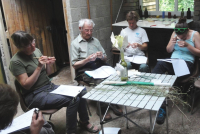
    When Tony Smith from the Bristol Naturalists’ Society visited the NEWT reserve at Moorend Spout to help with some plant surveying in June, he realised that several of us were struggling with identifying grasses and kindly offered to run a day course. This would be the first joint venture for the North Somerset Nature Net (NSNN), with attendees from YACWAG, NEWT and BET.   BET’s cabin would be the classroom, and on 11th July, after waving off the BET Monday morning work party, eight of us settled down for some serious study.

    Grass Course 480

    As the essential parts of grasses are so small and have a specialist vocabulary, Tony had brought along his ‘visual aids’ – large scale paper models showing the structure of grasses – and a training booklet which would enable us to key out the different families, and eventually to identify the grass in question.   Tony patiently guided us as, armed with hand lenses, we poured over samples and compared their ligules, lemmas, glumes and spikelets, and were introduced to other more prosaic technical terms such as ‘pink stripy pyjamas’. After lunch we ventured into the meadow for the challenge of some field work. Tony assured us that by following his training booklet, and with a little more practice we could all become proficient. To this end, he offered a follow-up day for more field work from which two of us were able to benefit.

    I shall certainly look at grasses differently in future and recognise that in a traditional meadow there are so many more species than the ubiquitous rye grass that so predominates in fields scalped for silage. The vernacular grass names are lovely – crested dog’s-tail, sweet vernal grass, timothy, yorkshire fog, cock’s foot, foxtail, to name but a few – though I do struggle with the Latin ones. (I know I should try harder with them as they do help to group families of grasses).

    It was a very useful day and we are most grateful to Tony Smith for giving so generously of his time.

    Carrie Riches


  • Spring Bird Walk – April 2016

    Spring Bird Walk – April 2016

    Spring Bird Walk – April 2016

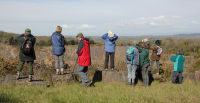
    On Saturday 30th April, Trevor Riddle, with John Croxton, (both from YACWAG) led a walk to help us to identify birds on our reserves by their song.  As the canopy thickens with new leaves, it is quite difficult to see birds amongst the trees and, in the open, they fly so very fast!  However, their presence can be indicated by their song, if one can recognise it but, as most have a song, an alarm call and contact calls, it is quite challenging as many seem so similar.

    Bir walk 480

    While some such as the chiffchaff are quite unmistakable, others such as the great tit have a confusingly wide range of songs or calls.   At this time of year it is further complicated by the calls of baby birds!  In the lower part of Jubilee Stone Wood we know that there are often nuthatch so we watched and waited until we finally heard the one calling. Frustratingly we didn’t actually see it as they are such smart looking birds, but Trevor confirmed that it was definitely a nuthatch.

     I was hoping that we would hear or see marsh tits as we know they have nested on the reserves but we were not that lucky, nor did we spot any treecreepers. We did hear the slightly wistful song of the robin, the explosive energy of the wren and lots of chaffinches, chiffchaffs, tits and glorious blackcaps.

     Trevor and John were very patient with us but we all concluded that we definitely need more practice!  The most satisfying way is to visually identify a bird, then watch the beak move as it sings and try to remember the sound!    It was a lovely sunny morning to be out and we enjoyed the increasing numbers of spring flowers as well as the birds. Trevor and John were very complimentary about the management of the reserves and hope that as insects proliferate in the various habitats, so will the birds.


    We are most grateful to Trevor and John for sharing their expertise and time.

    More photos can be seen in our album: https://flic.kr/s/aHskzm2LHR

    Carrie Riches


  • Walling – 2015

    Walling – 2015

    Dry Stone Walling – Summer 2015

    This summer, BET’s volunteers rebuilt the old dry stone wall at the top of Jubilee Stone Wood, next to the car park entrance.

    This is one of the remaining sections of wall which ran the whole length of Cheston Coombe lane but most of which has collapsed and disappeared.

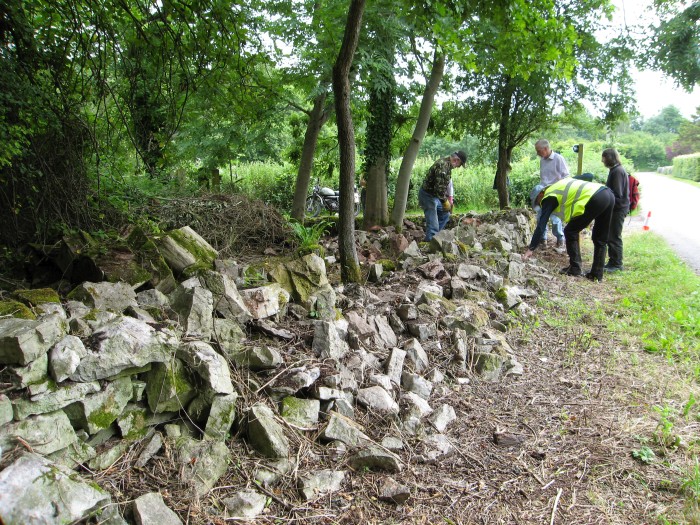
    There were signs that this stretch had been rebuilt in the past but it was in a very sorry state and had a lot of rubbish dumped along it.  We decided that the JSW reserve warranted a smarter entrance and so over a couple of months our dedicated volunteers applied their skills on Monday mornings and tackled the rebuilding.

    wall before sm

    After a couple of sessions just clearing away the debris and removing tree roots, we took most of the wall down to ground level and reset some of the bottom foundation stones.

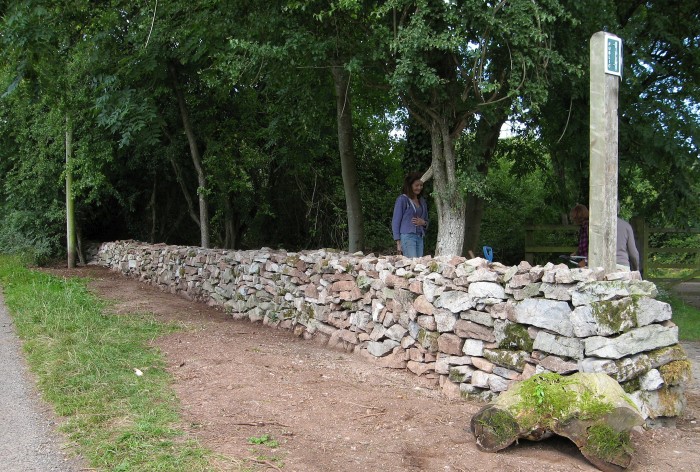
    Then the fun began – rebuilding the wall stone by stone.  This can be a frustrating job as the stones are never quite the right shape!  But under the guidance of our more experienced wallers, week-by-week the wall rose until we had used up all the available stone.

    wall after sm

    Lots more photos of the progress and magnificent final result can be seen in this album.

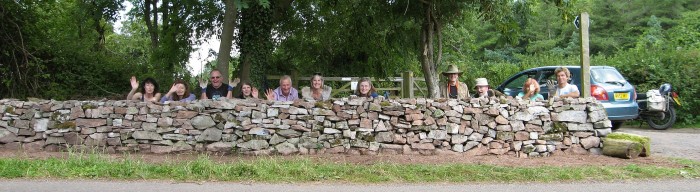
    Hopefully the wall will survive for many years and will be admired by passers-by and re-inhabited by local wildlife – like the slow worm in the photos we encountered between the stones!

    wall vols sm

  • Family Wildlife Event – June 2015

    Family Wildlife Event – June 2015

    Wildlife Event – 5th/6thJune 2015 

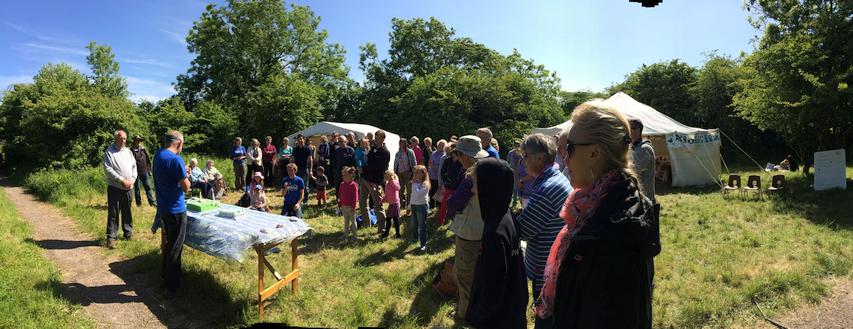
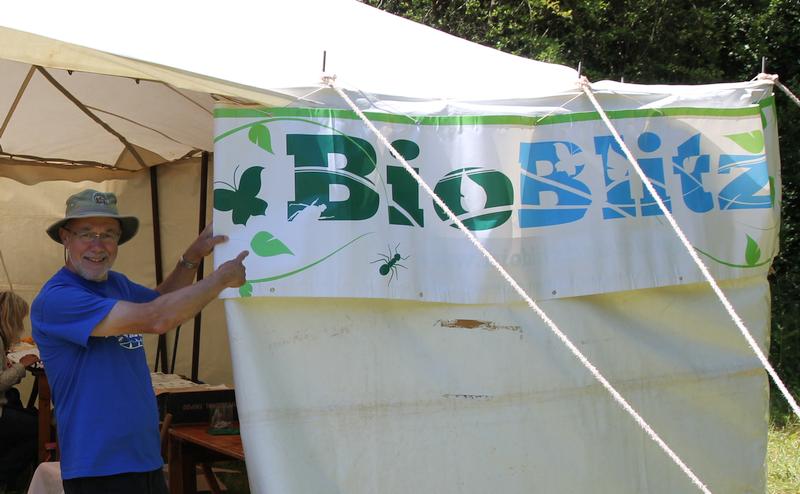
    After several months of planning, BET hosted a most successful two-day wildlife event and Bioblitz in our woodland reserves. The event had been well publicised via flyers, local newspapers and social media. The good weather helped to make sure we had good attendance from existing members as well as attracting new families and visitors.

    We were also very fortunate to have the support of a team of brilliant nature experts who shared their knowledge in such an enthusiastic and informative way. We had over 200 visitors and everyone went away buzzing with excitement at what they had seen and learned!

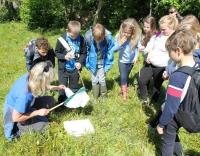
    The event started on the Friday and over 100 schoolchildren from Backwell Junior School came for walks, pond-dipping and bug-hunting. The experts really brought the woods to life for the youngsters.

    IMG 7093 sm

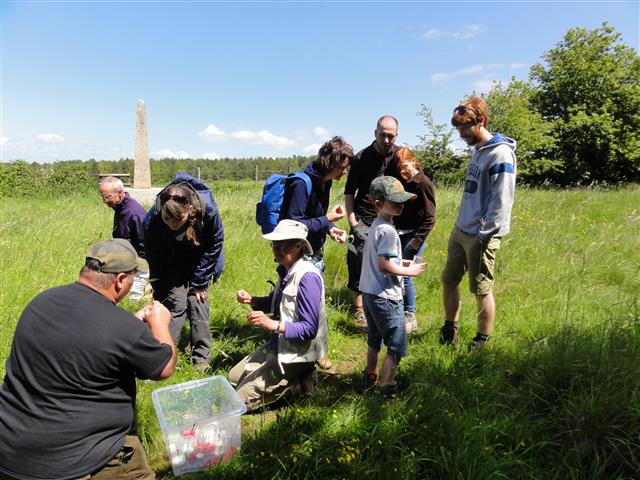
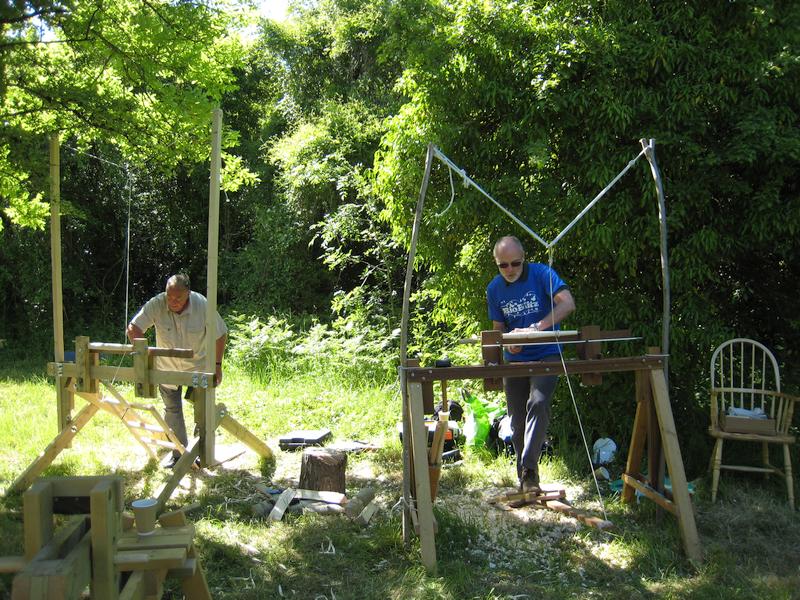
    On the Saturday over 100 more people of all ages came for a programme of nature walks, bird-spotting, more bug-hunting, pond-dipping, etc, plus children’s activities (colouring, badge-making, etc) and rural crafts, notably green woodwork and pole-lathe turning.

    DSC06220 SmallIMG 3537 sm

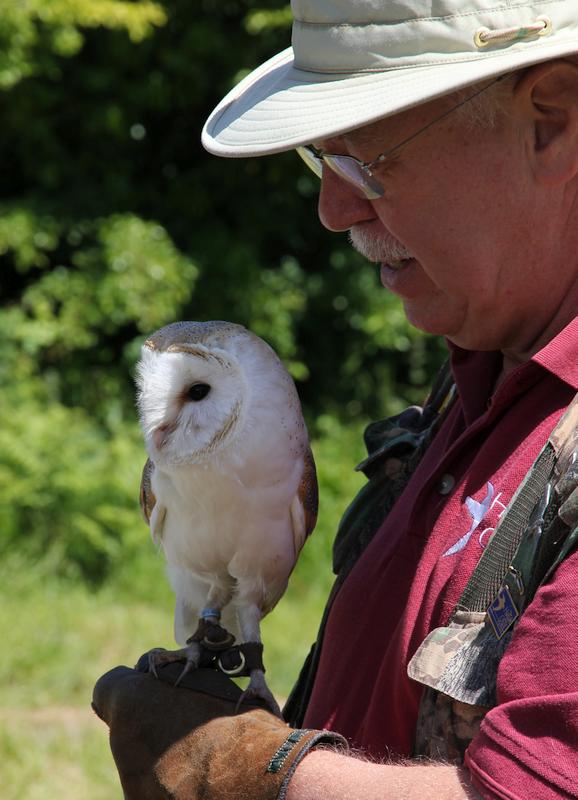
    Other attractions included a Barn Owl, a Tawny Owl, a Kestrel and four Kestrel chicks (which everybody loved) plus musicians and displays about local wildlife.

    IMG 7114 sm

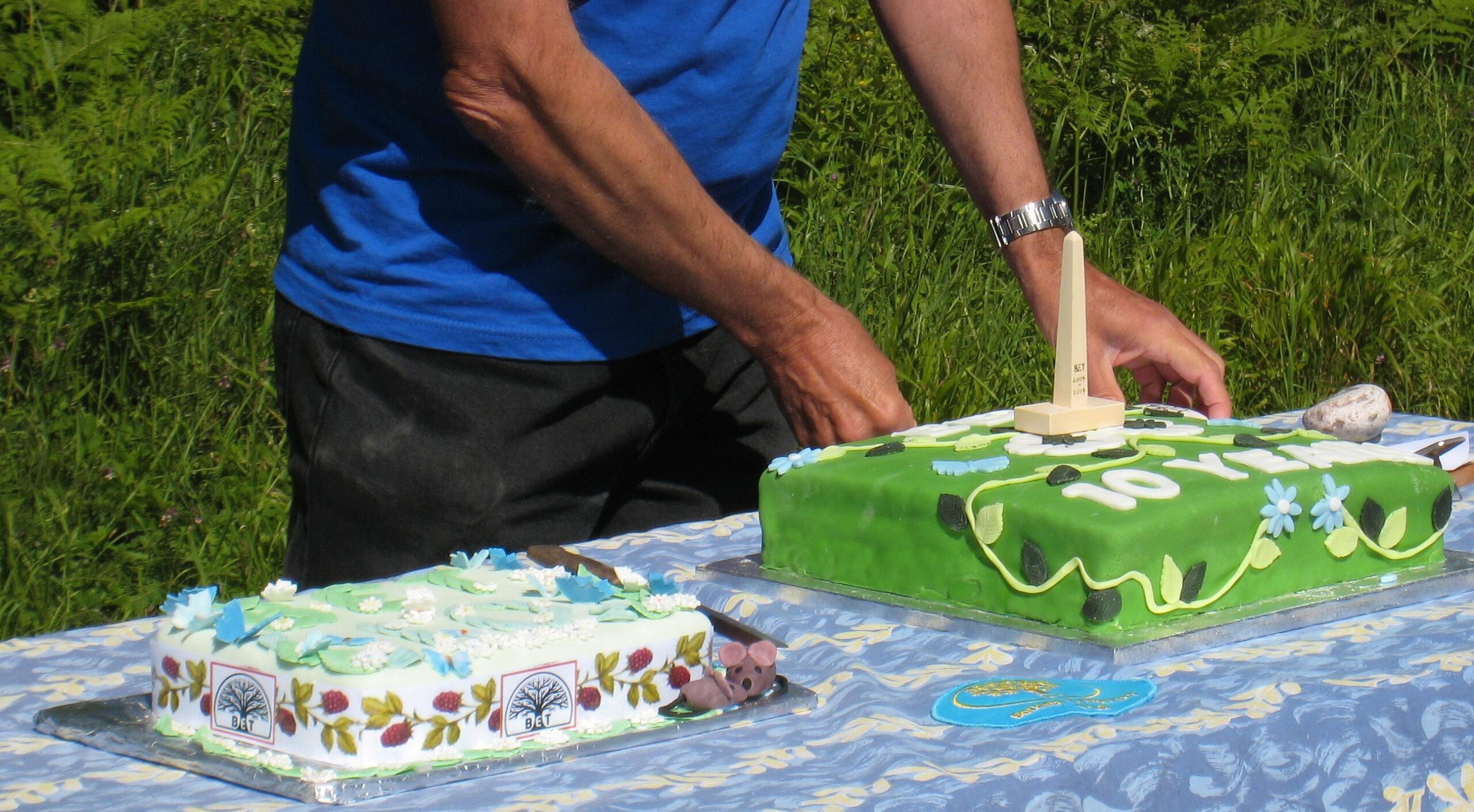
    One aim of the event had been to celebrate BET’s tenth anniversary – and this was achieved with a lot of tea and cakes, including two specially-made birthday cakes.

    IMG 3545 edIMG 2708 sm

    Underpinning the event was a Bioblitz with the nature experts identifying over 400 different species (plants, mammals, invertebrates) on the Backwell site, ranging from the huge (oak trees) to the impressive (peregrine falcons, buzzards) to the very small and quite unusual (24-spot ladybird, ‘pseudo scorpion’ and flea sedge). The full list of species, which has since been added to over recent months, can be found here:Nature and Wildlife menu

    IMG 7107 sm 

    We would like to thank all the experts and helpers over the two days, plus the Backwell Scouts for the loan of the marquees and other equipment.

    You can see lots more photos of the event here:  Album

    Event sub-committee:
    Carrie Riches
    Martin Brasher
    Peter Speight
    Ian Chambers

  • Family Wildlife Celebration

    Family Wildlife Celebration

    BET’s Big Wildlife Event – June 2015

    BET’s family wildlife event and Bioblitz to celebrate our first ten years was a fantastic success and enjoyed by over 200 visitors!


     Read more:  Wildlife Event – June 2015

  • Opening Celebrations – Oct 2014

    Opening Celebrations – Oct 2014

    Opening Celebrations –  October 2014

    On Sunday 22nd October, BET Members joined in celebrating the completion of two big projects by our volunteers over the past two years.

    To start with, 25 Members and friends walked along the newly constructed Geology Trail in Badgers Wood. This path was built above the Fern Way with the aim of giving visitors access to the upper slopes and dramatic limestone cliffs along the ridge above Cheston Combe. Tricky sections of the steep terrain had presented some significant engineering challenges for our volunteers, but well-camouflaged ironwork and buttresses have resulted in an exciting yet safe walk through the woods. Everyone enjoyed the excursion and the information provided by BET trustees and local geologist Richard Kefford. Richard is a member of the Avon RIGS Group, and talked about the formation and evolution of the limestone landscape and crags and other features.

    Gradually we made our way down to the newly refurbished BET Cabin to enjoy ample tea and cakes! A total of 35 people admired the amazing transformation which has been achieved by some very dedicated and skilled volunteers. The result is a dry, light and roomy base for BET events like this one. Photos of BET’s work and a display of Richard’s fossils helped to make a very informative and enjoyable gathering.

    {loadposition WOWCelebs}


    Both projects are now very much open for business!

    More photos and videos taken during the projects can be found here:


    Peter Speight


  • Winter Walk – Feb 2015

    Winter Walk – Feb 2015

    Winter Walk – February 2015

    On 15th February, Bill Charnock led 20 BET Members on a ramble from Backwell Woods to National Trust Tyntesfield.

    The route headed down to the Land Yeo, passing by Watercress Farm and onto the Victorian Bathing Pond which was constructed around 1890 and is 5 feet deep at one end.  After climbing up to Tyntesfield, the group had a rest for lunch and then bodgers Peter and Ted gave an overview of Windsor chairmaking at the bodgers barn.

    The path down to Wraxall and Backwell Common was exceedingly muddy but the intrepid walkers survived and agreed the outing had been most enjoyable and informative.


    {loadposition WOWTyntes}


     Peter Speight


  • Archaeology Walk – July 2014

    Archaeology Walk – July 2014

    Archaeology Walk –  July 2014

    On Sunday 13th July, BET held an Archaeology Walk through its woods, and after meeting by St Andrews Church, our group of 12 interested walkers set off up the ancient holloway path through the Jubilee Stone woods.  We paused by the 2 big mounds almost touching each other, which local tradition assumes to be mining mounds, but there are no mine shafts nearby, and their shape is not that of a tip.  It is just possible they may be 2 intact Bronze Age barrows, similar to the 4 higher up on the hillside, which have almost been ploughed away.

    We then walked up the path to the Jubilee Stone, a large granite obelisk built in 1897 to commemorate Queen Victoria’s Diamond Jubilee, which is surrounded by a small meadow of long grasses and wild flowers, and was alive with colourful butterflies.  Once over the stile, there in the field were the 4 barrows, possibly up to 4,000 years old, though they are barely visible, apart from the largest one 30 feet in diameter, which was described by Reverend George Masters of Flax Bourton in 1898 as ‘… a cup or basin inverted in its saucer’.  He dug into it looking for grave goods (treasure!), but all he found was a pavement of flat stones 2 feet down, covering modern (19th century) pottery sherds, clay pipes and animal bones, which he called ‘a puzzle’.

    After admiring the views across the valley, we moved on to the Warrener’s Cottage, lived in until 1843, the Warrener being an important person who looked after the ‘pillow mounds’ or ‘rabbit bury’ – low grassy mounds from 25 feet to several hundred feet long, and between 6 and 20 feet wide –  where rabbits were bred, for both food and fur.  He also kept predators like stoats, and badgers away, and the inevitable poachers who were always around.  All that remains of the Cottage now are low foundations of stone and soil, and tumbled-down outbuildings, whereas the next site we visited – BET’s limekiln, has been excavated and mostly restored.

    Small limekilns were once an essential part of life, used to convert limestone (calcium carbonate) into quicklime (calcium oxide), this one being built between 1843 and 1884, the internal part being lined with Nailsea pennant sandstone.  Limekilns were so important because from them was produced lime mortar used in building, whitewash/limewash waterproofing paint for houses and barns, and it was also spread on the fields as slaked lime which not only helped ‘sweeten’ acid soils, but also enabled better crops to grow.  They were not so good for tramps, however, as many were suffocated by noxious fumes when they sought a warm place to spend the night. BET’s limekiln went out of use between 1884 and 1902.

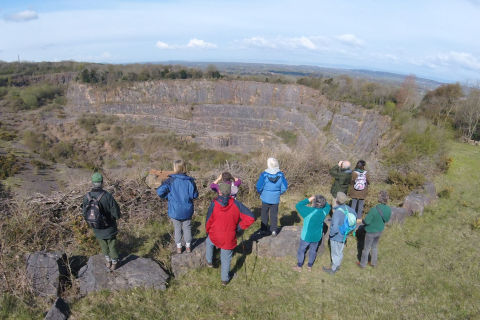
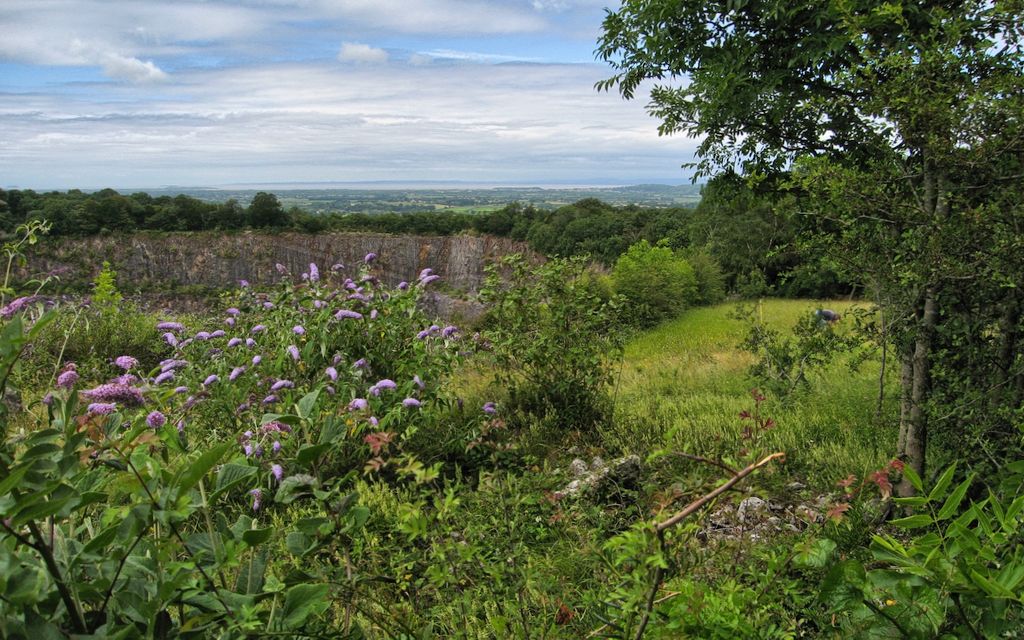
    Then we crossed Cheston Combe road to our lookout point in Badgers Wood to pause for a very welcome cup of tea/coffee and biscuits, and admired the spectacular views across the Estuary towards distant Wales.

    Quarry View

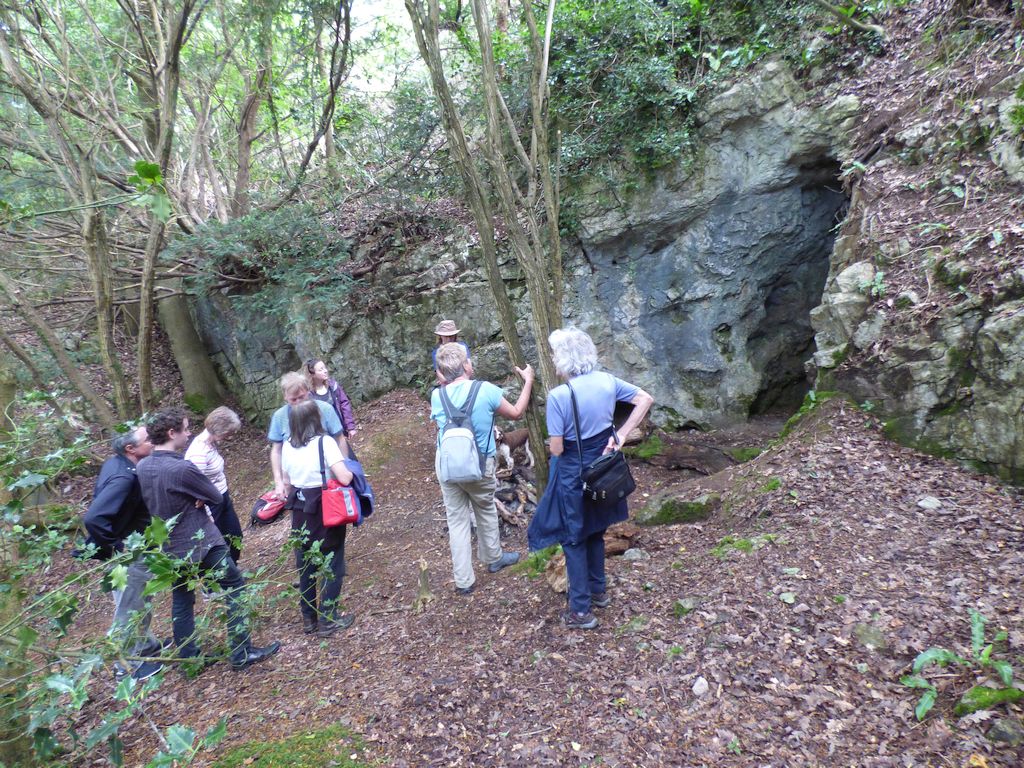
    Much refreshed, we made our way down the path towards the Burial Cave at the bottom of the hill.  In ancient times a stream flowed over the calcite-covered rock surface of the Cave, giving it an almost mysterious appearance, hence it was thought of as a sacred site. 


    Back in 1936, when human bones were found by quarrymen digging it out (for calcite for spreading on paths), Professor Tratman excavated what was left, and believed there were 18-30 people buried there, including 3 children.  Two skulls were found including one with a large depressed fracture, maybe caused by an axe, and several jawbones still with teeth.  Although most of the bones were lost when the University of Bristol Spelaeological Society Museum was bombed in the War, radio carbon dating on 2 vertebrae shows they are 5,000 years old from the Neolithic period, much older than previously thought.

    For photographs and more information about the finds, please see this BET article: Backwell Cave

    This was the last place we visited on our walk, and then slowly made our way back down to the Church, very pleased that everyone said they had enjoyed themselves, and learned more about Backwell’s archaeology, and the people who had lived, worked and been buried on the hillside all those years ago.


    Jenny Greenslade