Friday 7th August 2026
Butterflies and the heatwave….
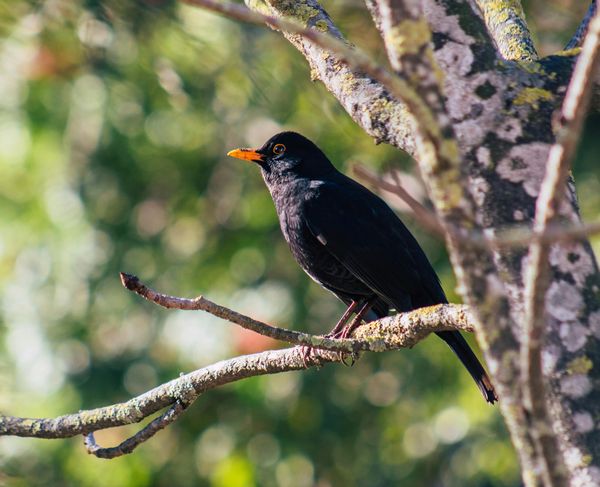
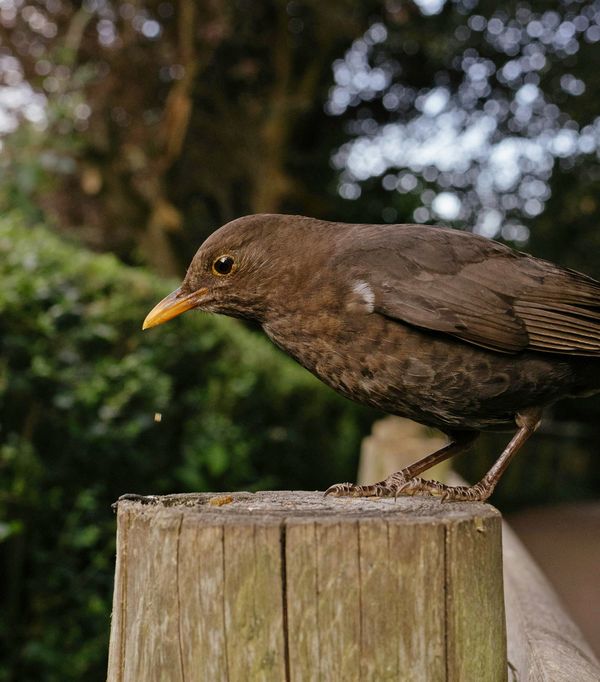
Goodness what a challenging summer we are having. Sitting here, in the BET woods, close to the Jubilee Stone, I can see the brown, dry grass, the limp ferns, the trees that are struggling to keep hold of their leaves and the dried up flowers. As I walked up here I could hear the sound of the blackbirds rummaging desperately in amongst the dry leaves for grubs – no chance of a worm for them for weeks. Then the weak chatter of blue tits who are conserving their energy with the heat and reduced availability of water. There are also the signs throughout the meadows of badgers digging in amongst the anthills for a sparse meal. Those of us who love the woods and the wildlife therein are so terribly sad at the sight of it just now and are praying for any sign of rain.
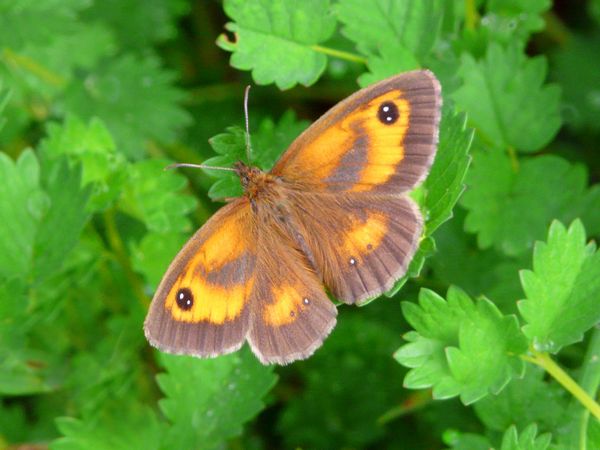
But all is not lost as we remember how amazingly resilient nature can be. Time and time again I have written about the cold or hot weather that appears to us, comfy enough in our homes, to be unliveable for wildlife. Yet somehow nature survives and, in some cases, thrives. That is why I’m writing now to celebrate the amazing results from this year’s butterfly surveys.
To return to last year initially – which seems an age ago – the survey year began with a wet and windy spring, with just snatches of warmth. Then, suddenly, summer broke through in June and we had real heat and good records of butterflies. At our peak we counted 308 mid June, which at that time felt like a healthy number for our ever-improving meadows. Ringlets suffered as the wet weather came just when they were due to emerge, but most other species held their own.
However our concern centred on the lifecycle of the butterfly and whether the eggs, caterpillars or chrysalises (the other 3 stages in a butterfly’s lifecycle) would survive this up and down weather which seems to be becoming the norm. So we waited with curiosity for this year in the hope that it would be a temperate year and allow nature to thrive rather than struggle.
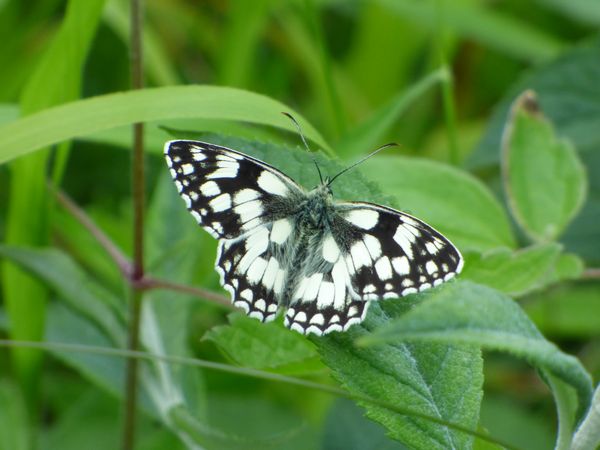
What we couldn’t have expected, and would have dreaded, was a 2026 that would be one of the hottest and driest summers on record. And whilst we have some weeks to go yet before the end of our surveys, which run from March to the end of September, the results have been startling. First off the signs were not good. The spring was wet and cold again and we started June having only managed 4 surveys due to the weather. We were concerned. The over-wintering butterflies would have had a late start and be struggling without food, the chrysalises would be needing to emerge but there was nothing but rain on offer. 2 hours of surveying in May gave us a handful of Brimstones, Speckled Woods, some struggling Small Whites, and some Holly Blues. Then the sun came out at the end of June again and we cheered. The temperature shot up and our count went from 26 butterflies on the 29th May to an amazing 370 mid June. Meadow Browns and Ringlets filled the meadows and Marbled Whites appeared at every turn.
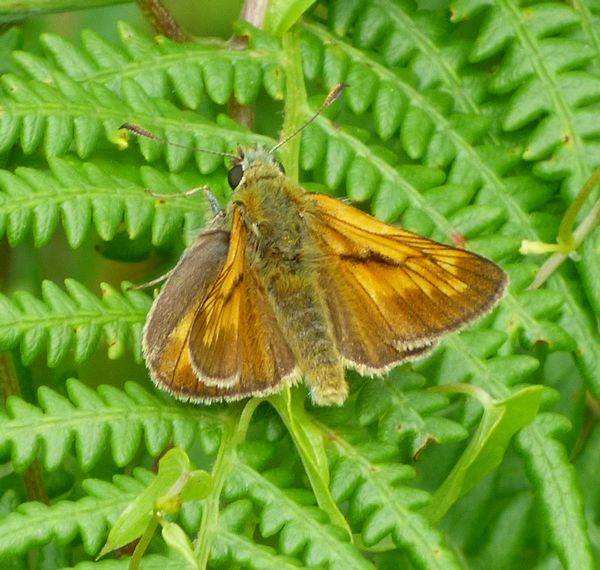
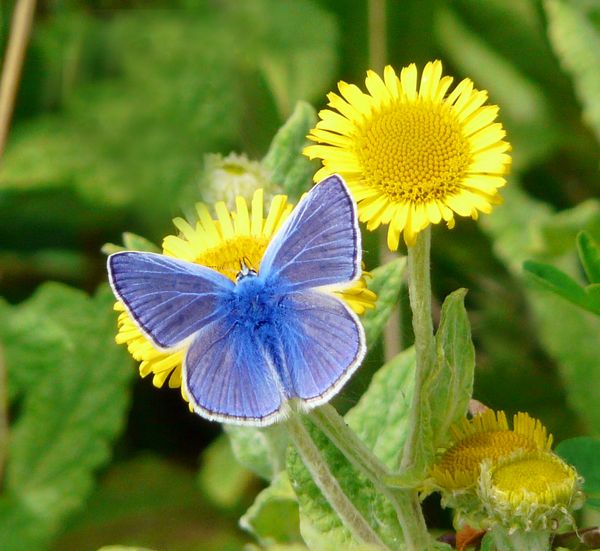
Skippers did their best to avoid identification and Red Admirals sat comfortably on the early Buddleia. On the 26th June, with temperatures at a high of 26C (or so we hoped), we counted (exhaustedly) an amazing 946 butterflies. But it didn’t stop there. Our weekly totals in July exceeded 400 each time as the drought and the heatwaves came and went. No water was to be seen and the plants throughout the wood were wilting and dry and yet ‘freshly minted’, as I like to call them, butterflies were still emerging for us to count. Gorgeous and new soft brown Speckled Woods dancing in the sunlight, unusually large and beautifully orange Gatekeepers and startlingly high numbers of Common Blues both hanging out, and bickering, on the remaining Marjoram.
With a fifth heatwave almost upon us and an official drought in North Somerset, environmentalists are now very concerned about the ability of the butterfly eggs to be safe on the wilting plants, or the voraciously hungry caterpillars finding suitable food to eat in order to get chunky enough to be ready to pupate. Then they need to find safe places amongst the dead and dying foliage to hang out for the winter. It is a genuine concern and we all desperately hope that we do get more rain in the forecast before too long. In the meantime, Ian and I will continue to count and be amazed and hopeful about how resilient these stunning little creatures can be.
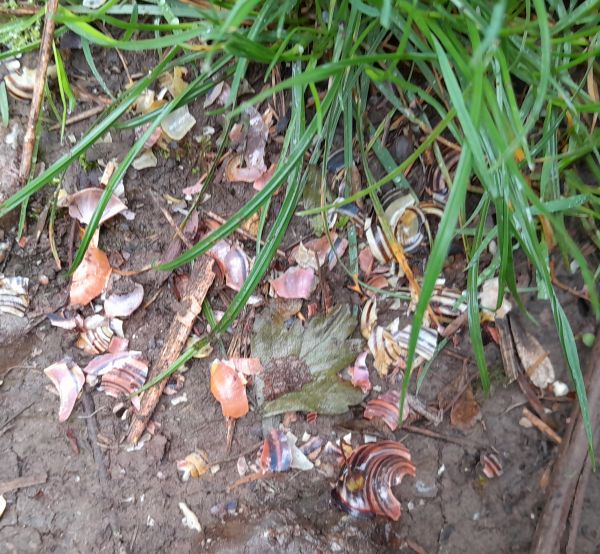
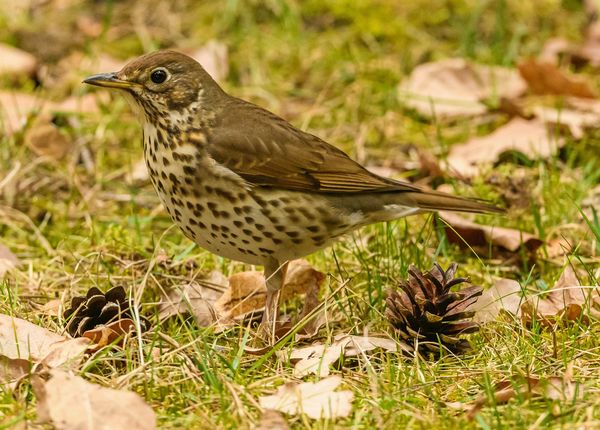 Which brings us to the lovely Song Thrush – whose beautifully tuneful song is a highlight of these woods. It just so happens that one of the favourite meals of the Song Thrush is a snail and they are well known for using any handy rock or tree root as an anvil, to bash the poor snail left and right until the shell falls away and the succulent meal is ready to eat. It is no coincidence that there has been a notable increase in Song Thrush numbers this spring but I really can’t say whether more snails has meant more Song Thrushes or the other way around. But one thing I did want to investigate is whether Song Thrushes are the only thrushes that do this. Blackbirds, which have a very similar song to the Song Thrush but with much less repetition, are also in the Thrush family and we also have very good numbers of these. The male blackbirds standing off to one another in the daftest of places – middle of the road, on busy paths or half way up a tree – are proof that fighting for territory or for a female is a busy Blackbird activity in BET woodlands this year. So do our good numbers of Blackbirds add to the numbers of snail shells on the path? Well, the BBC Wildlife Magazine is definitive on this. They say that, almost always, it’s just a Song Thrush thing. Blackbirds sometimes try but without the same success – so Blackbirds tend to go for the snails that can be prised open instead. So there we have it – without Song Thrushes we wouldn’t have our Crunchy Nut flakes footpath.
 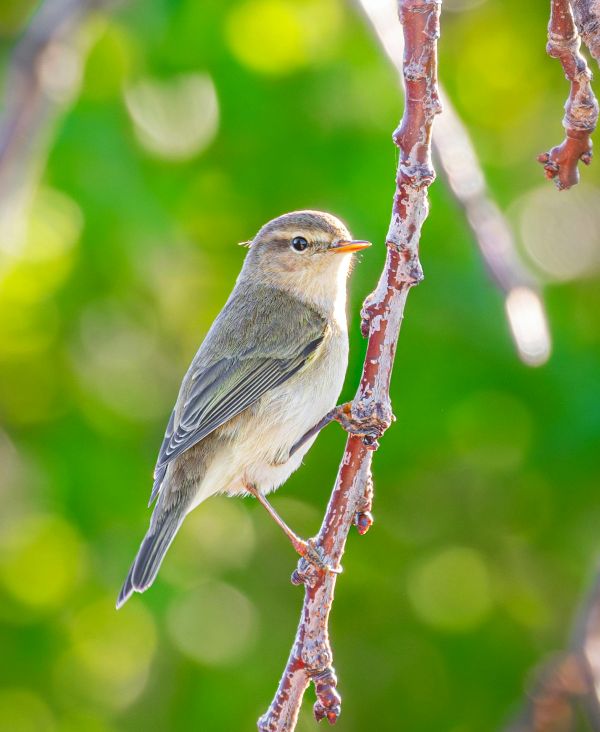 In this case you need to head in the opposite direction to the Snail Trail, down the rocky path. As soon as you have gone 20 or so paces from the Jubilee Stone you may be lucky to hear a song which is very similar to a Blackcap but just isn’t quite. In fact the Willow Warbler has a particularly cascading fluty song which has been ringing out from this position for over a month now. I’m excited to wonder whether there is any chance of breeding in the woods as this is not a regular visitor for us. Despite their name they do apparently like woodland and scrub so there is definitely hope. Plus Warblers are known for singing even in the midst of breeding. If you are lucky to spot the shy Willow Warbler (which we haven’t yet) then it will have a very similar appearance to a Chiff Chaff, including the supercilium (stripe above the eye), the olive-green colour and the small size and brisk flitting movement. So it is often only the song which allows us to tell them apart. I loved this comment from Google : ‘If it says its name and flips its tail, it’s a Chiffchaff; if it sings a sweet, falling song and has pale legs, it’s a Willow Warbler’.

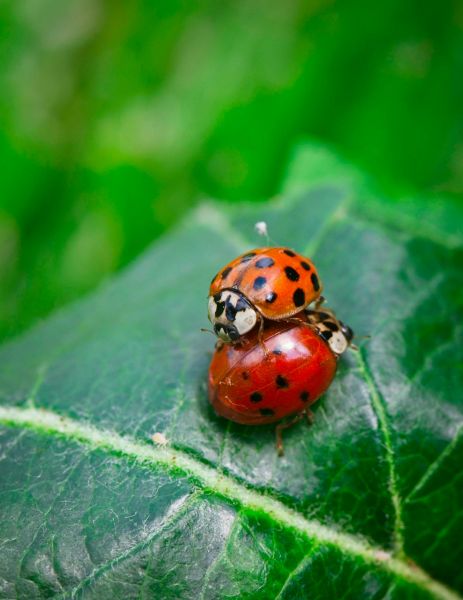

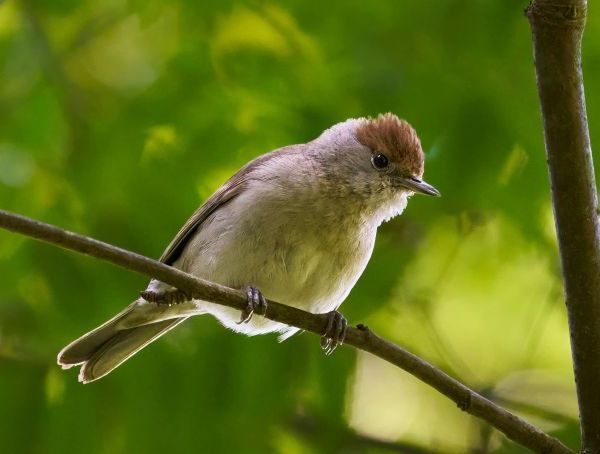 A grey warbler they get their name from the head of the male, which is black, whilst the female has a dark brown cap. They are medium sized and nest in hedges or brambles. At this time of year the males sing out loud and strong to protect territory and/or to attract a mate. However the females sing too, for similar reasons, with a song that is quieter and less complex.
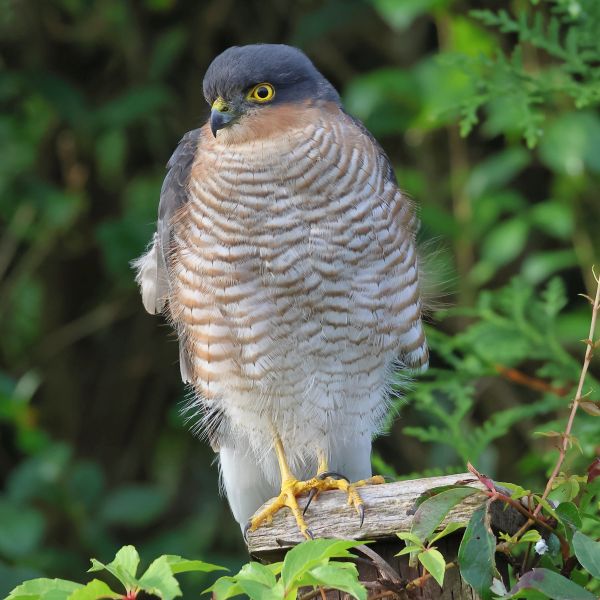 A beautiful bird, the male has a bluish grey back and wings and orangey brown stripes on his chest. The female is similar but is more predominantly brown. Like all birds of prey the females are larger than the males. Sparrowhawks enjoy gardens meals too, so we can all be fortunate enough to see one if you have an open garden with an active bird population.