Category: Bird Blogs

  • 14th June 2024

    14th June 2024

    Friday 14th June 2 p.m.

    Not just birds but butterflies too! Follow Viv on one of her weekly butterfly surveys in the BET woods.

    When BET bought the reserves 18 years ago, it was decided by the Trustees that both woods would benefit from the creation of cleared spaces.  By bringing light into the relatively dark woods growth of a wider variety of plants could greatly improve biodiversity.  Not everyone supported the idea of removing the trees and leaving what initially appeared to be dry grassland or scrubland.  But over time the results have been spectacular.  The grasslands are now populated with an incredible variety of wildflowers and with this has come a noticeable increase in insects, bees, butterflies and recently dragonflies. 

    As a result we decided a few years ago to set up a butterfly survey transect.  By working with the UK Butterfly Monitoring Scheme we can also contribute to the national data collection.   The Scheme requests that we aim to head out every week between the end of March and early October and count all the butterflies we can spot within our transect.  However there are time and weather limitations on butterfly counts – and this year has been particularly challenging!   However even a poor survey is a useful survey so whenever we even barely met the weather requirements we have made the effort to head out.  Today is such a day.

    The weather is overcast and only 17°C so we are not expecting great results as butterflies like sunny (rather than hot), dry and calm weather.   Our count starts at the very top of Jubilee Stone Wood heading along the path towards the Warreners Cottage.  In the past, at this time of year, this woodland route would offer up a good selection of butterflies glad to escape the heat of the sun, but today not one.  We try and remain optimistic. The sky is still overcast as we the reach the Cottage. 
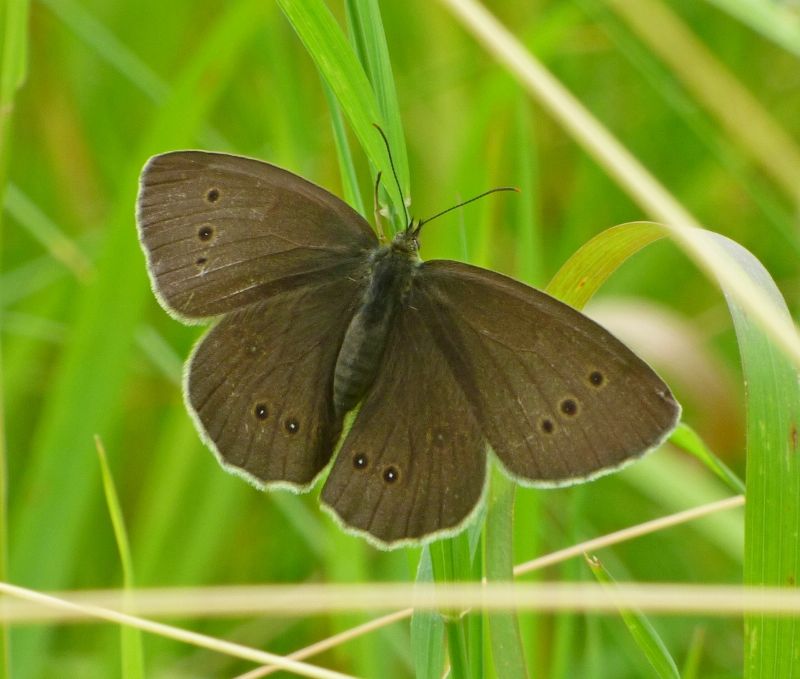
    8PIC 1 Ringlet We push through the overgrowth which has so benefitted from this inclement weather, to find a couple of Meadow Browns and a few Ringlets lurking in the grasses.  Not a good turnout but we are delighted to see them nevertheless.
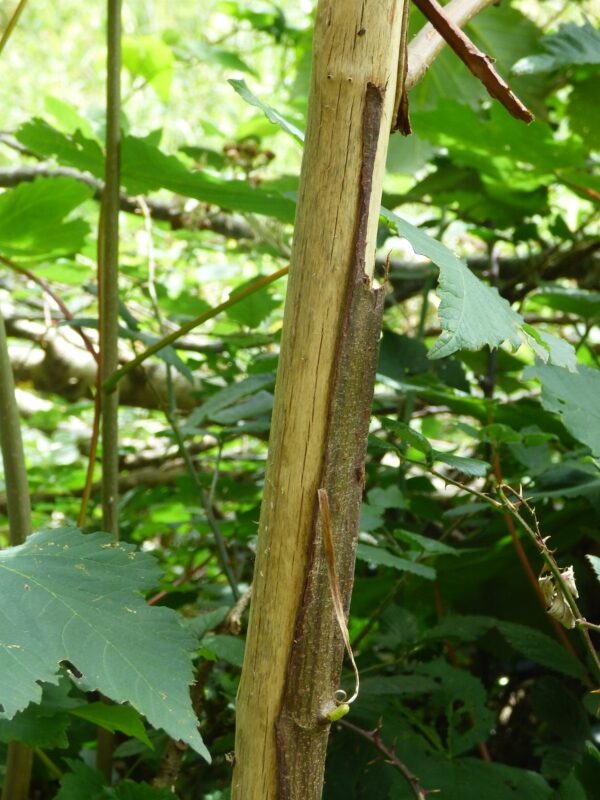
    8PIC 2b Sycamore8PIC 2 Sycamore

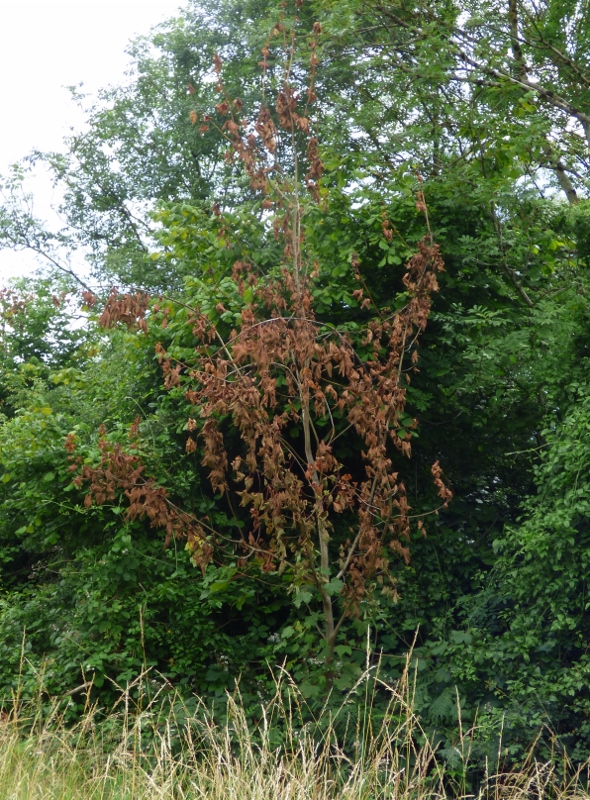
    In front of us we also spot some lovely Sycamore trees which appear to be dying.  Ian advises me that this is almost certainly Squirrel damage. 

    Squirrels love to strip the bark to feed on the nutritious sap beneath.  For some reason, probably connected to our weather, this has been a particularly bad year for stripping and Sycamores are clearly one of their favourite trees.  After our Ash dieback loss we can only hope the Sycamores rally and survive.

    We head for the Jubilee Stone and butterfly matters improve.  The skies have cleared a little and this is a beautifully warm open spot with wild flowers dotted around the feature Ash tree.  Although numbers are still not high we are delighted to see Marbled Whites and a good number of both Meadow Browns and Ringlets.  We feel more positive as we head down the track towards the Jubilee Stone meadow. 

    The Jubilee Stone meadow has been a real success.  Cleared in stages between 2007 and 2016, it has been allowed to naturally reseed, with maybe the occasional help from Ian’s pocket, and now offers a wonderful selection of flowers and plants.  Whilst butterfly numbers are down we are still delighted to count over 70 butterflies including a couple of Small Skippers. 
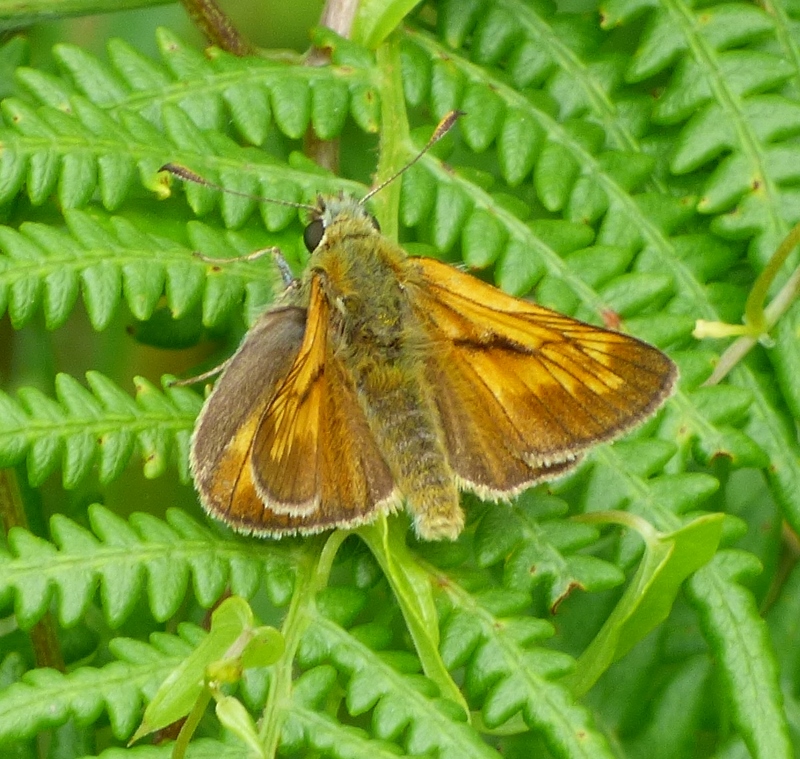
    8PIC 3 Small Skipper

    Quite difficult to distinguish from the Large Skipper (or even the Essex Skipper which has been spotted in North Somerset) Ian uses his camera scope to focus on the antenna and the forewings to make an identification. 

    As we exit the meadow we take the path over to Badgers Wood and head for Fern Way meadow.    A small area cleared close to the quarry it now offers a spectacular display of Cowslips in the spring and the summer brings Ox Eye Daisies and Marjoram.  Despite this, the meadow has, in the past, been our least successful for butterflies, possibly because it is an isolated spot rather than linked.  Either way we are happy to record 8 butterflies in the meadow before progressing up the track to the three meadows located next to the quarry.

    The three meadows are consistently good for butterflies.  Located in a very sunny spot, high up the track the butterflies enjoy a selection of Scabious, Clover, Gorse, Vetch and Birdsfoot trefoil as well as grasses and cool woodland areas.  We record a reduced but fair number of Ringlets, Meadow Browns, Small Skippers and a Small White.    And we are delighted to spot our first Gatekeepers for the year. 

    The remainder of the survey takes us along woodland paths.  We do catch sight of a couple of Meadow Browns fluttering around in the dappled sunshine but as we return to the top of Jubilee Stone Wood we can only hope that next week is warmer and sunnier and the butterflies return to enjoy the feast of flowers and plants.
     

  • 29th April 2024

    29th April 2024

    Monday 29th April 2024  9.15 to 9.50 a.m.

    Lower Jubilee Stone Wood can be accessed by following the bridleway sign on the level part of Church Town road, up from the Church.  The sign points up a short piece of road leading to a particularly steep stony track. As I approach the gate at the top I try not to sound too breathless.

    Happily the sound of birdsong and calls reach me even before the top of the climb.  Blue Tits are flitting between trees and bushes with their multitude of spring time calls, a Robin is singing close by as is a Nuthatch and a Great Tit.  In the woods to the left, a Song Thrush is belting out its morning tune and lambs are baaing in the field beside the wood.  High above in the tall trees are the Jackdaws.  Although Jackdaws generally reside in the quarry by Badgers Wood, they particularly like to spend time hanging out and calling from these Jubilee Stone Wood trees where they have a fantastic vantage point over Backwell.

    Up the bridleway through the woods, past the stile on the left, there is a rustic wood bench.  Perfect for sitting, catching the odd glimpse of sunshine and listening.  Chiff Chaffs are in full song now and can be heard in every part of the wood.  Blackbirds, although also in good numbers, are by contrast much quieter.  The females are hardly seen now and as a male Blackbird swoops past me I get the feeling he is very busy on family duties.   Goldfinches pass overhead chattering as they go, I catch a brief song of a Blackcap and then another Robin and then the rasp of a Greenfinch.

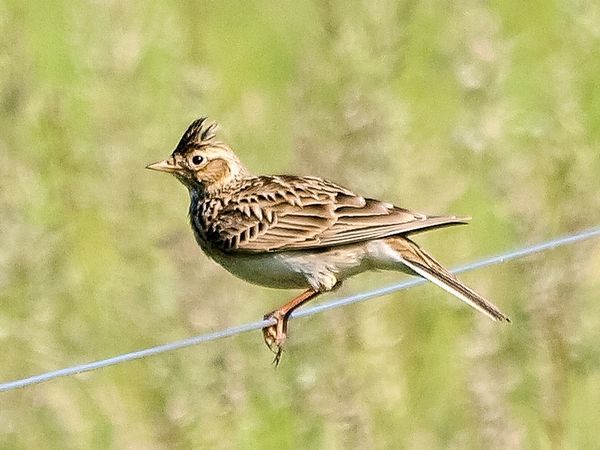
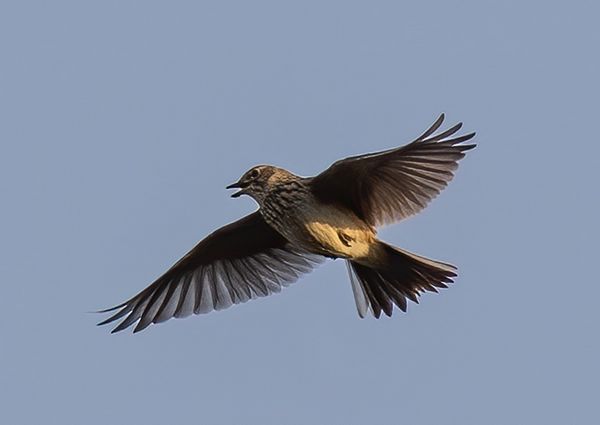
    All of a sudden, as the sunshines briefly, I catch a most unexpected sound.  Listening carefully I can definitely hear the song of a Skylark.  Skylarks have never appeared on our Woodland bird surveys so I pause to listen carefully and realise that although the sound is close, it is coming from the adjacent field.   skylark 1 600

    But what a joy!  Skylarks are, to me, very attractive birds.  On first glance they are small and brown but on closer inspection you can see they are have a pretty speckled chest and brown wing feathers. Their distinguishing feature is their delightful brown streaky head crest which can be raised in alarm. 

    skylark 2 600

    Skylarks are red listed birds which means their numbers have dropped significantly – thought to be because they nest on the ground often in open fields and therefore suffer from disturbance.  However, they persist where they can and their complicated and melodic high-pitched and vertical song flight is one of the joys of spring.

    I sit for a bit longer and note how the the bird sound drops as the clouds roll in.  As I head back down the path and out the woods I am accompanied by the not unusual reverse song of “Chaff Chiff”.


  • Late summer

    Late summer

    Late Summer

    Viv looks back at some of the other wildlife highlights during her butterfly and bird surveys this year .

    Early September and already we can feel an autumn chill in the air.  The skies are overcast more often and, with the woods bathed in shadow, we will struggle to do many more butterfly surveys this year.  It was a really difficult spring weather-wise for wildlife and our butterfly surveys are certainly reflecting this.  It is sad to see our butterfly numbers so low and we are just grateful that nearly all regular species have been spotted at least once.  We can only hope for better weather and numbers next year.

    So to bring some cheer to my blog I thought it would be fun to list the alternative highlights of our butterfly surveys this year so here they are:

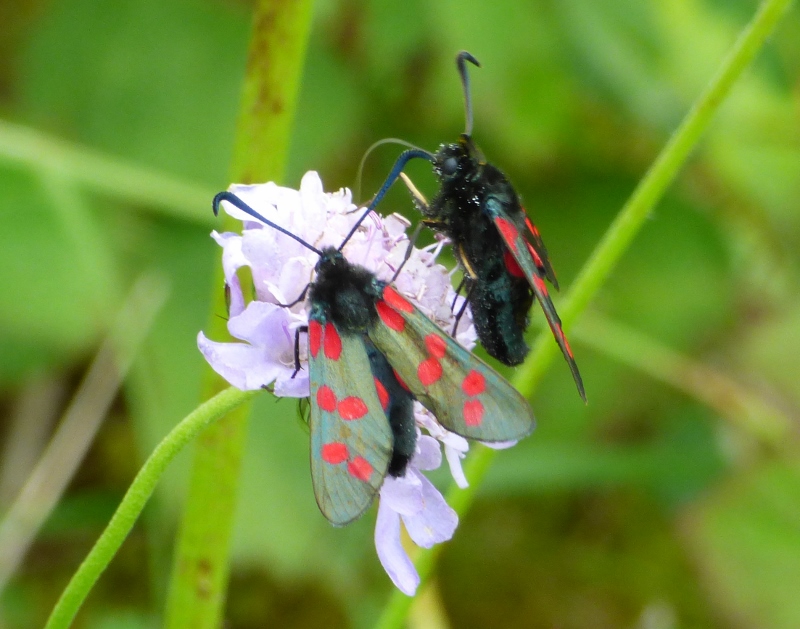
    The Six-spot Burnet moth. Six spot Burnet 2

    What an absolute beauty and so cheering to see so many in the meadows above the gorge. As we scurry around looking for elusive butterflies these wonderful day flying moths buzz around us bringing colour and life.  Their favourite flowers are scabious, thistles and knapweed – which we just happen to have in good numbers!

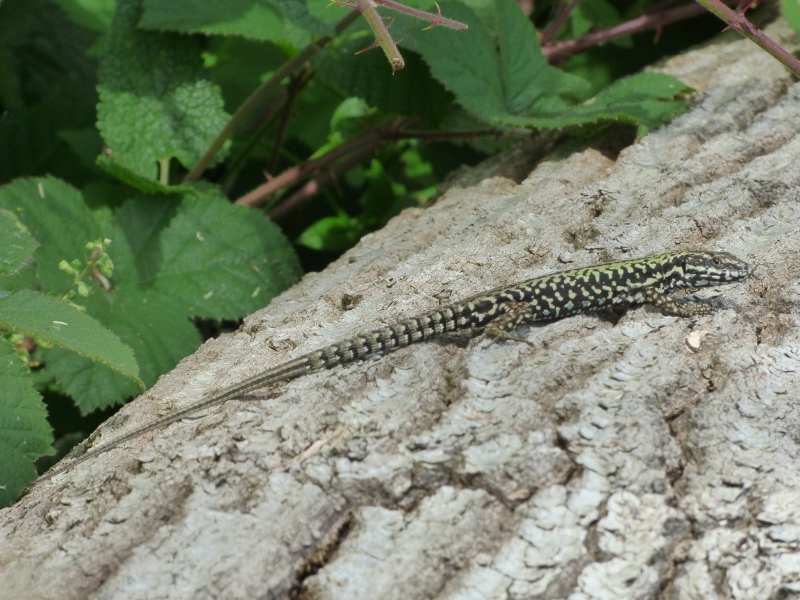
    The Common Wall Lizard. 

    Common Wall LizardWhich actually isn’t that common at all in the U.K. and has fascinated us with its unexpected appearance at the top of Badgers Wood near the quarry. 
    Studying their size and tail length we believe we have identified several and hope they are part of a thriving family.  We look out for them whenever we survey and never fail to be delighted by their speed and agility.

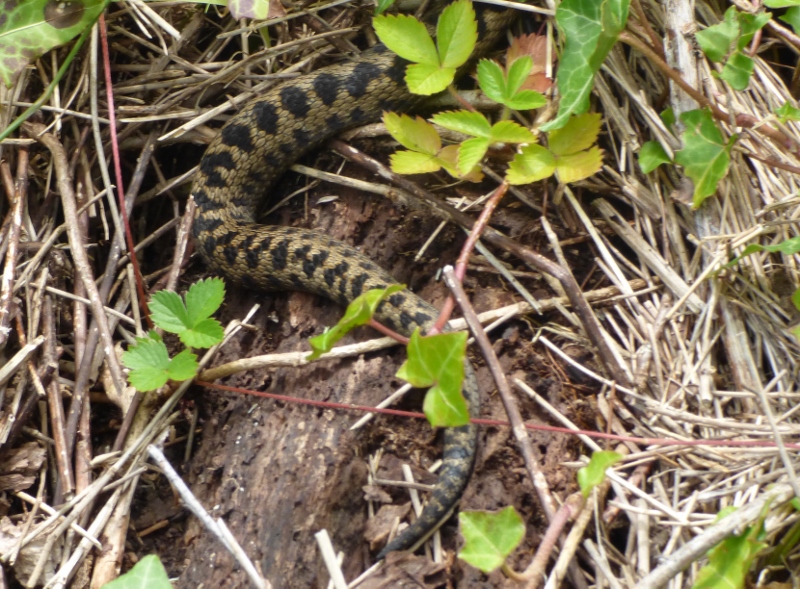
    An Adder.  AdderAdder

    Our trusty butterfly photographer just managed to avoid putting his foot down on this small one.  As the UK’s only venomous snake it’s best to avoid treading on them – although their venom is generally not dangerous to a healthy adult. Instead we enjoyed seeing the incredible markings close up – so distinctive from the Grass Snake which we also have in the woods and see rather more often.   Having reached an impasse with neither snake nor photographer moving, I gently carefully tickled its underside with a long grass and it slithered away quietly.

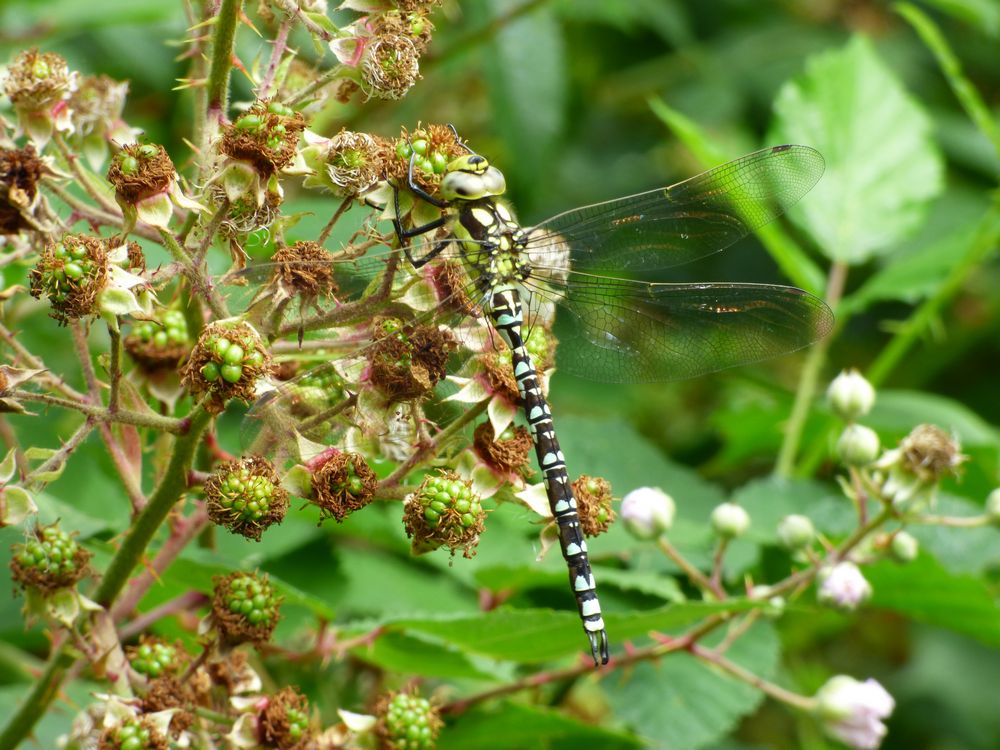
    The Southern Hawker dragonfly.  

    Souhern HawkerOur first year of officially monitoring dragonflies and damselflies on the reserve and I for one have much to learn.  Once they stop for long enough to be photographed I get a chance to enjoy their amazing colours. I have also come to realise how territorial dragonflies are.  Whilst the damselflies are busy doing their own thing and tend to ignore our presence the dragonflies often make a point of making themselves known and asserting their ownership of a particular area we might be passing through.  Dragonfly dive bombing is definitely a thing and when we have impeded their flight path we have had plenty of experience of this over the summer!

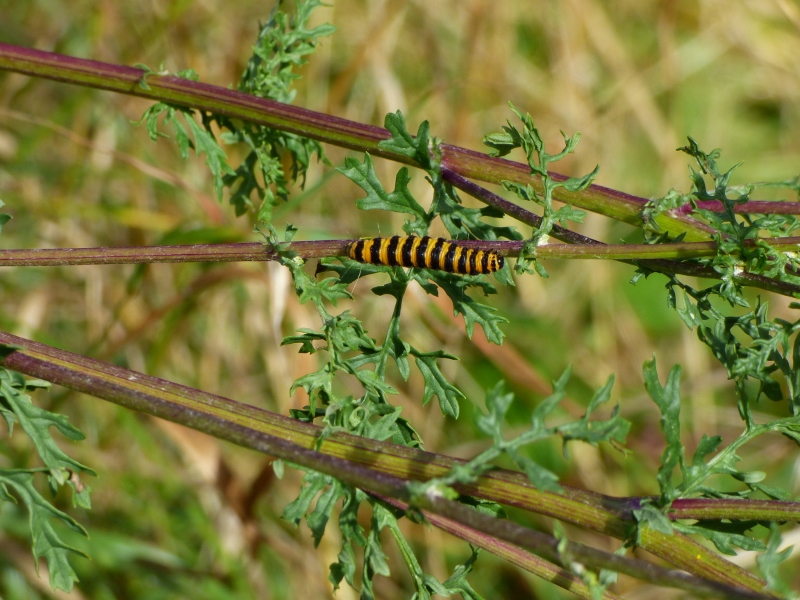
    Cinnabar moth caterpillar.  Cinnnabar moth caterpillar

    These lovely brightly coloured caterpillars are absolutely dependant on munching our Ragwort for their diet and we have been very fortunate to have had a really good crop of Ragwort in the woods this year. The caterpillar colours denote a warning as all their Ragwort munching can lead to them being toxic for predators.   Once the caterpillars have consumed as much as they need they dig themselves into the ground and spend 12 months underground as a pupae before emerging as a beautiful black and red moth not totally dissimilar to the 6 spot burnet.  Fingers crossed we see many of these beautiful moths next summer.   


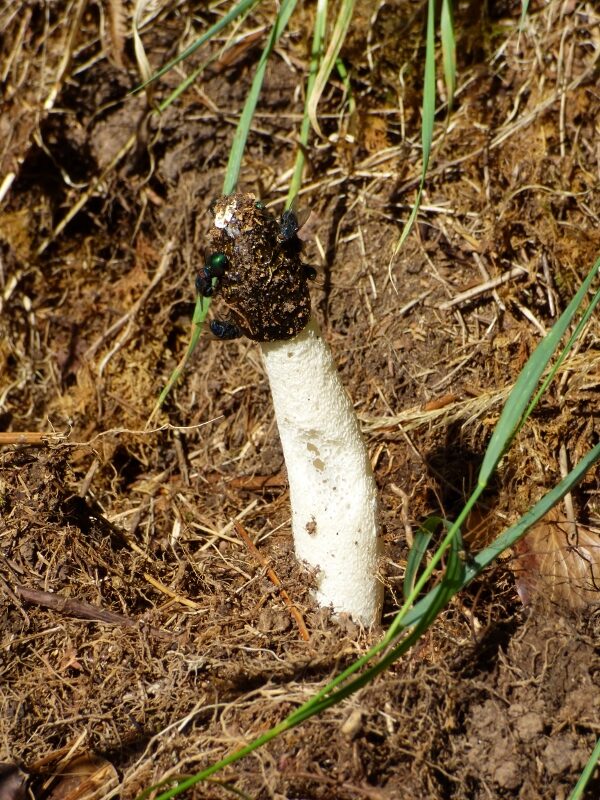
    StinkhornAnd finally The Stinkhorn – which is exactly as it says. If you stroll around, particularly in Badgers Wood, you may occasionally encounter an unpleasant pungent smell.  It is most likely to be the Stinkhorn fungus. Far easier to smell then to see the Stinkhorn usually emerges for just a day or two as a phallic, white stem-like structure with a brown bell-shaped head.  The strong odour attracts flies which then scatter the spores.   Whilst not being keen on the smell we do enjoy trying to hunt these down – dogs may also be attracted but, whilst not considered poisonous, they can certainly cause gastric problems so best avoided.
    And so as autumn begins to show its colours it’s a joy to hear the tentative sounds of the dawn chorus starting up again.  I can’t wait to begin surveying the woods for birds and seeing what turns up during the rest of this year.

  • 18th March 2024

    18th March 2024

    Monday 18th March 2024  9.05 to 9.50 a.m.

    Sitting on a tree stump.

    Many of my birding hours are spent surveying, walking steadily along a regular route listening and looking.  However once in a while it is lovely to just sit as still as possible and wait and see what comes.

    Today, with the much missed blue skies and just the occasional wispy cloud above, after weeks and weeks of rain, I push up through boggy mud to the Limestone Pavement to pick an ash tree stump as my perfect sitting spot.

    With the quarry close by it isn’t long before the Jackdaws make themselves heard.  Like me the Jackdaws are enjoying this moment of warmth and, for them, a chance to enjoy some light thermals in the quarry.  A brief snatch of Peregrine call and the Jackdaws pause but are barely threatened.  They have been sharing the same space for a while now and are accustomed to each other. 

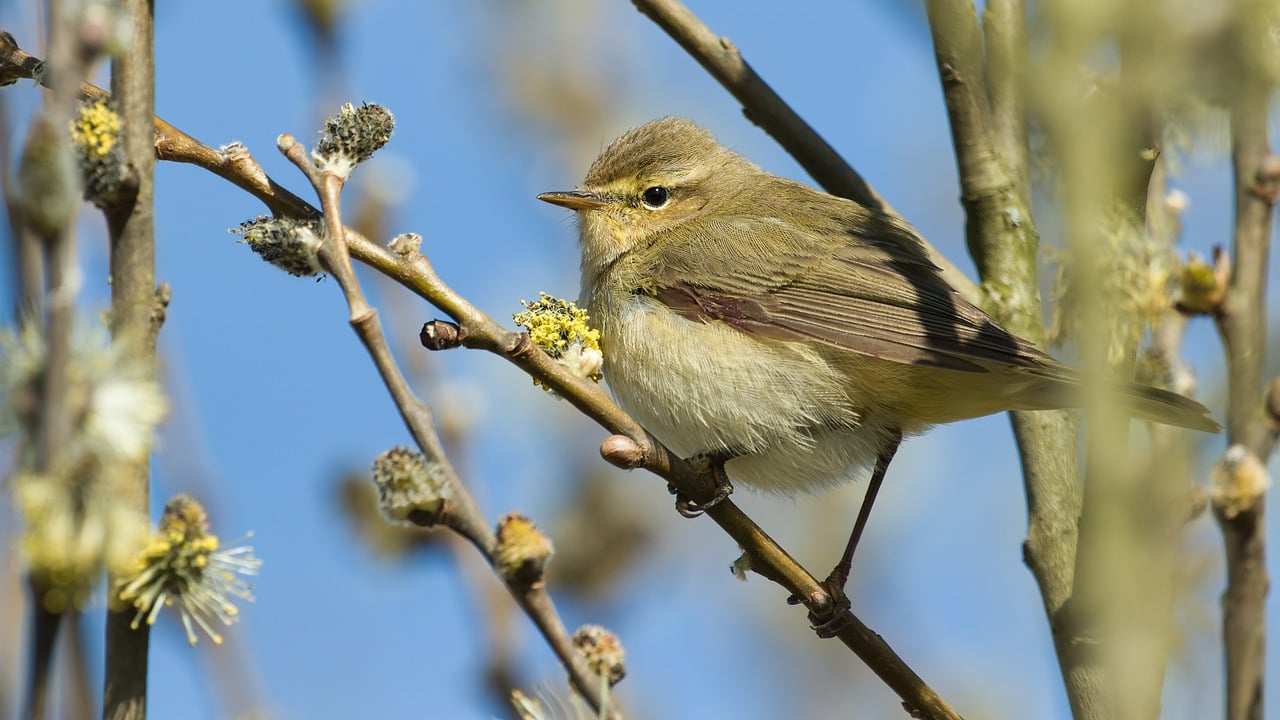
    Below me extends Badgers Wood and I hear loud and clear the song of a Wren deep in the wood – with another responding almost immediately – seemingly as a conversation but more likely as a territory statement. Chiff ChaffThen a Chiff Chaff with it’s distinctive ‘chiff chaff chiff chaff’ song. What a welcome sound that is.  Chiff Chaffs have only just started singing this spring and, for me, it is the bird song that most reflects that winter is nearly over. 

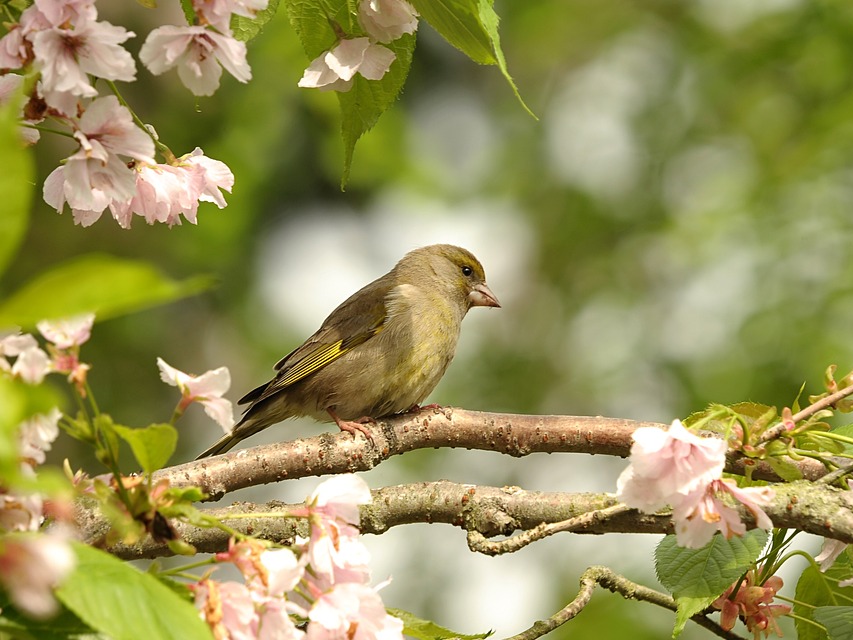
    Next I hear a Green Finch. Green Finch Initially the rasping, wheezing sound of a Green Finch hanging on to the topmost branch of a very tall tree, then the beautiful flute like bubbling sounds of a Green Finch on the move.  Again a bird I am particularly delighted to hear.  The population of Green Finches took a dive during the early 2000s which was linked to an outbreak of trichomonosis and for a while there was real concern for their future.  After 5 years I’d almost forgotten the sound of their song and their distinctive olive green colour with a dash of yellow patches on wings and tail.  Fortunately they are now noticeably increasing in numbers in North Somerset and it is a real pleasure to find them wherever I go.

    As sound continues to rise up from the wood I catch the distant song of a Nuthatch, then a Crow overhead, and a Raven croaking as it passes by. 

    Sadly a drizzle begins and my notepad is soggy so I head back towards the cabin.  As I do the Great Spotted Woodpecker gives a solitary chirp and I begin to hear sounds of Blue Tits and Great Tits amongst the Yew trees.  I have a theory that Tits are late risers.  I rarely seem to hear much of them at the start of a walk but they are often in full busy mode as I head home. 

    As I reach the cabin the rain eases and the birds continue to sing – hardly disturbed by the light change in the weather.


  • 12th February 2024

    12th February 2024

    Monday 12th February 2024  9.45 to 11.00 a.m.

    Six weeks into 2024 and, so far, the weather  has chosen to be either super chilly or damp and overcast, with just the occasional day of sunshine to break the gloom.  Today may be mild but it remains cloudy.

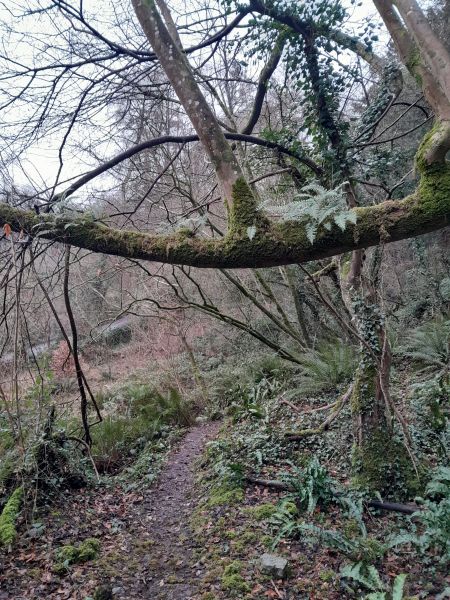
    I enter the woods at the corner of Church Town and Backwell Hill.  The path cuts in to the right of the restored wall and is initially steep and slippery.  But the effort is worth it as the path soon begins to level out, turning right to head down towards the cabin or turning left along the Fern Way. Trees and ferns 600

    The Fern Way is one of the original paths created by BET volunteers through Badgers Wood and is (in my opinion) one of the prettiest.  Fringed either side with ferns of all types, rotting wood (for those, like me, who love a bit of rottenness), a good amount of bramble cover, lichen and fungi it always reminds me of a tropical rain forest.  In fact I suspect it is one!  So rich is it that ferns even grow out of trees. 

    With the overcast conditions keeping sound close to the ground, bird song resonates around the wood.  As I join the Fern Way I can hear the rasp of a Greenfinch, the song of two Robins, a good number of Blue Tits, a Great Tit and the chunter and croak of a Raven overhead.  Even though I am walking quietly, startled Wood Pigeons batter their way out of the nearby trees. 

    The path winds its way up through the middle of Badgers Wood past some incredibly old, knarly and beautiful trees…a couple of which have keeled over revealing a wonderful maze of roots for animals to hide or forage in.  Two thirds of the way up I am pleased to hear the tap tap tap of the Great Spotted Woodpecker. 

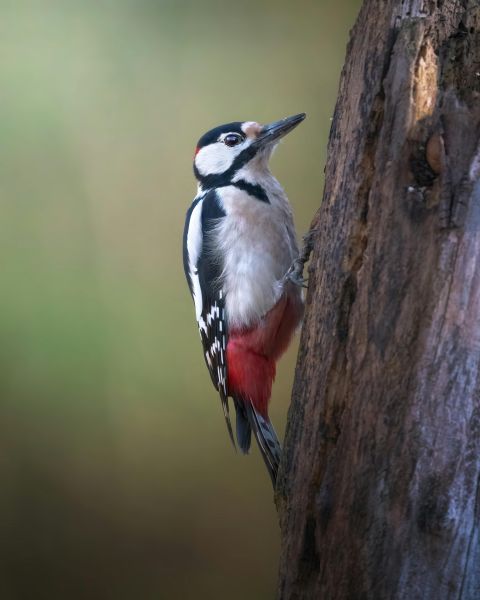
    Great Spotted Woodpecker 600It is rare to spend time in these woods without catching the short, sharp chip of this rather shy bird and the drumming is a nice reminder that spring is on the way.  Great Spotted Woodpeckers, both male and female, drum on trees for communication.  I used to think they were busy making holes for residential purposes but they are actually signalling for a mate or to mark out their territory.  And we appear to have several busy pairs residing in the woods.
    As I approach the top of the Fern Way I pass the stunning Limestone Pavement.  The Pavement is a whole story in itself and is definitely worth a visit.   But my ears are caught by the song of Nuthatch high up in the canopy and then sounds of various bird alarm calls.  Definitely Blackbird and Robin and then, the loudest of all, the Wren.  They buzz and chatter in annoyance – possibly at my presence but more likely at a passing predator or a challenge to their established territory.  

    The path comes up to the quarry and rain begins to fall quite heavily.  Time to cover up and head for home.


  • 6th December 2023 (2)

    6th December 2023 (2)

    Wednesday 6th December  9.00 to 11.00 a.m. Part 2

    The second half of our survey on behalf of the BTO initially takes us off the BET reserve. 

    This is so we can fulfil the requirements of a transect, basically two parallel routes through a chosen square, which helps to avoid double counting.  So we exit the reserve and head for Long Lane and then back along the quarry edge, counting as we go, re-entering the BET reserve at Val’s Gate next to the viewpoint and the quarry in Badgers Wood.

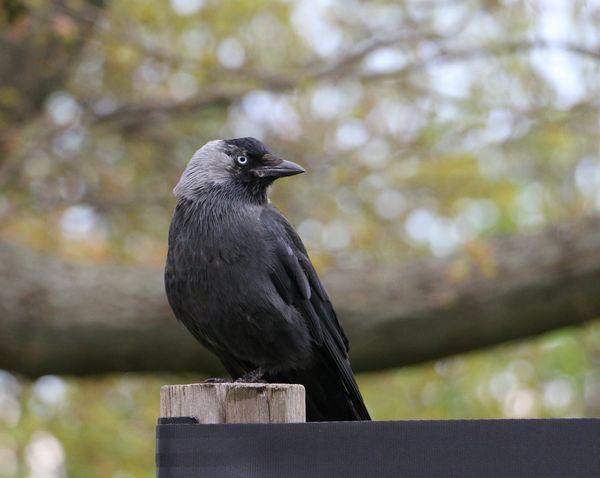
    Jackdaw 600We are immediately greeted by the sound of noisy Jackdaws in, around and above the quarry.  Jackdaws are very intelligent and sociable birds, small and black with a distinctive silvery sheen to the back of the head.  In particularly good numbers in this part of North Somerset it is easy to get used to their urban presence on roof tops and chimneys.  During the day they often move in large flocks, sometimes with other Corvids such as Ravens or Crows.  On the BET reserve their favourite spot is without doubt the quarry.  Easily disturbed from their perch they seem to take real pleasure in the thermals or updrafts.  As usual they are joined by a pair of Ravens who show their status by selecting the best perch on a large tree overlooking the quarry.

    As we circle the quarry we pass Fern Way and catch the sound of a small flock of Goldfinches overhead.  Often heard but not seen on such cloudy days their light twittering passing chatter is cheering. 

    On we go towards the Yew trees.  Here there are fewer birds to see but, because we are high up on the hill and the cloud clover is low, we catch regular snatches of bird sounds from below.  In particular the regular ‘teacher teacher’ of a Great Tit, the trill or more urgent high pitched calls of Blue Tits and the occasional notes of a Nuthatch.
    Goldcrest 4. 600jpg

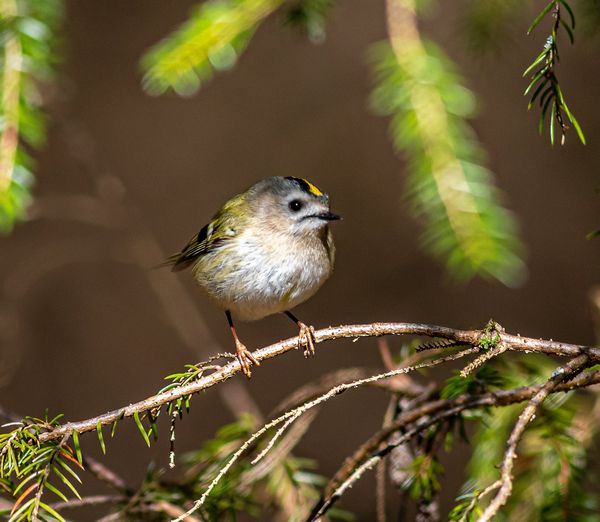
    As we near the end of the Yew tree section we are rewarded with the very high pitch sound of the Goldcrest.  Hard to spot and unusually shy for a Goldcrest we stand still and wait quietly until this one comes into view, foraging busily on the branches.  Goldcrests often move in flocks so perhaps the shyness of this particular bird is due to it being momentarily alone.  As ever, a joy to watch but the grey cloud makes the beautiful colours of the Goldcrest harder to distinguish.

    We leave the Goldcrest to feed and begin our descent noticing that the the bird song is gradually increasing.  At this time of year birds are so often found feeding in and around the local gardens and today is no exception.  Not all of the birds on the reserve will take advantage of the feeders but the Blue Tit, Great Tit, Wood Pigeon and Chaffinch numbers in the woods are surely in part a result of their willingness to move onto feeders in the winter.

    We finish our count at the bottom gate to Badgers Wood.  Despite the cold it is always a joy to walk our regular survey route and to see the progress of life within the woods.  However a hot bowl of soup is top of my list !


  • 6th December 2023

    6th December 2023

    Viv 1 Neo crWednesday 6th December  9.00 to 11.00 a.m. Part 1
    It is a cold, grey morning at the start of our first winter bird transect survey on behalf of the British Trust for Ornithology (BTO).

    Even the steep walk up to the Jubilee Stone Wood gate is not enough to warm the hands and as we stand and listen the wood is dark and still. It takes a few moments before we finally hear soft, brief bird sounds.  The contact call of a Blue Tit or a snatch of Robin song. 

    Suddenly we hear the loud call of the Jay – often described as screaming, to me it is more scratchy and crow like – but certainly abrasive. Then another appears – and the noise level increases. Jays often call when they are on the move and it may be these are just contact calls – however there also appears to be a bit of a dispute with some Jackdaws who are reluctant to shift from the Jay’s chosen perch.  After a few minutes the Jackdaws fly reluctantly away and the Jays settle.

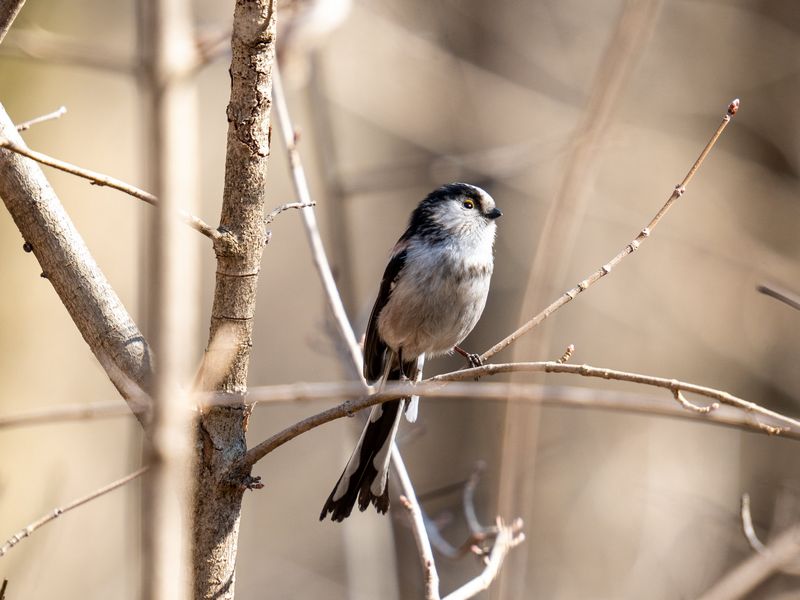
    The wood returns to its quiet and sombre tone and we continue our walk up through the wood listening out for the occasional note of the Blue Tit, Great Tit and even Nuthatch as we go.  Gradually I can pick up the squeaks and chit chats of approaching Long-tailed Tits. Long tailed Tit

    With their bouncing personalities, ability to hang any way up and constant chatter they cannot fail to make us smile as they dive in and around the small trees each side of us. They are foraging on the cold tree branches as they go and, as we walk, they join us for a while before peeling off as if to find more interesting entertainment or better food.

    As we reach the new tree line we catch sight of thrush-like birds darting out of the trees in front of us and flying ahead.  They are quick and silent and in this grey light initially difficult to identify.  It is only their characteristic flight pattern, shyness and the occasional chack chack chack or an up and down song that confirms that these are Fieldfares and Redwings.  

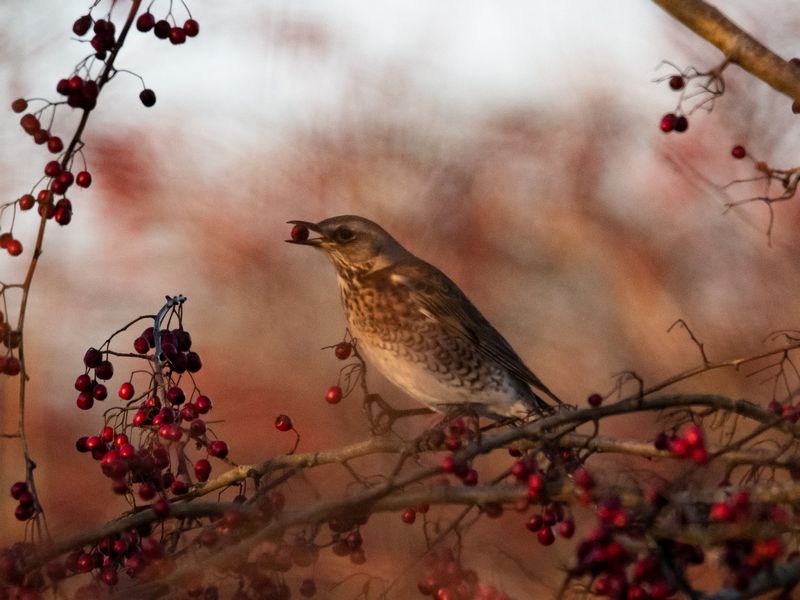
    Fieldfare

    In good numbers all over North Somerset during the last 2 weeks we are not surprised to see them in these woods. They come for berries and both woods have had an excellent crop this year. 

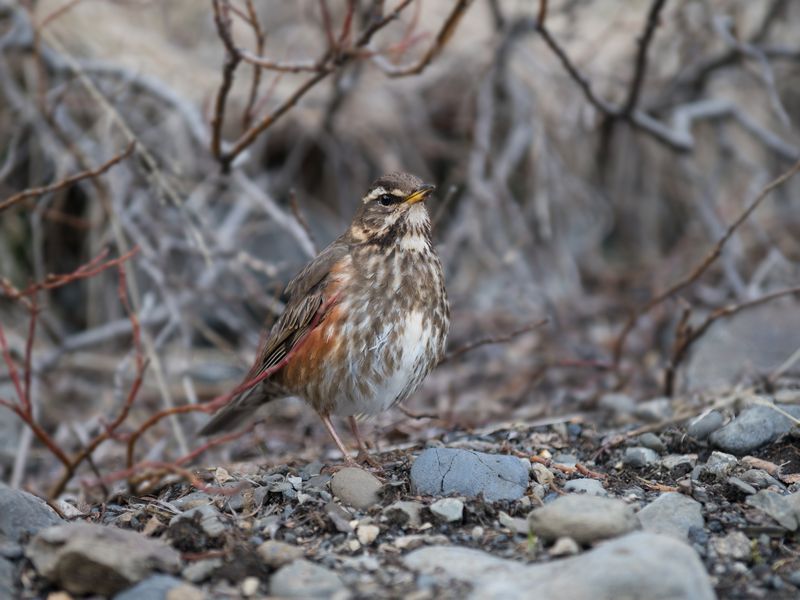
    Fieldfares (left) and Redwings (right) often group together in flocks in the winter and can, at first glance, be difficult to tell apart. However the Redwing is the smaller of the two and notable for its shorter tail, spotted breast, rusty red underwings and bold white supercilium (eyebrow). Redwing

    Whereas Fieldfares are more Blackbird sized with a light grey head and back, a more patchy chest pattern and a longer tail. Both are rather shy birds and fly off into the trees quickly at the slightest sound. 

    We follow them up the path and through the woods to the Jubilee Stone, catching sight of Blackbirds, Wood Pigeons, Jackdaws and Goldfinches as we follow the field line and then pass through to the gateway at the end and finish the first half of our survey.

  • 20th November 2023

    20th November 2023

    Monday 20th November  8.30 – 9.30 a.m.

    Late October and early November have been rather quieter for birds. 

    The rain, wind and cloud cover have been discouraging and many birds have been quietly sheltering or going about their business – and no doubt taking the time to enjoy the garden bird feeders. 

    However the weather has eased at last.  As I approach the cabin I can hear the busy chatter of Great Tits – offering up their wide variety of calls and song.  These along with the Blue Tits, with whom they are often to be found, are in very good numbers in both woods – enjoying both the dense  scrub and bark of the tall trees for foraging and for safety.

    Turning left at the Cabin and heading for the Layers (reached by a set of steep steps to the left of the Cabin and taking you up to wonderful views over North Somerset) a Robin is singing out loud and clear from the spindle tree still in ‘bloom’.   Then I catch snippets of a song, sounds of a bird warming up its syrinx (the bird version of our larynx) for the morning and not quite singing in key – most likely a young bird singing its first autumn tunes. 

    Song ThrushIt’s a Song Thrush hiding in the bushes at the top of the Layers.  It sings in breaks and doesn’t quite complete its musical phrases but it’s a great start for a chilly morning.  Often shy and timid this bird is especially so and flies off as soon as I appear. 
    Reaching the top of the Layers I progress through the Yew trees, hopeful of the sight of a Goldcrest and I’m not disappointed. Goldcrest

    I stand quietly still and soon their high pitch seep-seep-seep can be heard approaching.  A family of about 5 or 6 dart across to, hang and then seem to tumble from one Yew Tree branch to another.  These are their favourite trees and they, like other birds, are still enjoying the remainder of the berries.

    But I’m not to be allowed to stand for long.  I’m disturbed by an angry squirrel – chuntering and barking behind me.  As I can’t see another squirrel around I can only assume that I’m on his patch.  His tail is flicking madly and his fur is on end.  I move on to allow him some space.

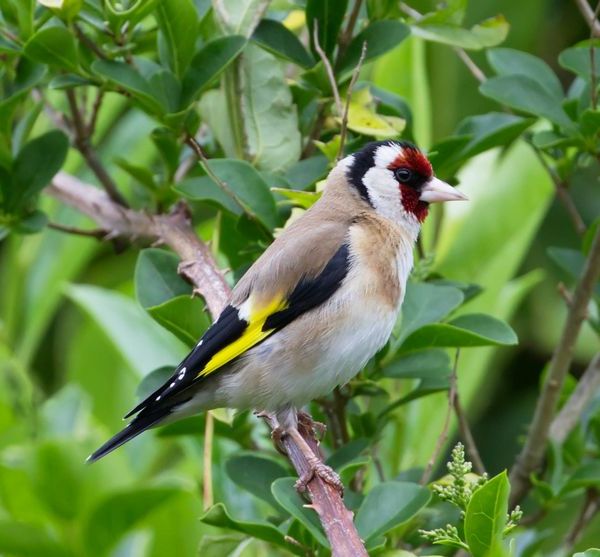
    GoldfinchI pass on through the tall trees and reach the Quarry top.  The chip of a Greater Spotted Woodpecker can be heard deep in the woods, Goldfinches twitter as they fly over my head and the Jackdaws and Ravens around the Quarry squawk and honk.

    Late autumn has come at last with its wonderful sights, sounds and colours and with the promise of drier sunnier but colder days to come.

  • 9th October 2023

    9th October 2023

    Monday 9th October  8.30 – 9.30 a.m.

    A beautifully mild start to the week – 19C, sunny with light winds. 

    The birds are singing loud and clear as I arrive.  There is much bickering today as the autumn song picks up tempo and the new younger birds find their place in the hierarchy.

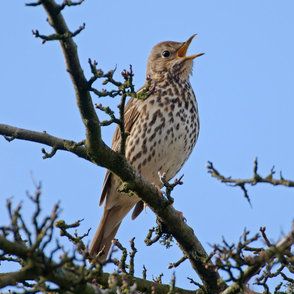
    Three Mistle Thrushes can be seen and heard having a real set to high up but close to the cabin.  Their alarm call is very distinctive and resembles a football rattle or machine gun.  As shy birds this was a rare sighting.

    Nuthatch

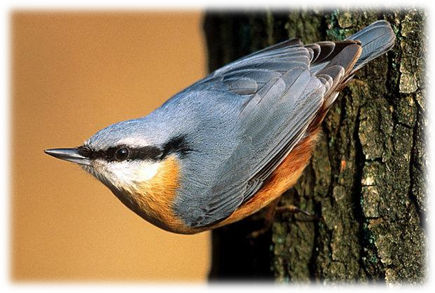
    Nuthatches, on the other hand, are plump birds about the size of a Great Tit and resembling a small Woodpecker – with a distinctive blue-grey on top and chestnut on the sides.  Agile with a beautiful call they are very much at home in both of the reserve woods.  This morning their call is ringing out from high up in the trees as they dart from tree to tree digging insects out of the bark.  They have a fondness for nuts (of which there is a plentiful supply this year) so there is every hope they will continue to thrive.