Author: PeterBET

  • BET was 20 years old in 2025!

    BET was 20 years old in 2025!

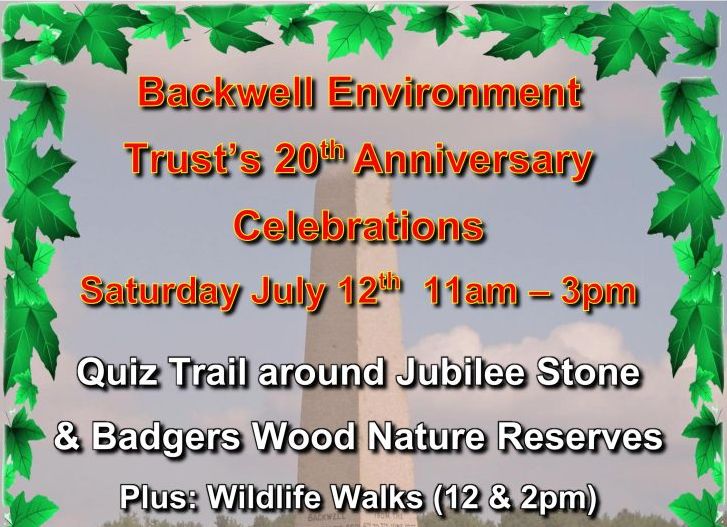
    Open Day 2025 Poster PS smBET at 20 years old!  Celebration event held on 12th July 2025.

    BET held a special celebratory event on the reserves, including Nature Walks and a fun Quiz Trail!

    Backwell Environment Trust was formed in 2005 to raise the funds to buy and protect the area of woodland on Backwell Hill, later called Jubilee Stone Wood.

    BET became a registered charity on May 10th 2005 and since then has recorded over 40,000 hours of volunteer time managing, maintaining and enhancing Jubilee Stone Wood and Badgers Wood, acquired in 2009.

    You can read more about BET’s history and achievements in our latest bulletin, available on our home page.

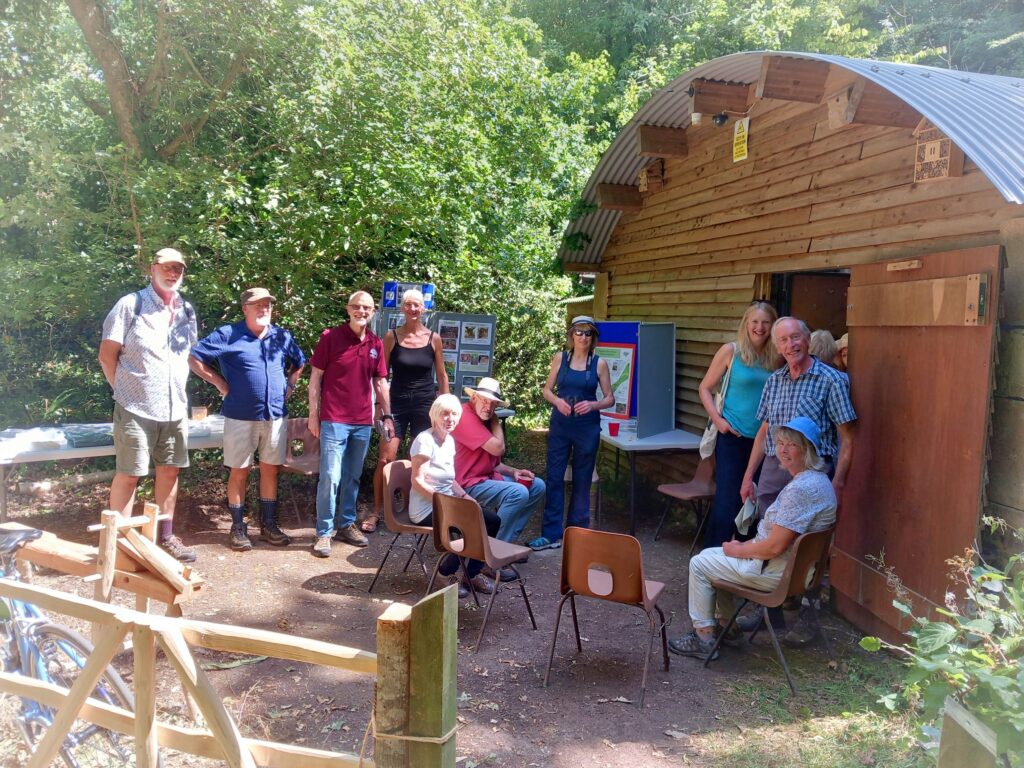
    To celebrate this milestone we held a special event on the reserves on Saturday 12th July.  We invited members, friends and new visitors to join us at the BET Cabin to see displays of our work and join short guided wildlife walks, looking out for birds and butterflies in particular.

    We had also devised a fun Quiz Trail around the reserves. The Quiz Trail took you up to the top of Badgers Wood and across to Jubilee Stone Wood, taking in some of the best features of the lovely reserves.  Many of the questions were rather cryptic, but answers were apparent if you kept eyes open.  Refreshments were provided at the Cabin.

  • 21st May 2025

    21st May 2025

    Wednesday 21st May 8:45 a.m.

    Lots of fabulous bird song on a sunny walk in Jubilee Stone Wood

    Dappled sunshine greets me at the top of Jubilee Stone Wood.  The weather today is sunny, dry and very still.  As I enter via the access gate I can hear bird song all around me.  A Song Thrush is singing in the adjacent woods, whilst a Chiff Chaff, Robin and Wren are making themselves heard much closer.  This has been one of the driest springs on record and yet our bird surveys have delighted us with good numbers, great songs and many sightings.  Nature once again has proved able to rise above the stress of the changeable British weather.

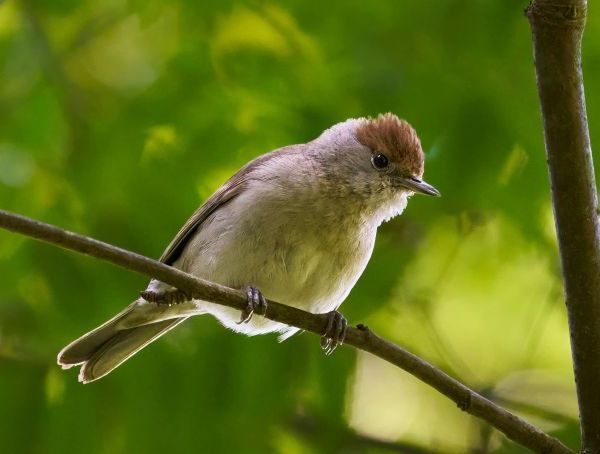
    As I stroll away from the gate I choose the right hand path, parallel to the open fields.  With lots of thick brash to my left offering safe cover there is plenty of bird song.  A Chaffinch, another Robin, several Wrens, more Chiff Chaffs and a Greenfinch are singing and calling, and I haven’t even reached the Jubilee Stone.  Then the lovely song of the Black Cap sounds out stronger and more melodious than any of the others and makes me smile.  As a self- professed lover of Blackbirds and their chitty chat melodious song, I have to say that the Black Cap comes a close second with its beautiful tone, range and melody.Blackcap 600

    Black Caps are a bird I had never heard of growing up – so I had no knowledge of them before I started bird surveying.  They are a shy bird – preferring woodland habitats or well-forested gardens – so are still not so common to spot but are becoming increasingly common to hear.  They are primarily a summer visitor but more are choosing to spend their winters in the UK. 

    Blackcap female 600A grey warbler they get their name from the head of the male, which is black, whilst the female has a dark brown cap.  They are medium sized and nest in hedges or brambles.  At this time of year the males sing out loud and strong to protect territory and/or to attract a mate.  However the females sing too, for similar reasons, with a song that is quieter and less complex.

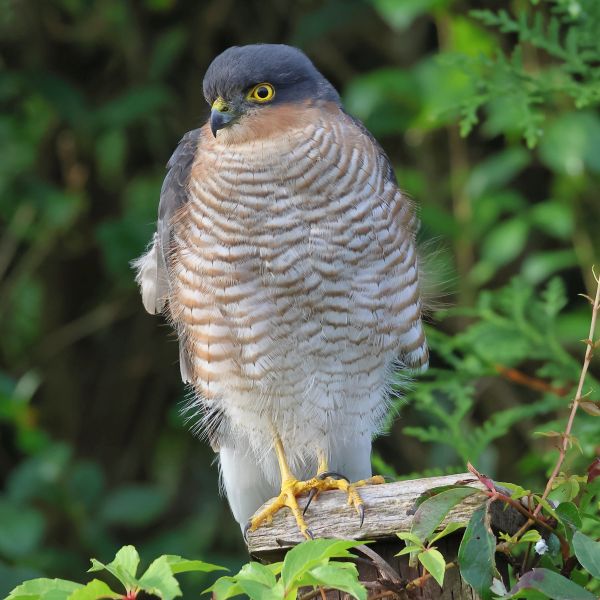
    At the Jubilee Stone, bird song quietens.  The open space here is less attractive for birds, with less cover and more danger.  In fact if you walk these paths regularly you will note that they are the most common spaces within the woods to encounter raptor meal remains, feathers mostly.  Of all our local birds of prey Sparrowhawks are the ones most likely to hunt in and around these woods. Sparrowhawks are a small compact hunter, particularly adapted for working in confined, dense spaces and, being on the smaller side, they are also well known for enjoying their catch where they find it rather than carrying it off to eat. 

    Sparrowhawk 600A beautiful bird, the male has a bluish grey back and wings and orangey brown stripes on his chest.  The female is similar but is more predominantly brown.  Like all birds of prey the females are larger than the males.  Sparrowhawks enjoy gardens meals too, so we can all be fortunate enough to see one if you have an open garden with an active bird population. 

    I head off in the direction of the Warrener’s Cottage and then back to the top gate.  A very short walk but one full of activity and finds.  As I turn back, clouds start to gently roll in and I wonder whether today is the day we get some much needed rain.

    Photos 1 & 3: Copyright Jon Thobroe


  • BET Merchandise

    BET Merchandise

    BET logoWe are pleased to be able to offer a range of garments bearing the BET logo.

    Our aims are to celebrate BET’s 20th anniversary and to enable our members and friends to show their support for BET.

    Polo shirt

    The BET logo is embroidered in one of three colours (yellow, white or black) on the front of the garment and is 7.5cm wide. The default colour combination is yellow logo on bottle green garment from the RTX product range.

    Hoodie

    Other combinations can be ordered and, for two garment types, an additional manufacturer has been included for extra choice.

    A larger version of the logo can be vinyl printed on the back, 30cm wide, in any colour.  Note that vinyl printing on fabric is less durable than embroidery and is not suitable for fleeces.


    Beanie

    We also offer beanie hats in a wide range of colours with an embroidered logo (yellow, white or black embroidery on a green background).

    BET Badge sm outlineFinally, we have a stock of sew-on woven badges (6.5cm) to put on garments or bags.


    BET is not able to host an online shop. To order a garment please follow these instructions:

    1. Browse the options below and the links to the supplier’s catalogue to see available colours, sizes and stock levels.

    2. Make a payment to BET by Bank Transfer (Account 40-34-39 31385682).  Include your name in the reference.

    3. Send a confirming email to Betwoods@yahoo.co.uk stating the garment(s) you would like and including the following details:

    Your name, address, garment type, size, colour and the colour of the logo to be embroidered on the front (yellow, white or black).  Also confirm the amount paid.

    If you would prefer a large logo printed on the back instead of a small logo embroidered on the front, please state the logo colour required.  There will be an extra cost of £5 if you require both logos – front and back.

    Orders will be placed on our supplier in batches when we have sufficient numbers. The supplier’s current leadtime is up to 4 weeks.  We will advise you when they are available for collection at the BET Cabin on a Monday morning, or for local delivery by the BET team.  There will be an additional charge for postage if you require an item to be posted. 

     Type Click link for details Colours  Available Sizes  Price
     T-Shirt

     RX151-pro-rtx-pro-t-shirt

     GD01-gildan-softstyle-adult-t-shirt

    18

    43

     XS – XXL +

    S – XXL +

     £14
     Polo Shirt  RX101-pro-rtx-pro-pique-polo-shirt 19  XS – XXL +  £15
     Sweatshirt  RX301-pro-rtx-pro-sweatshirt 15  S – XXL +  £20
     Fleece – zipped  RX402-pro-rtx-pro-fleece-jacket 5  XS – XXL +  £27
     Hoodie – zipped

     RX351-pro-rtx-pro-zip-hoodie

     GD58-gildan-heavy-blend-zip-hooded-sweatshirt

    4

    17

    S – XXL +

    S – XXL +

     £28
     Beanie  BB45-Beechfield Original Cuffed Beanie 56 One size £12
     Sew-on badge  As above picture 1 One size £4
  • 20th March 2025

    20th March 2025

    Thursday 20 March 2025 9.00 – 10.00 a.m.

    Wandering in Badgers Wood – with the Nuthatches

    Mid March and it feels wonderful to be experiencing both dry and warm weather.  In fact March has been unusually dry this year and some of the ponds in the woods are looking a bit low.  However we are enjoying this spell of warmth after a tough winter.  With the dial saying 10 centigrade and no wind I headed up to the woods to enjoy the late spring.  I was lucky to have with me today a good photographer who is keen to see the woods and to spot one of our shy but rather vocal Nuthatches.

    We entered Badgers Wood at the corner of Church Town and Cheston Combe, just by the pretty stone wall rebuilt and maintained by the volunteers.  The wild garlic is rampant here with its distinctive oniony smell.  We turn immediately left to follow the path that runs up hill parallel with Cheston Combe and quickly duck beneath a thick low branch.  Bird song and chatter is all around us.  Blue Tits are chuntering to each other, a Dunnock to my right is belting out its pretty flute-like song and to my left a Robin is happy to join in the singing.  A Great Spotted Woodpecker chips in the distance and a Wren sings loud and proud in the undergrowth.  As we amble up the path in front of us we detect the gentle sound of a Nuthatch in the distance.  Rather than head off to find it we decide to stay on the path for a bit longer.   Nuthatches are very mobile, often high up in the canopy, and if we go looking for one they will doubtless unwittingly outfox us by moving off before we can reach them.Mossy tree BET 600
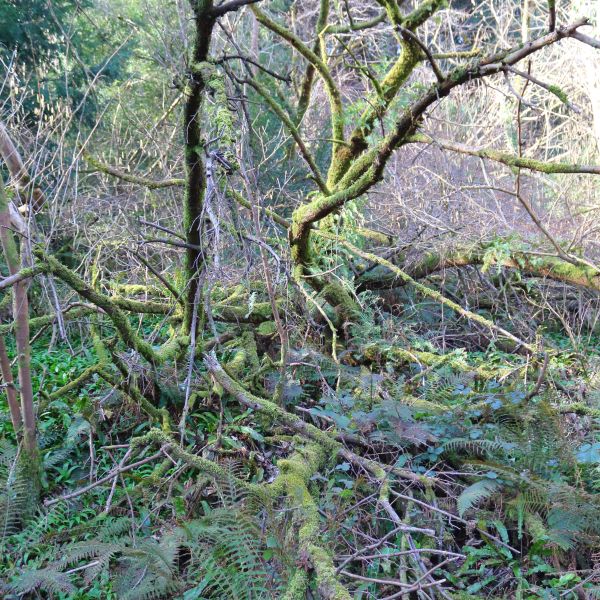
    The path is full of wild garlic, ferns and moss. Almost like a temperate rainforest the lower woods are darker, damper and more inclined to encourage moss and lichens.  Last year I spotted a living tree with fern growth and along this path we discover yet another tree full of plant life which merits a photo.  These may look as though they are rotting and dying but they are a haven for small insects, plants, fungi and other species. 

    As our path takes us further up the woods towards the light, we reach a 3-way junction which offers a bench, a path up to the limestone pavement or a chance to head back down.  Knowing how the Nuthatches prefer the darker woods, we head down.  Every now and again we hear a Nuthatch call or a song.  We are also aware of a Blackbird alarm call, probably disturbed by our passing, a chak chak of a Magpie, Jackdaws passing high above the canopy and the odd Wood Pigeon flapping out of the woods. 
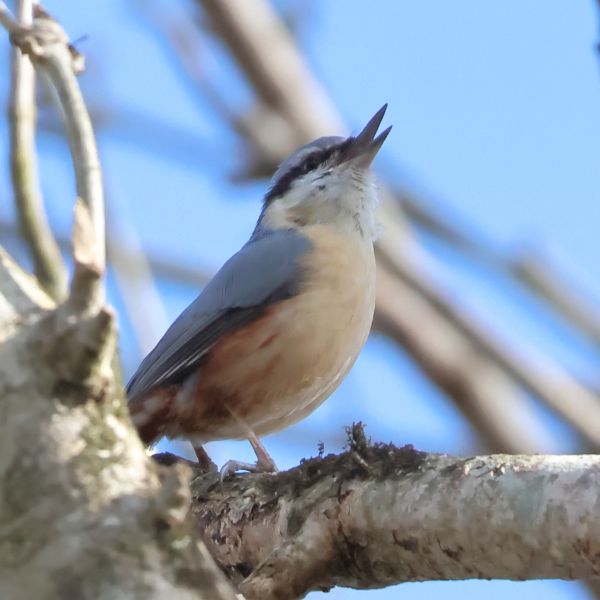
    Nuthatch BET 1 600As the Nuthatch songs and calls persist, we begin to suspect there are at least 2, as one of the songs is very traditional Nuthatch – strong, melodious about 6 notes up and down – whereas the other is what I call Nuthatch on heat. More strident, more repetitive and perhaps a few less notes but still in the same key. 

    As we return almost to the bottom of Badgers Wood we turn left onto the path that runs parallel with Church Town and we are thrilled to see a Nuthatch swoop past us busily – barely distracted by our presence.  Knowing how timid they usually are we stop in our tracks and watch and wait.  We are not disappointed.  The Nuthatch lands on an adjacent branch, looks around and then begins to sing.  Loud and clear and not afraid to be seen or heard.  

    Nuthatch BET 4 600

    Jon approaches carefully and is rewarded with a set of great photos of the Nuthatch singing.  Nuthatches are a really pretty bird.  Often hard to spot it is a joy when you get a good view. 

    They are blue-grey on top and white below – with a ruddy chestnut colour on the sides and under the tail.  The distinctive black eye stripe and long bill give it a distinguished look despite the short legs.

    Within minutes another Nuthatch appears and also begins to sing but out of view.  We suspect this to be the female as her song is also less strident.  We stand for quite some time watching as they fly together, then apart, singing and then quiet.  We can’t help but believe that this is an established couple, enjoying the spring sunshine and preparing to set up home together.

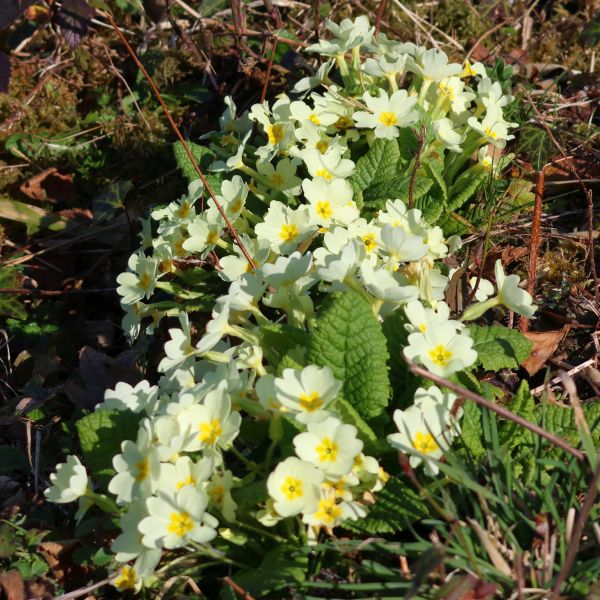
    With our mission accomplished we finish off the walk by strolling towards the cabin and then turning right to head down to Church Town road.  Jon spots a clump of Primroses and can’t resist another picture.  It is an ideal way to celebrate spring.Primrose BET 1 600
    Footnote:  We were intrigued by the origin of the name Nuthatch.  Apparently the name comes from the middle English “nuthak” meaning nut hacker, from its habit of wedging a nut into a crack then repeatedly bashing it with its beak to get into the soft kernel.


    Nuthatches primarily eat  insects and other invertebrates in the summer, switching to a diet of nuts and seeds in the winter.

     

  • 27th January 2025

    27th January 2025

    Monday 27 January 2025 9.00 – 10.00 a.m.

    Winter has hit us hard this year.  From frozen nights and icy days, to lashing wind, rain and hail, and to days of overcast, damp and cold gloominess.  The rain has come in bucketfuls making channels of water down the slopes of the wood and deep puddles in the crevices.  During those lovely summer days we often talk of how important a good winter is, but when it comes in all its correctness we are reminded of its brutality and wonder how nature can possibly survive.  But survive it does.

    Late January brought the first sign of a break in the weather.  Monday the 27th surprises me with a morning that doesn’t require my neighbours to diligently scrape the ice off their car.  I wake hopeful of an hour of discovery in the woods.  And so it is that as I arrive at the top of the woods and enter the pedestrian access gate which leads to the Horsering Meadow I can already hear bird song.  What a joy.  Blue Tits are flitting around, chatting and trilling as they forage for insects in the tree bark, Robins are perched on the top of the trees singing at the top of their ‘voices’ to mark out their spring territory and a solitary Dunnock is outsinging all of them with its piccolo-like high warble.  Bird experts call it a squeaky little ditty but I think that is rather insulting for the power and joy that the little Dunnock puts into its tuneful song.

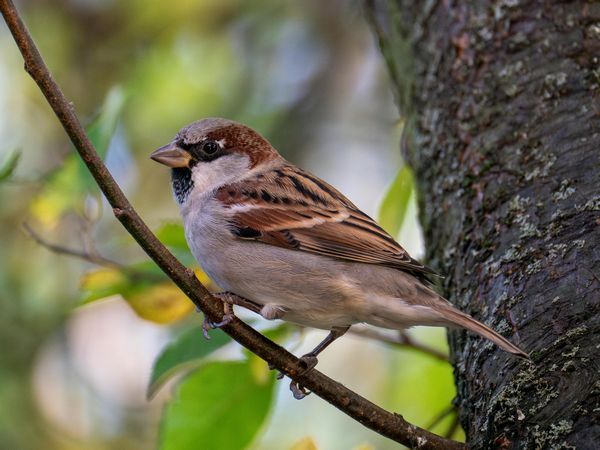
    Whilst I’m thinking about Dunnocks they are definitely worth a proper mention.  Dunnocks are easily confused with House Sparrows and to add to the confusion are also called Hedge Sparrows.  However they are actually very different birds with very different songs. 

    House Sparrow 600

    Sparrows, or House Sparrows, are noisy, sociable birds that love to live in groups, darting around and communicating animatedly and constantly. The females and young are pale coloured, light brown and grey whilst the males have stronger black, white and brown markings.  The song of the House Sparrow is very similar to its contact call – the song is a monotonous cheep, chirrup sung by the male to attract a female, whilst the contact call is a simple cheep cheep cheep.  Sadly House Sparrows are now on the endangered list in the U.K., having been driven out of their preferred habitat of urban bushes, brambles and barns due to our drive for tidiness.  House Sparrow boxes with three apertures, plus the added benefit of a bird feeder or two, are wonderful opportunities to re-establish a colony.
    Dunnock 600

    Dunnocks on the other hand, whilst being almost identical in size to House Sparrows, are a noticeably duller bird – small brown and grey.  Quiet and shy and often seen on their own or in pairs, they like the top of bramble bushes or the sides of woodland paths.  They tend to live in dense scrub and bramble on the outskirts of the urban environment.  Generally Dunnocks only become visible either to sing loudly from the top of a bush or when two males come together and chase each other around.  In the BET woods Dunnocks, although often hidden, are in good numbers as evidenced by their song, House Sparrows can only be found in the surrounding gardens.

    As I pass the Horsering Meadow the wood becomes gloomier but the presence of birds is everywhere.  Male Blackbirds fly out from cover often directly into my path.  Busy sizing up the opposition and preparing for a fight they scurry off aroud the undergrowth and take little notice as I stroll by.  The number of Robins in this area, and in fact throughout the woods, is stunning.  They really are thriving this spring so that it takes me quite a while to reach the Warreners Cottage and then pause to enjoy the Cottage renovations.  Positioned in the tall trees overhead, the Wood Pigeons keep an eye out to see if I have brought any refreshments.  Not this time but they look incredibly rotund and healthy so I’m not too concerned.

    I note it is already nearly time to join up with this morning’s workparty.  So I head quickly along and down the paths to meet up with the team at the Cabin.  After a brief early spring visit today I’m so looking forward to real spring in a month or so.  I’m sure there are yet more cold and brutal weather surprises to come but our hardy birds are clearly revelling, just as we do, in a break in the weather and a chance to make a re-appearance.

  • 18th November 2024

    18th November 2024

    Monday 18th November  8.45 – 9.30 a.m.

    A cold morning’s bird watching whilst sitting on the bench on The Layers meadow..  

    A cold but reasonably bright Monday morning and a chance to sit on the bench halfway up The Layers and see what appears.  The Layers is meadow up a steep stepped path to the left of the Cabin.  Previous readers will know that this bench is one of my favourite spots for bird watching.  There is both an abundance of interesting birds and a wonderful view to admire.  And today was no exception.

    As I approached and tackled the windy steep steps up to The Layers bench, two Crows raucously announced my arrival.  Whether because of them or by chance, there were no other bird sounds for quite a while, so I settled myself down comfortably and waited.  Slowly calls, twitters and songs started up.  First the Robin, singing high and loud in the scrub to my left, then a Robin alarm call off to my right.  Next a pair of Blue Tits chuntering merrily not to be confused with a pair of Great Tits which arrive in an adjacent tree and sound very similar.  Whilst the Blue Tits flit around the trees the Great Tits are more intent on scrapping the branches for bugs whilst communicating intently.  All of a sudden a Song Thrush flaps angrily out of a nearby bush and flies off in a huff.  Song Thrushes are notoriously shy and retiring so it was either disturbed or it was fed up with me not moving on.  Next a Goldfinch passes high overhead twittering lightly and Jackdaws call out on their way past, heading in the opposite direction.

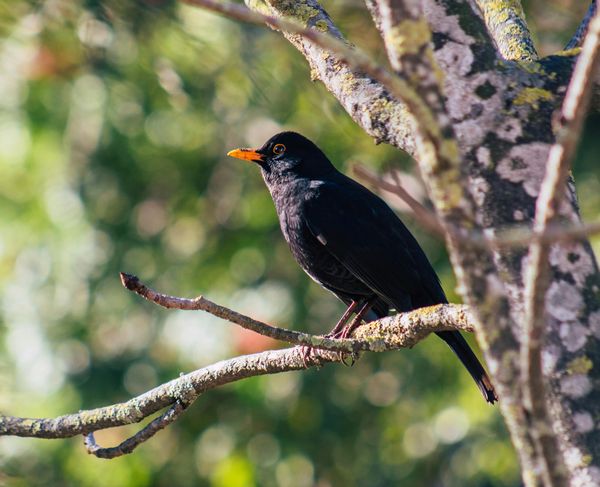
    Male Blackbird 600

    A Blackbird alarm call sounds off to the left and then a male Blackbird flies hastily out of the bushes.  Blackbirds have steadily increased in numbers in the woods over the last few weeks.  Regular alarm calls, tussles between male Blackbirds, or 3 or 4 male Blackbirds tagging a female Blackbird are all signs that the residents have some newly arrived competition.  Blackbirds are partially migratory within the UK but there is also a good chance they have arrived from Scandinavia and the Baltics or other parts of Europe.  It is almost impossible to tell a resident from an arrival – although there is some talk of a darker bill.

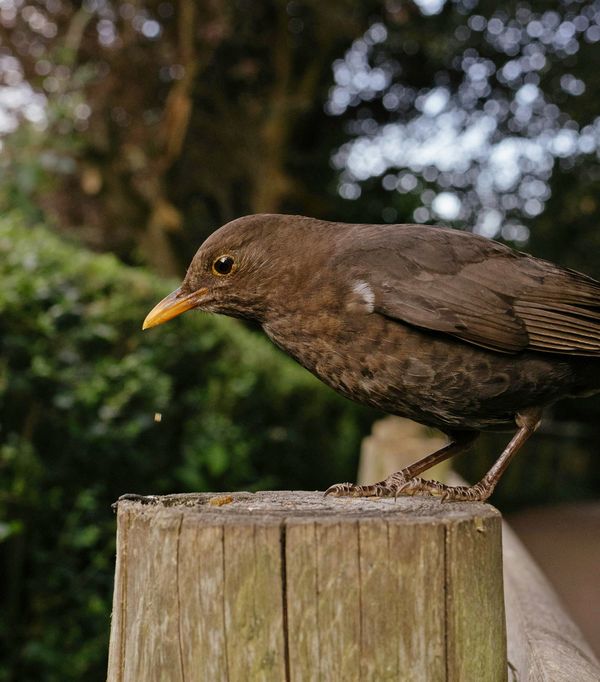
    Blackbirds are considered one of the most common birds in the UK and, as such, we possibly take them for granted.  However they have always been one of my favourite birds and long before I became a birder the early evening song of a Blackbird as I walked home from work was always a pleasure.  I would often stop and listen as the bird peddled his up and down melodic chatty song from the top of a TV aerial (I’ve never seen a Sky dish used as an alternative) whilst I waited and wondered from which direction the sound of a reply would come.  It often made me think of detailed messages sent from village to village by drums in forested areas.   Female Blackbird 600

    The males, forceful in personality and quite single minded, are dark black with bright yellow beaks and a yellow ring around the eye.  The males are a real contrast to the timid, retiring nature of the largely dark brown female. 

    It is not commonly known that Blackbirds are part of the Thrush family and as such their behaviour is similar to that of other Thrushes.  They like stomping the ground and listening out for worms but they are also partial to fruit and insects.  Although they are not traditionally attracted to bird feeders they can be spotted hanging out under a feeder to see what drops.

    And so, as I start to feel the chill of the autumn morning, it’s time to head back down to the Cabin.

  • 26th October 2024

    26th October 2024

    Saturday 19th October  9.15 – 10.00 a.m.

    Autumn in the woods on a chilly but sunny Saturday morning.  My visit today takes me to the top of Jubilee Stone Wood. I park up, enter via bridleway and head along the permissive path towards the Horsering meadow. 

    Water drips off the trees after the heavy rain last night but the promise of a dry sunny day is in the air.  In front of me are some old apple trees laden with small apples and to the left there are Blackberries still left on the bushes.  There is too much fruit for us to make use of so hopefully a stock of winter food for the woodland residents.  A heavy Wood Pigeon is disturbed by my presence and flaps noisily out of one of the apple trees sending water raining down on me.

    Whilst I dry off a soggy notebook I hear a Robin singing in the undergrowth close by and Goldfinches twittering and warbling overhead.  A Great Spotted Woodpecker chips then I hear the alarm call of a Blackbird, then a Chiff Chaff warming up its song and a number of Blue Tits communicating as they pass by me flitting through the trees.  It’s wonderful to hear so many sounds of birds again after the long, quiet summer.  In particular it is good to see and hear Blackbirds again.  Some recent arrivals but most just reappearing and establishing their territories and food rights before the winter influx of Redwing and Fieldfare, who come to compete for the winter berries.

    I’ve barely reached the Horsering as there is so much activity.  Weekend walkers and their wet dogs are enjoying the early peace and quiet and the chance to stroll without having to rush.  It is a pleasure to see how well behaved and gentle these early riser dogs are as they enjoy the walk, the smells and the fresh air. 

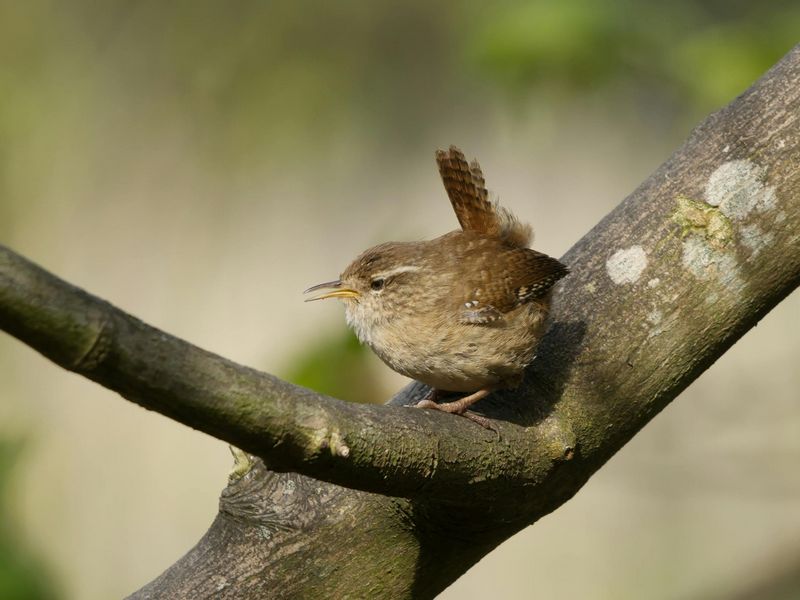
    Just as I note a squirrel passing quietly overhead to avoid the attention of the spaniel by my feet, I hear the loud alarm call and see a very fluffy and strident Wren moving up down and around a small tree up ahead. Wren 1 600

    Wrens are notable for having one of the loudest alarm calls of the woods and they can be relied on to be the first to complain when an unwanted visitor appears.  With their short brown tail raised, their rattling alarm and, if really fraught, their rapid movement the Wren is guaranteed to catch attention.  They certainly make up for their size and brown colouring with the force of their personalities. 

    Wren 2 600Wrens are one of our most common birds of the UK and overwinter here generally successfully.  However they have a weakness when it comes to the cold so despite all their feistiness, when cold weather hits, Wrens will sometimes sacrifice their territories to snuggle up and stay warm together.  I was amused to learn that the word wrenne comes from Middle English and means little tail.

    The dogs have moved on and so should I so the Wren can get some short-lived peace.  I take a right turn immediately after the Horsering meadow and then another right to head back along the bridleway towards my car.  As I do, a band of Jackdaws pass overhead cackling as they fly in the direction of the quarry, where the sunshine and the rising air will no doubt provide plenty of entertainment.

    Time for me to leave for the day and look forward to returning to enjoy plenty more autumn colours and sounds.

  • Warrener’s Cottage

    Warrener’s Cottage

    Location

    From the Jubilee Stone, take the sign-posted permissive-path heading south for about 50 metres and the remains of the cottage are located on the right hand side. There is an information board next the path.

    History

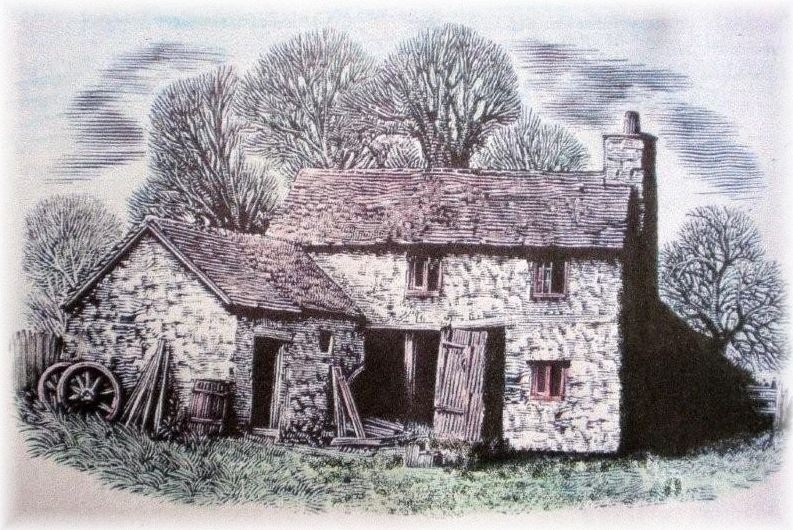
    The largest known dwelling in Jubilee Stone Wood was the cottage and garden referred to on old maps as either ‘Warren House’ or simply ‘The Lodge’. The first written references to the cottage date from the 1780s when the building was repaired after a severe storm. The ruins visible today suggest that the cottage would have originally covered an area of about 40sq metres with the adjacent walled garden (located to the left of the cottage) about 1200sq metres.

    Rabbit Warrens

    Rabbits (or ‘coney’) were introduced into England by the Normans and were highly valued for their meat and fur during the Middle Ages and have remained so almost up to the present day. It is thought rabbits originally came from south-western Europe so to ensure they would thrive in our cooler climate, artificial warrens were built consisting of low, flat topped mounds varying in size from a few metres to over a kilometre in length. These mounds were often referred to as ‘pillow mounds’ and were once quite a common sight in the English countryside.

    Warreners were appointed to protect and harvest the rabbits and it was not unusual for the Lord of the Manor to allocate them suitable accommodation as part of their position. As rabbits were officially classified as ‘game’, no warrens could be established during the period without the express permission of the King.

    The warren in Jubilee Stone Wood was granted to Sir Richard Rodney on the 10th June 1318 by order of King Edward II. References from a survey of the Manor of Backwell in 1709 record that the warren at that time covered an area of 3 furlongs by 1½ furlongs (600 x 300 metres) and would consequently have had the potential to produce many thousands of rabbits per year. The warren appears to have been in continual use until 1812 when the introduction of the Enclosure Act divided the area of the warren into fields which were subsequently allocated to Court Farm. After this date the fields were most likely used for other agricultural purposes and the warren was almost certainly abandoned. 

    The Cottage & Garden

    The warreners who cared for and eventually killed and processed the rabbits were often provided with purpose built accommodation. This was sometimes of a higher standard than was usual for the period and illustrates the importance of rabbits at the time. The cottage would have been a two-storey structure built of shaped limestone blocks extracted from the local bedrock and made watertight with a thatched roof. The warrener would have used the ground floor as a workshop to process the rabbits whilst using the upper storey as his living accommodation. When not working this arrangement would have enabled him to keep a watchful eye out for both predators and poachers approaching the warren. The large adjacent garden would have also allowed the warrener to grow his own produce enabling him to be relatively self-sufficient. After the warren was abandoned, the records show the cottage was still lived in up until 1843, however it too fell derelict some time between 1843 and 1882. 

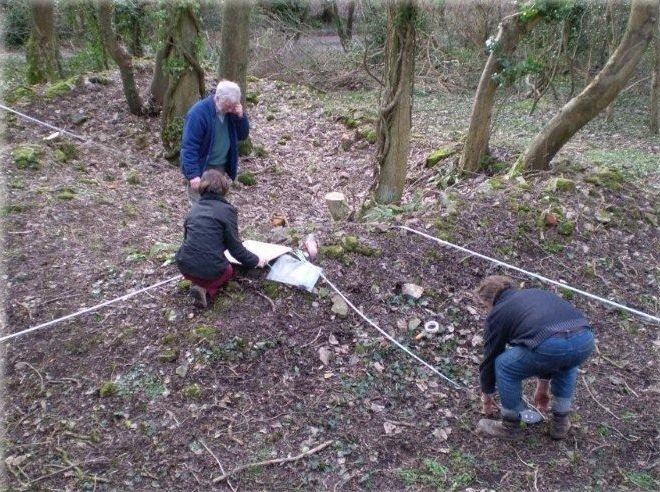
    Surveying the Warrener’s Cottage’s Remains – 2009

    Warreners_Cottage_Survey

    Cottage Excavation – 2019

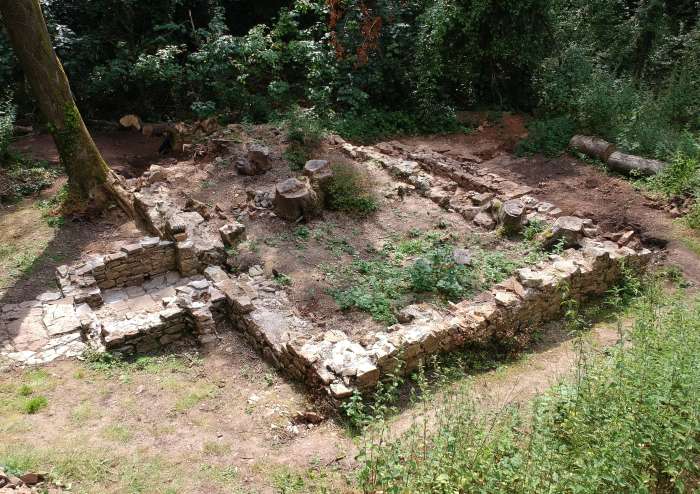
    To mark the 700th anniversary of the warren, in 2018 it was decided to expose the remains of the cottage walls.  One year later, the excavations have revealed the structure of the main building plus a porch and two outbuildings. The photo below was taken in July 2019 from a similar viewpoint to the above picture. We had no idea what lay deep under all that soil!

    The story of the excavation and more photos can be followed here:  Warrener’s Cottage Excavation

    Cottage July 2019 700

    The complete story of the Cottage was documented in this article written for the Nailsea and District Local History Society journal, November 2024: Warrener’s Cottage

  • The Lime Kiln

    The Lime Kiln

    Location

    Walk downhill from the Jubilee Stone (towards the Church Town entrance to the reserve) for about 100 metres. The Lime Kiln is situated on your left hand side, about 20 metres along a side path edged with stones & logs.

    Restoration

    The restoration of Jubilee Stone Wood’s limekiln began in 2006. By the end of the first year we had removed approximately 1.5 tonnes of rubble to expose more of the structure.


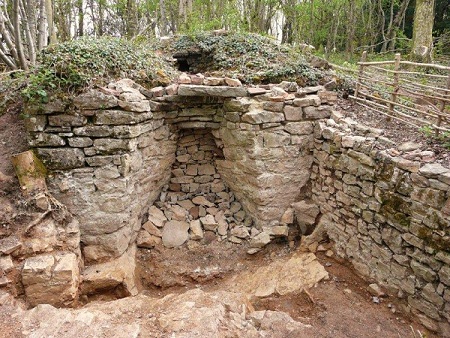
    The kiln itself has been found to be in remarkably good condition – probably protected from the elements by the enormous rubble pile in front of it. The picture below shows the kiln as it was at the end of 2009 (after the removal of approximately 5 tonnes of rubble) when we were at last uncovering the full extent of the structure.

    Limekiln

    Historical Context

    The Lime Kiln in Jubilee Stone Wood was constructed sometime between 1843 and 1884 to convert limestone (calcium carbonate) to ‘quicklime’ or ‘lime’ (calcium oxide). This material had many uses ranging from the production of lime mortar and lime wash for buildings to its use in agriculture as a soil improver. 

    Towards the end of the 19th century, improvements in transport enabled larger industrial kilns to mass-produce lime at comparatively lower prices whilst the use of cement in the construction industry was becoming increasingly popular.

    Historical evidence from old maps indicates that Jubilee Stone Wood’s lime kiln fell into disuse sometime between 1884 and 1902. The adjacent structure probably collapsed soon after the kiln was abandoned which has clearly helped to preserve the kiln in the excellent condition we find it today. 

    The manufacture of quicklime was a time-consuming, dangerous and labour-intensive process. Sufficient limestone and fuel (probably coal and/or wood) would have to be collected and transported, loaded into the kiln and set alight. The limestone was then heated in the kiln at temperatures of up to 1000ºC for around 3 to 4 days. The raw materials needed for the process were all available locally. Wood (or charcoal) could be easily sourced from nearby woodlands and coal could be hauled up Cheston Combe from the pits around Nailsea.

    Limestone was almost certainly mined from the surrounding area and the woodland has several large, square shaped pits where limestone has clearly been extracted.

    Construction

    The kiln has been built from locally extracted, shaped limestone blocks and has been deliberately set into the sloping hillside. This arrangement has the advantages of saving on construction costs whilst also assisting in its ease of operation by being able to load from the top and unload from the bottom. It also ensured the kiln was aligned with the prevailing south-westerly winds which would have helped fan the fire and speed up the conversion process.

    The internal bowl of the kiln would undoubtedly have been lined with Pennant sandstone extracted from around Nailsea. Whenever kilns were constructed from limestone blocks it was always necessary to physically separate the limestone used in the main body of the kiln with the fuel otherwise it too would be converted to quicklime during the lengthy firing process.

    Direcly in front of the kiln are the remains of an open-sided rectangular enclosure which may have served as a storage area for the kiln’s labourers or alternatively used as a sheltered loading point for the extracted quicklime.


  • 14th June 2024

    14th June 2024

    Friday 14th June 2 p.m.

    Not just birds but butterflies too! Follow Viv on one of her weekly butterfly surveys in the BET woods.

    When BET bought the reserves 18 years ago, it was decided by the Trustees that both woods would benefit from the creation of cleared spaces.  By bringing light into the relatively dark woods growth of a wider variety of plants could greatly improve biodiversity.  Not everyone supported the idea of removing the trees and leaving what initially appeared to be dry grassland or scrubland.  But over time the results have been spectacular.  The grasslands are now populated with an incredible variety of wildflowers and with this has come a noticeable increase in insects, bees, butterflies and recently dragonflies. 

    As a result we decided a few years ago to set up a butterfly survey transect.  By working with the UK Butterfly Monitoring Scheme we can also contribute to the national data collection.   The Scheme requests that we aim to head out every week between the end of March and early October and count all the butterflies we can spot within our transect.  However there are time and weather limitations on butterfly counts – and this year has been particularly challenging!   However even a poor survey is a useful survey so whenever we even barely met the weather requirements we have made the effort to head out.  Today is such a day.

    The weather is overcast and only 17°C so we are not expecting great results as butterflies like sunny (rather than hot), dry and calm weather.   Our count starts at the very top of Jubilee Stone Wood heading along the path towards the Warreners Cottage.  In the past, at this time of year, this woodland route would offer up a good selection of butterflies glad to escape the heat of the sun, but today not one.  We try and remain optimistic. The sky is still overcast as we the reach the Cottage. 

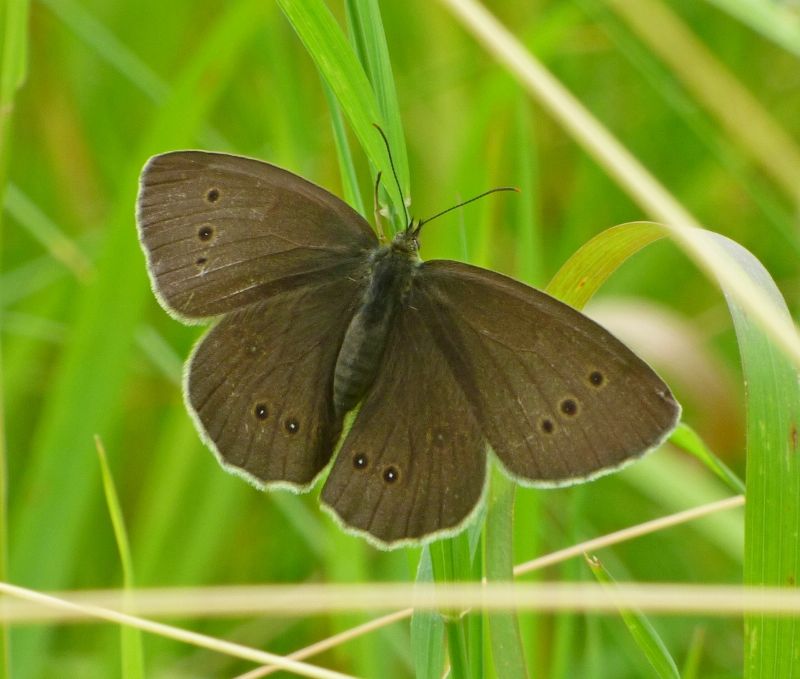
    8PIC 1 Ringlet We push through the overgrowth which has so benefitted from this inclement weather, to find a couple of Meadow Browns and a few Ringlets lurking in the grasses.  Not a good turnout but we are delighted to see them nevertheless.

    8PIC 2b Sycamore8PIC 2 Sycamore

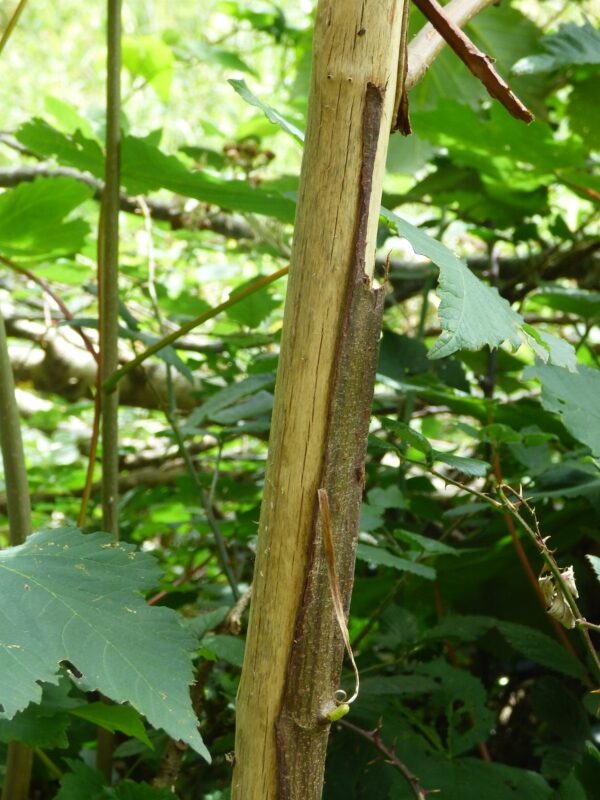
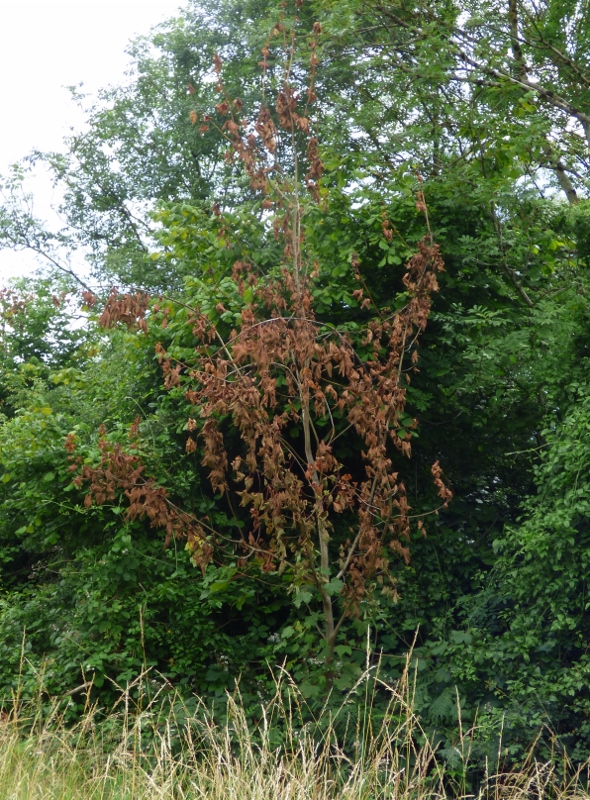
    In front of us we also spot some lovely Sycamore trees which appear to be dying.  Ian advises me that this is almost certainly Squirrel damage. 

    Squirrels love to strip the bark to feed on the nutritious sap beneath.  For some reason, probably connected to our weather, this has been a particularly bad year for stripping and Sycamores are clearly one of their favourite trees.  After our Ash dieback loss we can only hope the Sycamores rally and survive.

    We head for the Jubilee Stone and butterfly matters improve.  The skies have cleared a little and this is a beautifully warm open spot with wild flowers dotted around the feature Ash tree.  Although numbers are still not high we are delighted to see Marbled Whites and a good number of both Meadow Browns and Ringlets.  We feel more positive as we head down the track towards the Jubilee Stone meadow. 

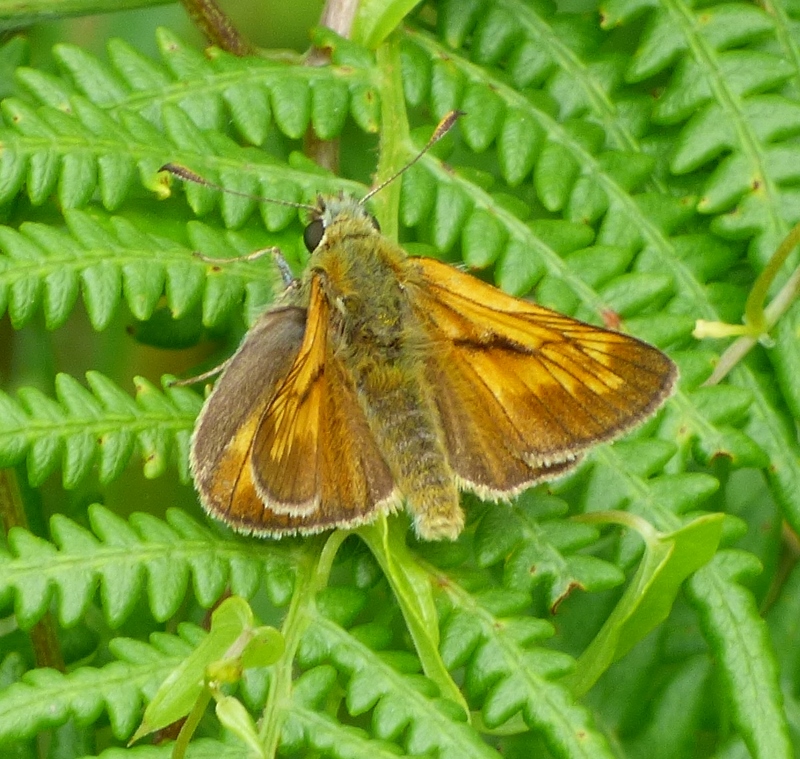
    The Jubilee Stone meadow has been a real success.  Cleared in stages between 2007 and 2016, it has been allowed to naturally reseed, with maybe the occasional help from Ian’s pocket, and now offers a wonderful selection of flowers and plants.  Whilst butterfly numbers are down we are still delighted to count over 70 butterflies including a couple of Small Skippers. 

    8PIC 3 Small Skipper

    Quite difficult to distinguish from the Large Skipper (or even the Essex Skipper which has been spotted in North Somerset) Ian uses his camera scope to focus on the antenna and the forewings to make an identification. 

    As we exit the meadow we take the path over to Badgers Wood and head for Fern Way meadow.    A small area cleared close to the quarry it now offers a spectacular display of Cowslips in the spring and the summer brings Ox Eye Daisies and Marjoram.  Despite this, the meadow has, in the past, been our least successful for butterflies, possibly because it is an isolated spot rather than linked.  Either way we are happy to record 8 butterflies in the meadow before progressing up the track to the three meadows located next to the quarry.

    The three meadows are consistently good for butterflies.  Located in a very sunny spot, high up the track the butterflies enjoy a selection of Scabious, Clover, Gorse, Vetch and Birdsfoot trefoil as well as grasses and cool woodland areas.  We record a reduced but fair number of Ringlets, Meadow Browns, Small Skippers and a Small White.    And we are delighted to spot our first Gatekeepers for the year. 

    The remainder of the survey takes us along woodland paths.  We do catch sight of a couple of Meadow Browns fluttering around in the dappled sunshine but as we return to the top of Jubilee Stone Wood we can only hope that next week is warmer and sunnier and the butterflies return to enjoy the feast of flowers and plants.