
Author: PeterBET

  • 6th December 2023

    6th December 2023

    Viv 1 Neo crWednesday 6th December  9.00 to 11.00 a.m. Part 1

    It is a cold, grey morning at the start of our first winter bird transect survey on behalf of the British Trust for Ornithology (BTO).

    Even the steep walk up to the Jubilee Stone Wood gate is not enough to warm the hands and as we stand and listen the wood is dark and still. It takes a few moments before we finally hear soft, brief bird sounds.  The contact call of a Blue Tit or a snatch of Robin song. 

    Suddenly we hear the loud call of the Jay – often described as screaming, to me it is more scratchy and crow like – but certainly abrasive. Then another appears – and the noise level increases. Jays often call when they are on the move and it may be these are just contact calls – however there also appears to be a bit of a dispute with some Jackdaws who are reluctant to shift from the Jay’s chosen perch.  After a few minutes the Jackdaws fly reluctantly away and the Jays settle.

    The wood returns to its quiet and sombre tone and we continue our walk up through the wood listening out for the occasional note of the Blue Tit, Great Tit and even Nuthatch as we go.  Gradually I can pick up the squeaks and chit chats of approaching Long-tailed Tits. Long tailed Tit
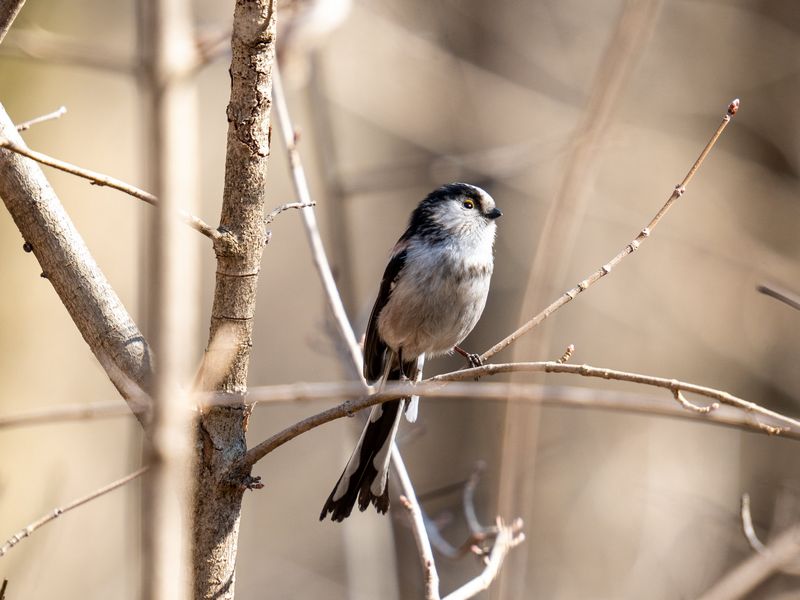
    With their bouncing personalities, ability to hang any way up and constant chatter they cannot fail to make us smile as they dive in and around the small trees each side of us. They are foraging on the cold tree branches as they go and, as we walk, they join us for a while before peeling off as if to find more interesting entertainment or better food.

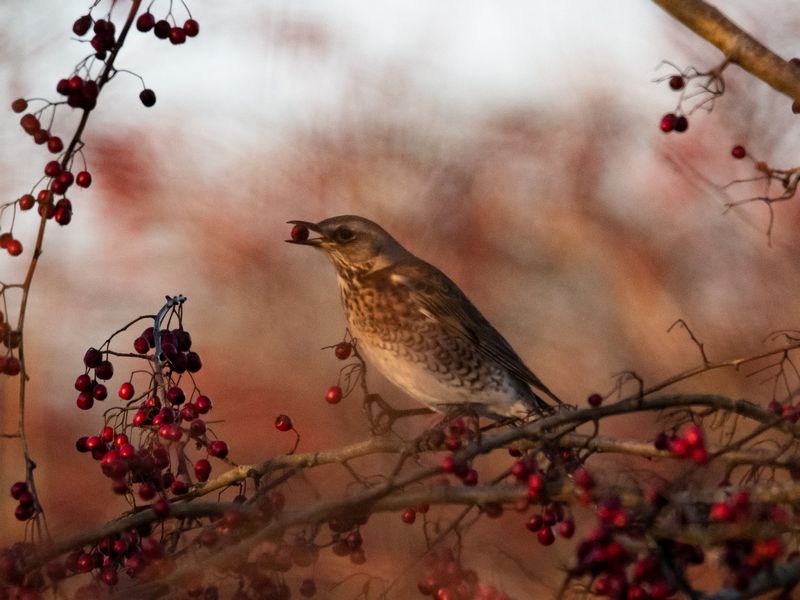
    As we reach the new tree line we catch sight of thrush-like birds darting out of the trees in front of us and flying ahead.  They are quick and silent and in this grey light initially difficult to identify.  It is only their characteristic flight pattern, shyness and the occasional chack chack chack or an up and down song that confirms that these are Fieldfares and Redwings.  
    Fieldfare

    In good numbers all over North Somerset during the last 2 weeks we are not surprised to see them in these woods. They come for berries and both woods have had an excellent crop this year. 

    Fieldfares (left) and Redwings (right) often group together in flocks in the winter and can, at first glance, be difficult to tell apart. However the Redwing is the smaller of the two and notable for its shorter tail, spotted breast, rusty red underwings and bold white supercilium (eyebrow). Redwing
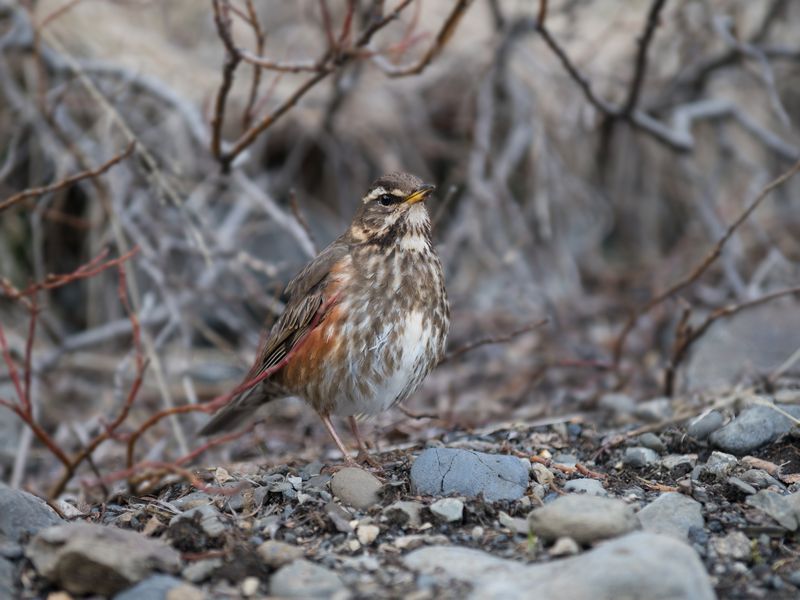
    Whereas Fieldfares are more Blackbird sized with a light grey head and back, a more patchy chest pattern and a longer tail. Both are rather shy birds and fly off into the trees quickly at the slightest sound. 

    We follow them up the path and through the woods to the Jubilee Stone, catching sight of Blackbirds, Wood Pigeons, Jackdaws and Goldfinches as we follow the field line and then pass through to the gateway at the end and finish the first half of our survey.

  • 20th November 2023

    20th November 2023

    Monday 20th November  8.30 – 9.30 a.m.

    Late October and early November have been rather quieter for birds. 

    The rain, wind and cloud cover have been discouraging and many birds have been quietly sheltering or going about their business – and no doubt taking the time to enjoy the garden bird feeders. 

    However the weather has eased at last.  As I approach the cabin I can hear the busy chatter of Great Tits – offering up their wide variety of calls and song.  These along with the Blue Tits, with whom they are often to be found, are in very good numbers in both woods – enjoying both the dense  scrub and bark of the tall trees for foraging and for safety.

    Turning left at the Cabin and heading for the Layers (reached by a set of steep steps to the left of the Cabin and taking you up to wonderful views over North Somerset) a Robin is singing out loud and clear from the spindle tree still in ‘bloom’.   Then I catch snippets of a song, sounds of a bird warming up its syrinx (the bird version of our larynx) for the morning and not quite singing in key – most likely a young bird singing its first autumn tunes. 

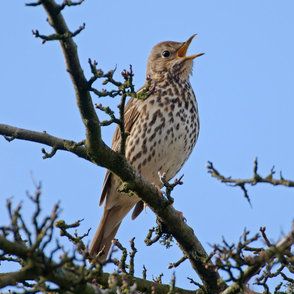
    Song ThrushIt’s a Song Thrush hiding in the bushes at the top of the Layers.  It sings in breaks and doesn’t quite complete its musical phrases but it’s a great start for a chilly morning.  Often shy and timid this bird is especially so and flies off as soon as I appear. 
    Reaching the top of the Layers I progress through the Yew trees, hopeful of the sight of a Goldcrest and I’m not disappointed. Goldcrest

    I stand quietly still and soon their high pitch seep-seep-seep can be heard approaching.  A family of about 5 or 6 dart across to, hang and then seem to tumble from one Yew Tree branch to another.  These are their favourite trees and they, like other birds, are still enjoying the remainder of the berries.

    But I’m not to be allowed to stand for long.  I’m disturbed by an angry squirrel – chuntering and barking behind me.  As I can’t see another squirrel around I can only assume that I’m on his patch.  His tail is flicking madly and his fur is on end.  I move on to allow him some space.

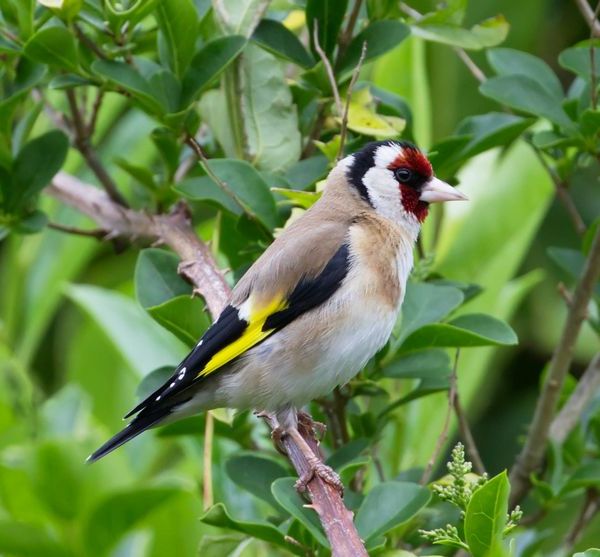
    GoldfinchI pass on through the tall trees and reach the Quarry top.  The chip of a Greater Spotted Woodpecker can be heard deep in the woods, Goldfinches twitter as they fly over my head and the Jackdaws and Ravens around the Quarry squawk and honk.

    Late autumn has come at last with its wonderful sights, sounds and colours and with the promise of drier sunnier but colder days to come.

  • Good and Bad News – October 2023

    Good and Bad News – October 2023

    Ash dieback 1

    Good and Bad News

    Easy-access path resurfaced – but vandals have been at work.

     IMG 3926 sm

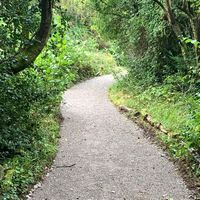
    We are very pleased to have resurfaced the easy access path in Jubilee Stone Wood which had become very rutted, muddy and slippery after 17 years. Rob Hodges has done a fantastic job for us, laying over 40 tonnes of stone kindly donated by Tarmac.  We are also grateful to Nailsea and Backwell Rotary for a generous donation towards other costs. 

    Please note that this permissive path is not a bridleway and should not be used for horse riding or cycling. Unfortunately one horse rider has already churned up the new stone/dust top layer.

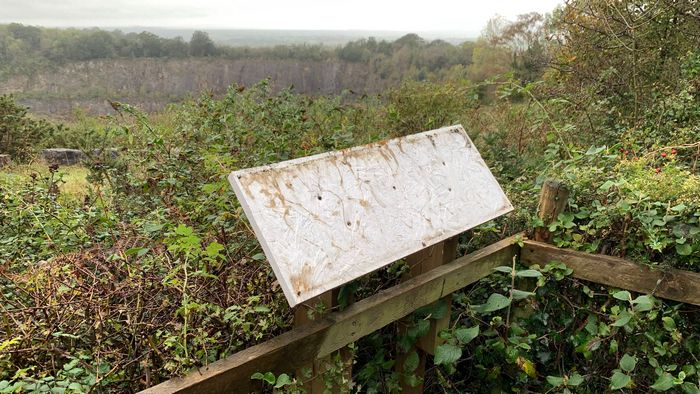
    On a less pleasant note, we are sorry to report that the Badgers Wood viewpoint board, funded by Nailsea Lions, has been vandalised. The large aluminium board has been ripped off its mount deliberately and discarded – probably into the quarry.

    Vandalised Oct 2023 700

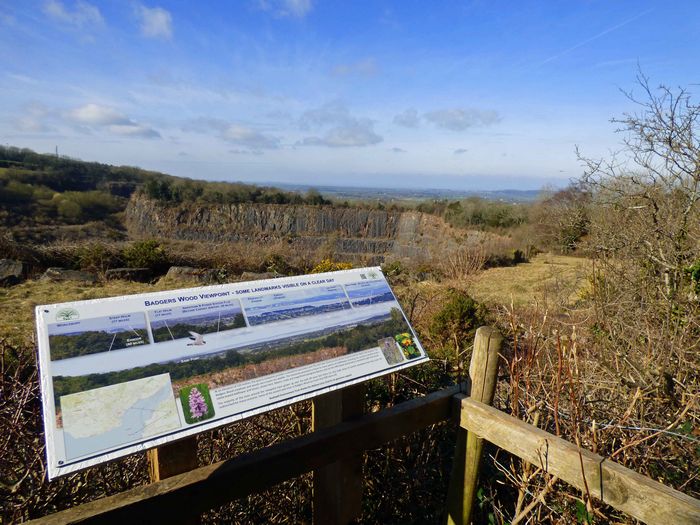
    As installed in 2021….

    BW Viewpoint LR 700

    Sadly this year there have been other incidents at the viewpoint with barbecues left behind, extensive littering and vegetation set alight. Previously, the tall noticeboard was damaged and the seat moved.  At the end of the school year, stacks of exercise books were strewn around. Fortunately the culprit’s name was in the books and he was reported to the police.

    If you become aware of similar antisocial behaviour on BET land please let us know – although we would not want you to enter into any confrontation.

  • 9th October 2023

    9th October 2023

    Monday 9th October  8.30 – 9.30 a.m.

    A beautifully mild start to the week – 19C, sunny with light winds. 

    The birds are singing loud and clear as I arrive.  There is much bickering today as the autumn song picks up tempo and the new younger birds find their place in the hierarchy.

    Three Mistle Thrushes can be seen and heard having a real set to high up but close to the cabin.  Their alarm call is very distinctive and resembles a football rattle or machine gun.  As shy birds this was a rare sighting.

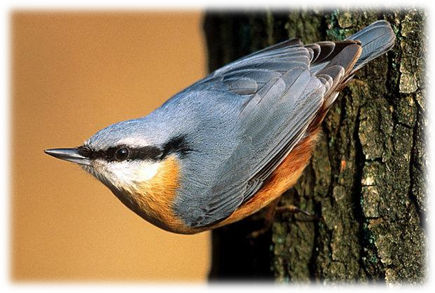
    Nuthatch

    Nuthatches, on the other hand, are plump birds about the size of a Great Tit and resembling a small Woodpecker – with a distinctive blue-grey on top and chestnut on the sides.  Agile with a beautiful call they are very much at home in both of the reserve woods.  This morning their call is ringing out from high up in the trees as they dart from tree to tree digging insects out of the bark.  They have a fondness for nuts (of which there is a plentiful supply this year) so there is every hope they will continue to thrive.

  • Heavy Horses – Easter 2023

    Heavy Horses – Easter 2023

    Peacock sm

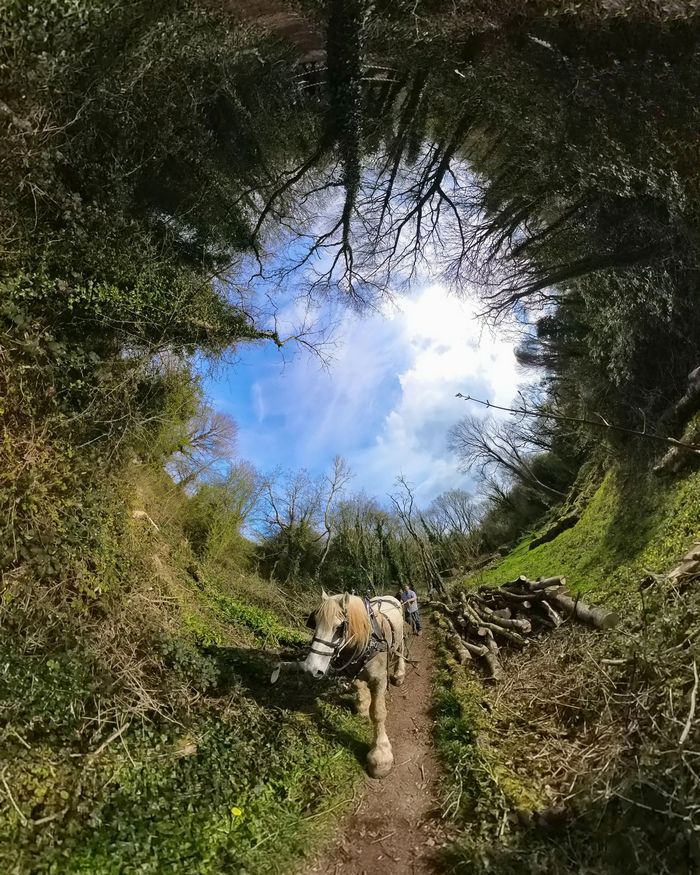
    Heavy Horses working in Jubilee Stone Wood – Easter 2023

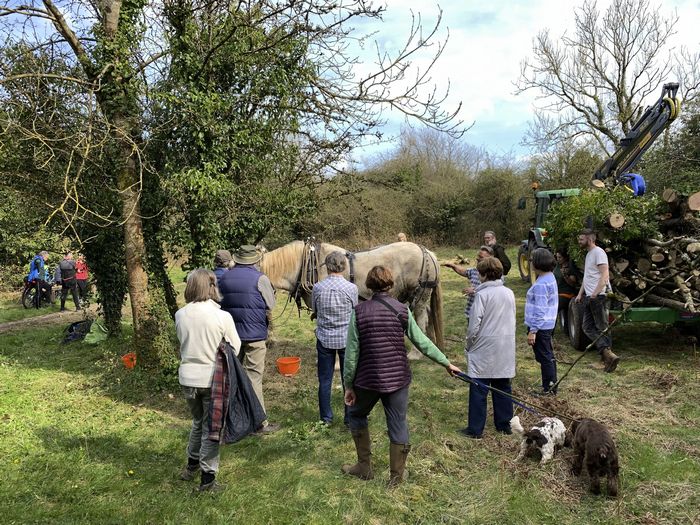
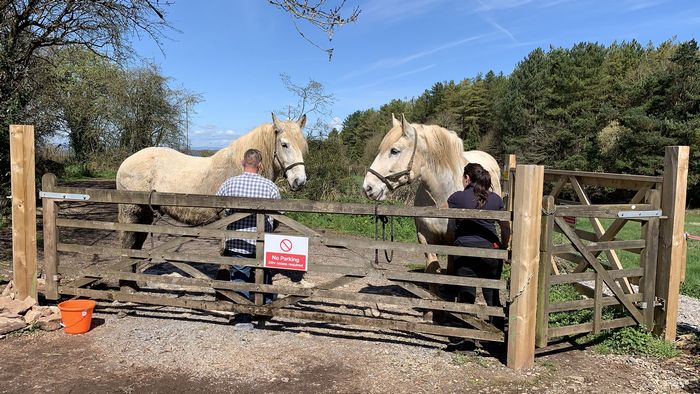
    BET members came to meet the horses hauling logs out of the woods.

    Heavy Horses – Easter 2023

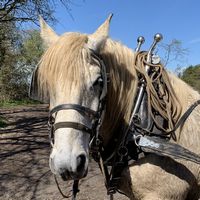
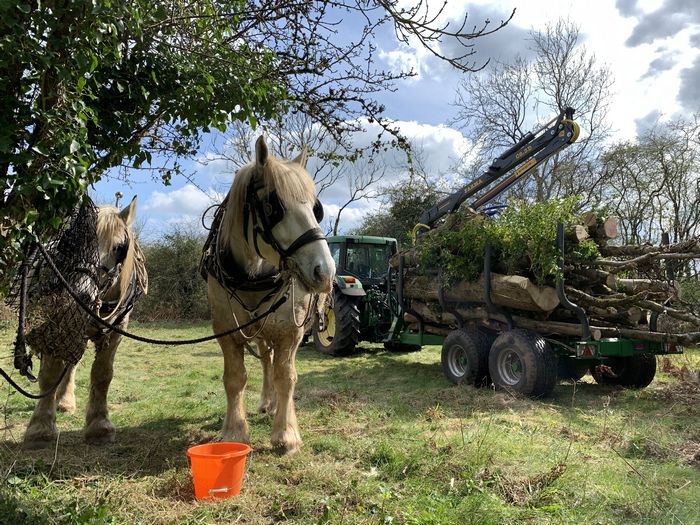
    BET members were treated to the wonderful sight of two heavy horses dragging felled trees out of the woods.  A ‘meet-the-horses’ session was arranged to allow members to see the horses after they had finished work for the day.  The two French Percherons – Jurgen and Marcel – belonged to Oakfield Farm, near Wotton-under-Edge.  Using horses was a fantastic and traditional way to extract the felled diseased ash trees from the BET reserves with their steep terrain and narrow paths.  Watercress Farm 1200

    The logs were dragged to the Horsering Meadow where our local partner, Backwell Logs, could load them onto a trailer and take them to their farm for processing, seasoning and selling as firewood. We hope the horses will return in the coming weeks to help us get more of the felled timber out of the woods.

    Belmont Vision
    Horses 7 700

  • Logging action 2023

    Logging action 2023

    Ash dieback 1

    Logging Action Film – 2023

    A short video of how we harnessed the power of heavy horses and BET volunteers to extract felled timber from the woods.  As shown at last year’s AGM.

    The felling of diseased ash trees last winter resulted in a large volume of excess timber on the reserves.  We left some logs as habitat piles but the majority were removed and sold for seasoning as firewood by Backwell Logs.

    Ash dieback 1

    Over Easter we enjoyed the sight of heavy horses working in Jubilee Stone Wood to extract logs, as descrbed in this article: Ash Trees and Working Horses – April 2023 

    After the visit by the horses, there was still a large amount of timber to haul out from the steeper and more inaccessible parts of the woods. We tried lots of different methods to get the logs down to the road for collection, including small tractors and a brilliant ‘logging arch’ constructed by Andy, our metal-working treasurer. Over the course of many months our volunteers simply used sheer muscle to shift tons of logs, as can be seen in this video of horses and volunteers in action:


  • Ash Trees and Working Horses – April 2023

    Ash Trees and Working Horses – April 2023

    Ash dieback 1

    Ash Trees and Working Horses – April 2023

    Over the Easter weekend, magnificent heavy horses started hauling felled diseased ash trees from Jubilee Stone Wood.


    Further to our previous article, a spell of dry weather allowed working horses to visit Jubilee Stone Wood for two days over Easter. Two magnificent French Percheron heavy horses, Marcel and Jurgen from Oakfield Farm near Wotton-under-Edge, made a great start in extracting felled ash trees, in partnership with Backwell Logs.

    Horses 1

    The Horsering meadow was used as their base and for stacking the logs. The horses and their drivers John and Ryan made repeated trips along the permissive path leading to the Warrener’s Cottage and steadily reduced the jumble of felled timber on both sides.

    Horses 2

    It was wonderful to see how the horses negotiated all the scattered logs, fallen stones – and holly – with complete trust in their drivers.  Once hitched to a massive log they used their immense power to get the log moving with no hesitation and then drag it along at a very fast walking pace.  A relay working pattern evolved with Jurgen using his more explosive power to extricate big logs from the tangled piles and then Marcel using his steady power to haul them all the way to the meadow.  Once there, Katie loaded the timber onto Backwell Logs’ trailer for transporting to their farm for processing.  We are very pleased that the logs are being collected, seasoned and sold by a local business. 

    Horses 4

    BET members were able to meet the horses on the Saturday after they had finished work.  You can see lots more photos of the horses in action in this album.

    It is great to be able to use a very traditional approach to extracting timber from the site with its difficult terrain and narrow paths. After the visit by the horses, there was still a large amount of timber to haul out and in the following months our volunteers applied themselves energetically to the challenge, as can be seen in this video of horses and volunteers in action:


    Horses 4

  • Watercress Farm – July 2022

    Watercress Farm – July 2022

    Watercress Farm – July 2022

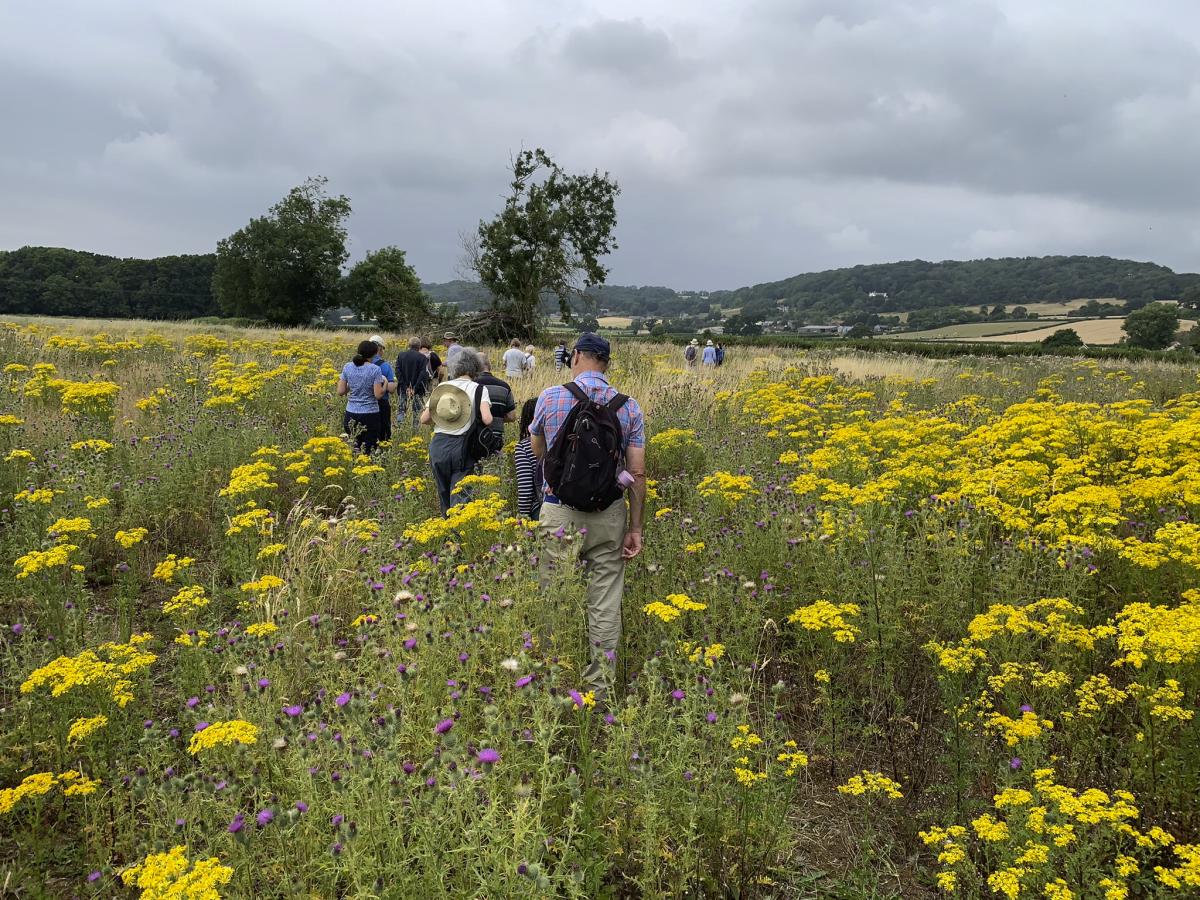
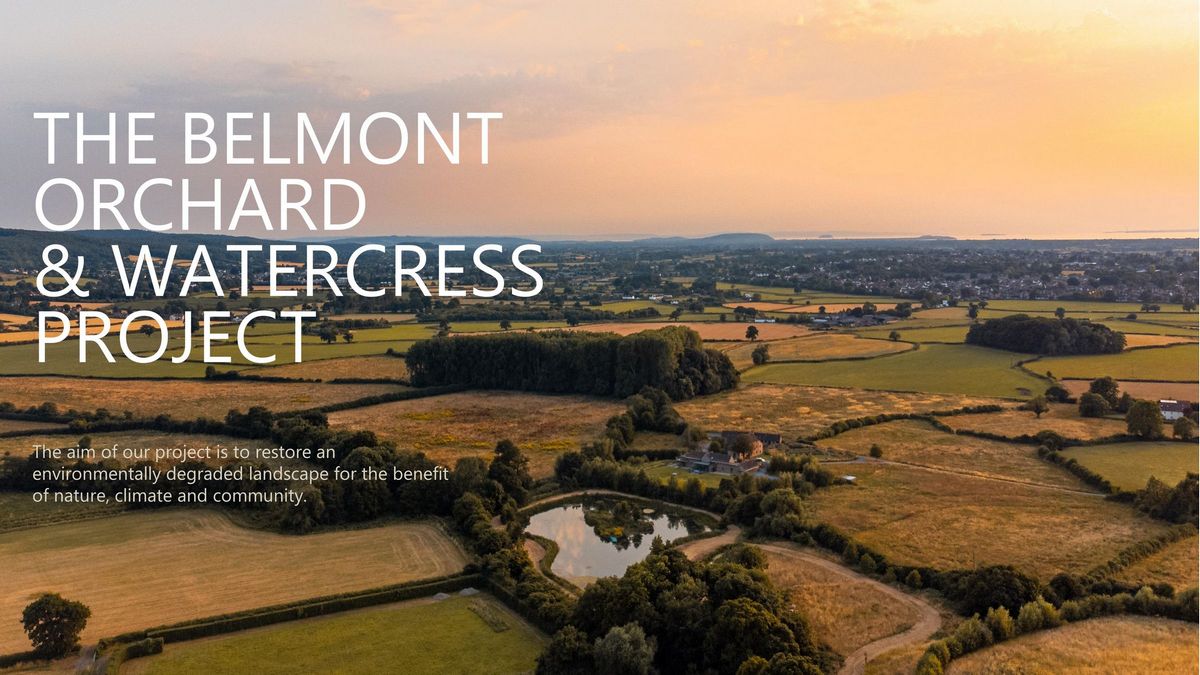
    Members of BET, NEWT and FoTP joined forces for a visit to the Rewilding project taking place at Watercress Farm on the Belmont Estate, not far from Backwell. 

    Watercress Farm 1200

    Estate manager Gil Martin hosted a fascinating and inspirational tour of the farm and the initiative to restore biodiversity to the landscape, which has been depleted by conventional farming.

    Belmont Vision

  • Ash Trees and Working Horses – February 2023

    Ash Trees and Working Horses – February 2023

    Ash dieback 1

    Ash Trees and Working Horses – February 2023

    Unfortunately, as the disease continues to kill our ash trees, we need to fell more trees to keep our woods safe.  Contractors will be returning on 14th February and draft horses a few weeks later!


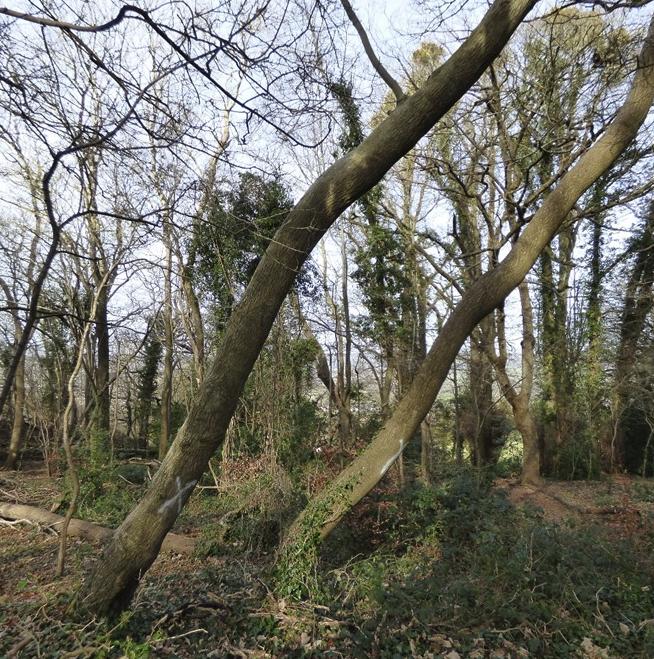
    As we have reported in previous BET Bulletins and project updates, the majority of the ash trees on BET’s reserves are showing severe signs of ash dieback disease. There is no treatment for the disease and in the coming years these trees will, almost certainly, die and collapse.

    BW Ash 2

    Last winter, contractors felled diseased ash trees along Cheston Combe which presented the highest risk to traffic and houses.  This winter we have started to remove diseased trees which are within striking distance of the public footpaths and bridleway running the length of our two reserves.  Over the past two months our volunteers have been felling smaller ash trees close to the paths. Starting on 14th February our contractor will be felling the larger diseased trees which could fall on the paths. This will mean that stretches of paths will be closed during the work, for which we apologise.

    Timber from the felling will be stacked and shortly afterwards will be collected and paid for by our local partners, Backwell Logs.  The steep terrain makes timber extraction challenging but we are planning to use draft horses, which will be very exciting and eco-friendly!! Four heavy horses should be coming from Oakfield Farm, near Rangeworthy, during March.  We hope to arrange a date and time after their working day for people to meet the horses. Details to follow.

    Note that the affected trees have been marked with various coloured paint spots according to the degree of decline and who will do the felling. The trees were checked during the summer, when in leaf, to identify those whose crown had declined by more than 50% and would not recover. The remaining trees will be assessed each year to determine those which will need to be taken down in future winters. Natural regeneration has started in the felled areas and we have also planted nearly 300 tree saplings so far.

    There are a number of ash trees on the road side of BET’s boundary which are the responsibility of North Somerset Council. However, as you will be aware, NSC have had higher priority roads to keep safe, including the A370.

    BET Trustees

  • Somerset Rare Plants Group Visit – June 2022

    Somerset Rare Plants Group Visit – June 2022

    Visit by the Somerset Rare Plants Group – June 2022

    On the 18th June, the Somerset Rare Plants Group made a return visit to the BET reserves. The group is made up of highly experienced botanists who aim to continue the long tradition of plant recording and conservation in the county. A member of the group visited BET three years ago and was so impressed she arranged a follow-up field trip.

    Nine members explored both reserves with their species-rich grassland – and weren’t disappointed. During the day they recorded 185 plant species in Jubilee Stone Wood and 118 in Badgers Wood.  More than five of these had not been recorded previously on BET land and will be added to our species list.

    Of particular note were the plants in the limestone heath area of the Coupe Meadow – including Heathers, Pill Sedge and Flea Sedge. Nearby they spotted specimens of Common Gromwell.

    Rare Plant Group 1
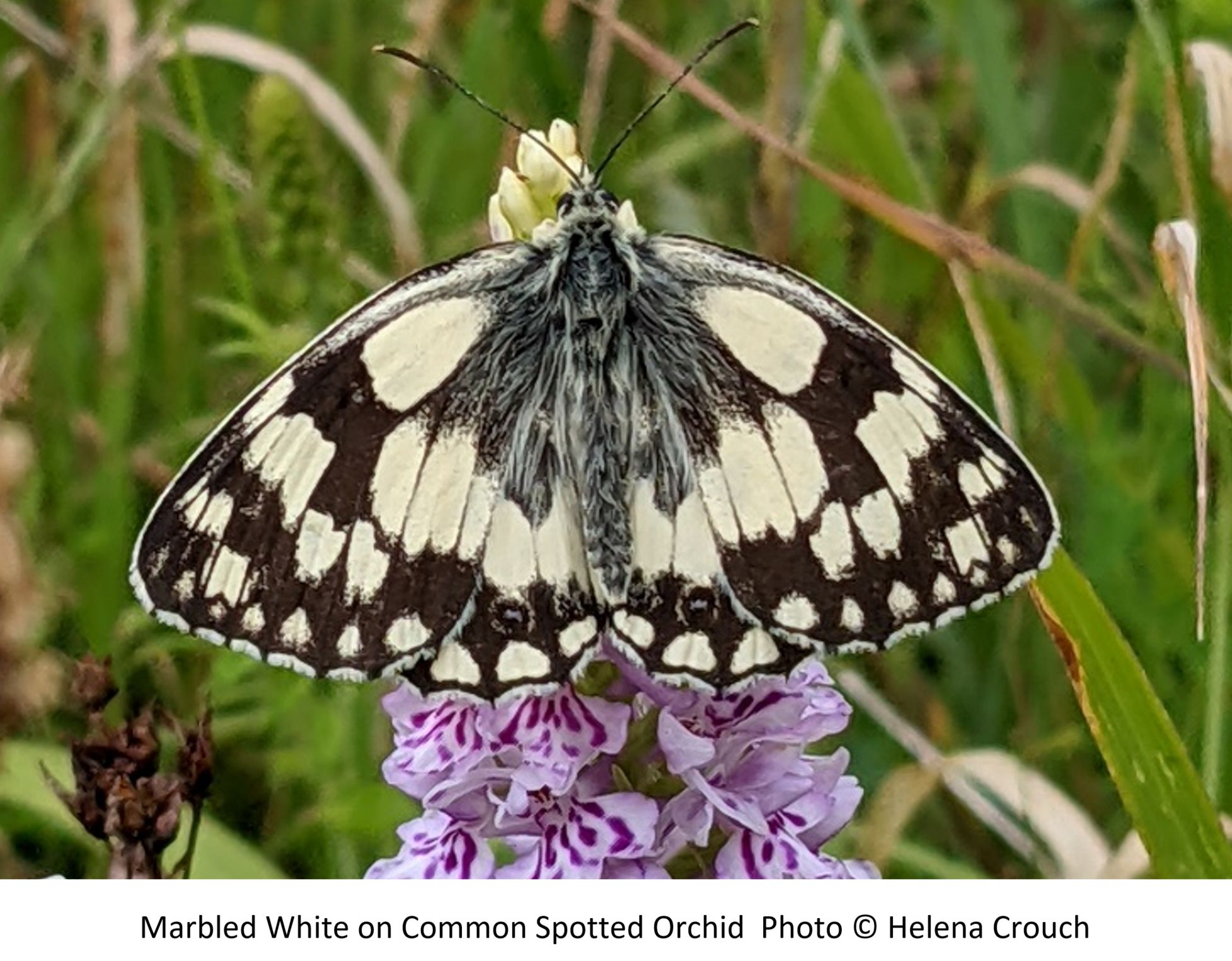
    Over in Badgers Wood, on the meadows near the quarry, the group was accompanied by Marbled White butterflies and took this splendid photo of one on a Common Spotted Orchid.

    Rare Plant Group 2

    The Fern Way footpath lived up to its name with its splendid Soft Shield-Ferns and Hard Shield-ferns.  One plant proved to be a bit of a puzzle and turned out to be Polystichum x bicknellii, a hybrid of the two species.

    The group really enjoyed their day and complimented BET on the well-managed reserves.